

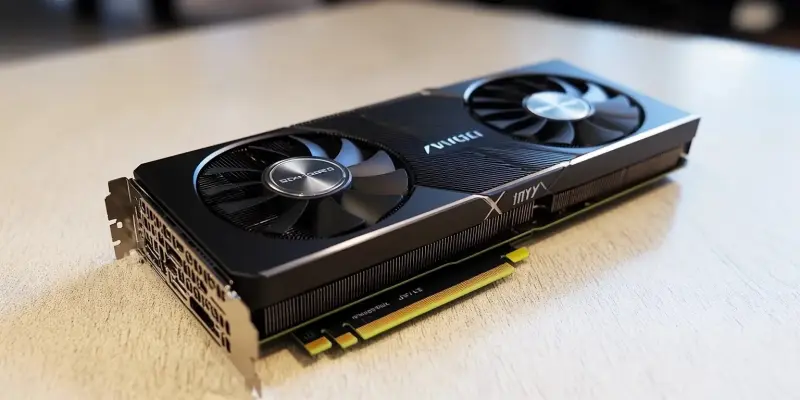
The tech industry is abuzz with anticipation as Nvidia is set to reveal its highly anticipated next-generation GeForce graphics cards, the RTX 5000 series, at CES 2025. This unveiling is expected to center on the RTX 5090 and RTX 5080 GPUs, which have been the subject of numerous teasers and industry leaks. Nvidia CEO Jensen Huang’s keynote speech will reportedly focus on these new GeForce products, confirming months of speculation and setting the stage for a significant leap in graphics technology.
Nvidia’s Upcoming RTX 5000 Series
RTX 5090 and RTX 5080 GPUs
Nvidia’s RTX 5090 and RTX 5080 GPUs have been long-rumored and eagerly awaited by gaming enthusiasts and tech professionals alike. These new graphics cards promise to deliver unprecedented performance and cutting-edge features that will set new standards for the industry. With the announcement imminent, there has been a notable increase in excitement and speculation about the capabilities of these GPUs. It is believed that the RTX 5090 will feature significant advancements over the previous generation, including higher core counts, faster memory, and improved ray tracing capabilities.
Additionally, the RTX 5080 is expected to offer a more affordable yet powerful option for consumers who do not require the top-tier performance of the RTX 5090. Both GPUs are anticipated to cater to a wide range of users, from hardcore gamers to professionals needing robust graphics processing for demanding applications. As Nvidia continues to push the boundaries of GPU performance, the unveiling of the RTX 5000 series will likely be a pivotal moment in the graphics card market.
Presentation at CES 2025
Nvidia’s presentation at CES 2025 is expected to be a highlight of the event, with Jensen Huang’s keynote address likely to draw significant attention. The company has a history of using CES to showcase its latest innovations, and this year is set to be no different. Industry insiders have suggested that the presentation will not only reveal the RTX 5090 and RTX 5080 but also provide detailed insights into the architecture and technical advancements of the RTX 5000 series.
This comprehensive reveal will provide consumers and industry experts with a clear understanding of what these new GPUs are capable of and how they will impact the graphics card market. Given Nvidia’s track record of cutting-edge developments and performance-driven innovations, the RTX 5000 series is expected to solidify the company’s position as a leader in the GPU industry. Attendees and viewers of the CES presentation will undoubtedly be eager to learn more about the future of Nvidia’s graphics technology.
Potential Technological Advancements
Promised Performance Improvements
The RTX 5000 series is expected to bring about significant technological advancements, with a particular focus on performance improvements that will surpass the capabilities of previous generations. These new GPUs are rumored to feature advanced ray tracing technology, enhanced AI capabilities, and faster memory speeds. Such advancements will not only improve visual fidelity in gaming but also enhance performance in other demanding applications such as AI, machine learning, and professional content creation.
Moreover, the RTX 5090 and RTX 5080 are anticipated to offer higher energy efficiency, reducing power consumption while delivering superior performance. This balance of power and efficiency is crucial for both gaming enthusiasts and professionals who require reliable and robust hardware for their work. Nvidia’s commitment to innovation is expected to shine through with the RTX 5000 series, making it a game-changer in the world of graphics processing.
Competitive Landscape
The reveal of Nvidia’s RTX 5000 series comes at a time when the graphics card market is becoming increasingly competitive. AMD’s upcoming RX 8800 XT and other RDNA 4 products are expected to offer strong competition, particularly in the mid-range segment. This competition is beneficial for consumers, as it drives innovation and can lead to better products and pricing. The rivalry between Nvidia and AMD has historically pushed both companies to outdo each other, resulting in rapid advancements in graphics technology.
While Nvidia is focusing on the high-end segment with its RTX 5090 and 5080, AMD’s strategy appears to be targeting a broader range of users with competitive performance and price points. As both companies continue to innovate and release new products, the graphics card market will remain dynamic and exciting. Consumers can look forward to an array of options that cater to different needs and preferences, ensuring that there is something for everyone in the evolving world of GPU technology.
Broader Industry Context
Impact on Gaming and Professional Applications
The introduction of Nvidia’s RTX 5000 series is poised to have a profound impact on various sectors, particularly gaming and professional applications. For gamers, the enhanced graphics capabilities and performance improvements will translate to more immersive and realistic experiences. The advancements in ray tracing technology will allow for more dynamic lighting and reflections, creating visually stunning environments that push the boundaries of what is possible in gaming.
Professional users, such as artists, designers, and engineers, will also benefit from the increased power and efficiency of the RTX 5090 and 5080 GPUs. These new graphics cards will enable faster rendering times, smoother workflows, and the ability to handle more complex tasks with ease. The impact of the RTX 5000 series will be felt across a wide range of industries, driving innovation and enabling new possibilities in creative and technical fields.
Pricing and Consumer Reactions
The introduction of Nvidia’s RTX 5000 series is expected to build on Nvidia’s legacy of delivering cutting-edge graphics performance, further cementing its position as a leader in the field. The RTX 5090 and RTX 5080 are poised to offer gamers and professionals alike unprecedented visual experiences. With enhancements likely in areas such as ray tracing, AI-driven rendering techniques, and power efficiency, the highly anticipated CES 2025 unveiling will undoubtedly be a landmark event, marking a significant leap forward in the industry.