

The sheer dominance of NVIDIA in the data center and gaming arenas has ignited a debate about whether the company will eventually swallow the very partners that helped build its empire. While traditionally known as a provider of discrete graphics processing units, the company is now orchestrating a profound shift toward total platform control. This expansion represents a move from being a mere component supplier to becoming the primary architect of the computing experience. The emergence of specialized AI-driven workflows has accelerated this transition, as standard hardware configurations often struggle to keep pace with the massive parallel processing requirements of modern software.
The Evolution of NVIDIA’s Role in the PC Ecosystem
The journey from a niche manufacturer of gaming accelerators to a central pillar of global computing has been defined by strategic foresight. In the early stages, graphics cards were treated as luxury peripherals, but the rise of the CUDA platform transformed the GPU into a general-purpose processor capable of handling complex mathematical simulations. This shift fundamentally altered the relationship between the processor and the graphics unit, placing NVIDIA at the heart of the technological landscape.
Moreover, the current environment demands a more unified approach to hardware. As traditional CPU scaling slowed, the industry turned toward heterogeneous computing, where different types of processors work in tandem. This allowed the company to leverage its graphical expertise into the broader PC market, positioning its technology not as an add-on, but as the essential core that determines a system’s true capability in professional and creative environments.
Core Architectural Pillars of NVIDIA’s Expansion
Transition to Proprietary Laptop Silicon
The most significant technical shift involves the move toward proprietary ARM-based designs for the mobile market. By developing its own integrated silicon, NVIDIA can bypass the constraints of third-party processor architectures that were not originally designed with high-end AI or graphical throughput as the priority. This vertical approach mirrors the success seen in the mobile phone industry, where tightly coupled hardware and software lead to superior power efficiency and thermal management. This transition matters because it allows for a “clean sheet” design of the motherboard and power delivery systems. Instead of trying to fit a high-powered GPU into a chassis designed for general-purpose computing, the company can dictate the entire electrical and thermal envelope. The result is a laptop ecosystem that prioritizes sustained performance over burst speeds, making these devices more reliable for heavy workloads that involve real-time rendering or local machine learning tasks.
Vertical Integration and AI Infrastructure
The integration of Tensor cores into every level of the product stack has turned the standard PC into a localized AI infrastructure node. This is not just about faster frames in games; it is about providing the foundation for generative AI tools and sophisticated data processing that previously required cloud-based clusters. By keeping these workloads local, users benefit from reduced latency and improved privacy, which are critical for enterprise adoption.
Furthermore, the software layer acts as the glue for this hardware expansion. The company’s focus on providing a full-stack solution—from drivers to specialized libraries—ensures that developers can extract maximum performance with minimal friction. This creates a powerful moat, as competitors must not only match the silicon performance but also build a comparable software ecosystem that has been refined over decades of developer feedback.
Current Trends in Hardware Consolidation and Strategy
Recent industry activity suggests a significant shift in how hardware is branded and sold. While rumors of direct acquisitions of major manufacturers have been met with official denials, the underlying strategy reveals a move toward a “reference design” model where NVIDIA exerts unprecedented control over the final product. Manufacturers are increasingly becoming assembly partners for highly specified designs rather than independent innovators, reflecting a consolidation of intellectual property at the silicon level.
This trend is driven by the sheer complexity of modern cooling and power requirements. As AI workloads push hardware to its physical limits, the margin for error in laptop and small-form-factor design has evaporated. Consequently, the industry is moving toward a more centralized authority where the chip maker provides the blueprint for the entire machine, ensuring that the user experience remains consistent regardless of which brand appears on the outer lid.
Real-World Applications and Market Deployment
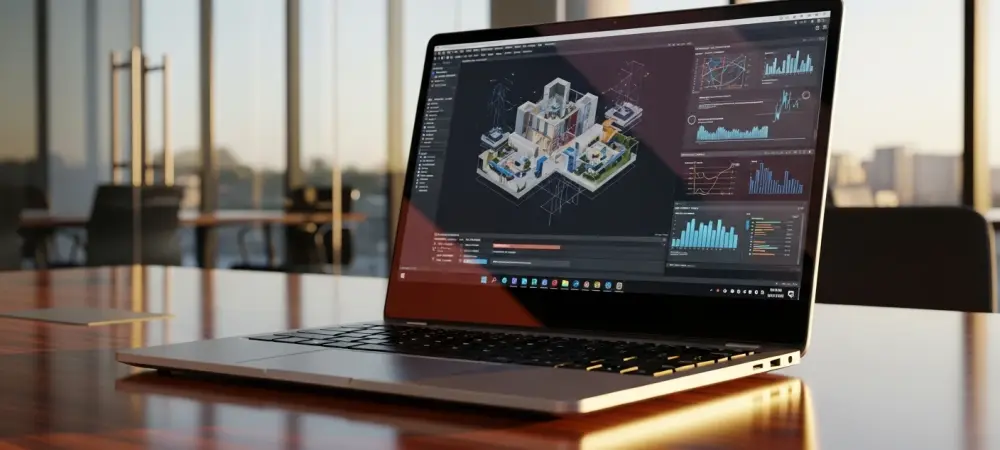
In the professional realm, these advancements have revolutionized sectors such as architectural visualization and medical imaging. For instance, the deployment of AI-enhanced laptops allows architects to perform ray-traced walkthroughs of buildings in real-time on-site, a task that once required a tethered connection to a massive server farm. This portability, combined with workstation-class power, has redefined the boundaries of where high-level technical work can be performed.
Similarly, the gaming sector has evolved from simple pixel pushing to complex simulations of light and physics. The use of deep learning super sampling technology has allowed mid-range hardware to punch far above its weight class, extending the lifespan of devices and making high-fidelity experiences more accessible. This democratization of performance ensures that the expansion into the PC market benefits a wide spectrum of users, from competitive enthusiasts to casual consumers.
Critical Challenges and Market Barriers
Despite the technical triumphs, the path to market dominance is fraught with regulatory and logistical hurdles. The prospect of a single entity controlling both the silicon and the platform design often triggers antitrust scrutiny, as it can stifle competition from smaller hardware innovators. Maintaining a balance between being a supplier to other brands and being a potential competitor in the system space is a delicate act that requires constant diplomatic and strategic management.
Technical barriers also remain, particularly concerning the inherent trade-offs between processing power and battery life. While proprietary silicon improves efficiency, the energy demands of high-end AI processing still outstrip current battery technology. These limitations necessitate ongoing development in materials science and power management software to ensure that the “AI PC” remains truly portable rather than just a transportable desktop.
Future Outlook: Beyond Component Manufacturing
Looking ahead, the role of the component manufacturer will likely disappear, replaced by the “platform provider” model. The focus will shift toward creating a seamless interface where the hardware is invisible to the user, and the emphasis is placed entirely on the capabilities enabled by the underlying silicon. We can expect to see deeper integration of neural processing units that handle background tasks like security, noise cancellation, and system optimization without any user intervention.
Breakthroughs in interconnect technology will also allow for more modular expansion, where the laptop or desktop acts as a hub for a wider array of specialized accelerators. This would permit users to scale their computing power based on specific needs, further entrenching the company’s architecture as the universal language of the PC ecosystem. The ultimate goal is a world where the distinction between a local computer and a supercomputer is merely a matter of scale.
Assessment of NVIDIA’s Strategic Trajectory
The review of the current landscape indicated that NVIDIA successfully transitioned from a specialized hardware vendor to a dominant force in the broader computing market. By prioritizing AI integration and proprietary silicon, the company redefined the expectations for modern personal computers. The strategic denial of acquisitions did not mask the reality that the firm had already gained functional control over the high-end PC segment through its rigorous reference designs and software lock-in.
The analysis showed that while technical and regulatory challenges persisted, the momentum toward vertical integration appeared irreversible. The shift toward ARM-based mobile chips and integrated AI stacks provided a clear competitive advantage that rivals struggled to replicate. Ultimately, the expansion was not just about selling more chips; it was about establishing a new standard for what a computer should be, ensuring that the company remained the indispensable architect of the digital future.