

Purchasing a high-end Nvidia graphics card in the current landscape feels less like a simple peripheral upgrade and more like a significant capital investment into a personal computing ecosystem. As prices for flagship silicon remain elevated, consumers are focused on the total cost of ownership over several years rather than just the initial price tag. While the core hardware is designed to endure years of use, the rapid pace of software development creates a disconnect between a card’s physical health and its functional utility. Many users discover that while their hardware technically operates for a decade, its ability to satisfy the demands of latest gaming titles diminishes long before the silicon itself begins to fail. This requires a strategic approach to management, as owners must balance physical preservation with evolving standards. Effective planning ensures that the investment remains viable as the software market progresses toward more demanding rendering techniques.
The Hardware Lifecycle: Physical Endurance Versus Modern Demands
Understanding the trajectory of a modern graphics card requires a dual focus on its material construction and the ecosystem it inhabits. The physical components are often built to outlast the standards they were designed to meet, leading to a middle ground where a device is technically functional but practically useless for its intended purpose. This divergence is noticeable in the high-end segment, where users expect performance that can only be sustained if both the hardware and the software drivers remain in sync. In recent years, the industry has shifted toward robust cooling and high-quality power delivery, which pushed the physical life expectancy of GPUs further. However, the software side of the equation moves at a much faster pace, making hardware that is only five years old feel significantly more dated than its condition would suggest. This creates a complex lifecycle where the end of service is rarely defined by a total failure of the internal silicon circuits.
Silicon Resilience: The Decadelong Life of Graphics Processors
The fundamental durability of Nvidia’s silicon is remarkably high, with many graphics processing units capable of remaining operational for ten years or more under standard conditions. History has shown that legacy models continue to function in secondary systems today, proving that the central processing chip is rarely the primary point of failure. Modern manufacturing processes have improved this baseline reliability, ensuring that the complex pathways of the GPU can withstand hundreds of thousands of hours of thermal cycling. However, the sheer longevity of the chip does not guarantee its relevance in a fast-paced market. While the silicon itself survives, its ability to calculate complex modern shaders or handle high-resolution textures effectively reaches a hard technical limit. A card that still powers on after a decade may find itself relegated to basic office tasks, as the internal architecture eventually lacks the necessary features to interact with current programming interfaces.
Functional Obsolescence: The Divergence of Power and Software
While the physical hardware may survive a decade, the practical gaming lifespan of a GPU typically reaches a critical plateau around the five-year mark for most enthusiasts. This functional decline is rarely caused by a loss of power within the chip but is instead driven by the escalating demands of software and the limitations of video memory. Modern titles increasingly require larger amounts of VRAM and specialized hardware accelerators for features like ray tracing or advanced frame generation that older architectures simply do not possess. Consequently, a user who prioritizes high visual fidelity may find their hardware obsolete in as little as four years. This trend highlights a reality where the software environment dictates the end of a card’s useful life more aggressively than the natural aging process of the silicon. For those seeking the best experience, the decision to upgrade becomes a matter of performance necessity rather than a mechanical breakdown.
Maintenance and Protection: Ensuring the Longevity of Internal Parts
Maintaining a graphics card throughout its lengthy potential lifespan involves more than just keeping it clean; it requires a proactive strategy that addresses both mechanical and electrical vulnerabilities. Many owners overlook the fact that a GPU is a composite of various parts, and the failure of a single inexpensive component can render the entire investment useless if not caught early. The goal of a proper maintenance routine is to ensure that the environment inside the PC case remains as stable as possible, minimizing the stress placed on the sensitive electronic pathways. This involves balancing thermal management with electrical protection, as heat and unstable power are the two most common killers of modern computer hardware. By understanding where the specific points of failure lie, users can take targeted actions that extend the functional life of their equipment by several years. This approach preserves the hardware and ensures that it operates at peak efficiency throughout its service life.
Mechanical Upkeep: Managing Cooling Fans and Thermal Conductivity
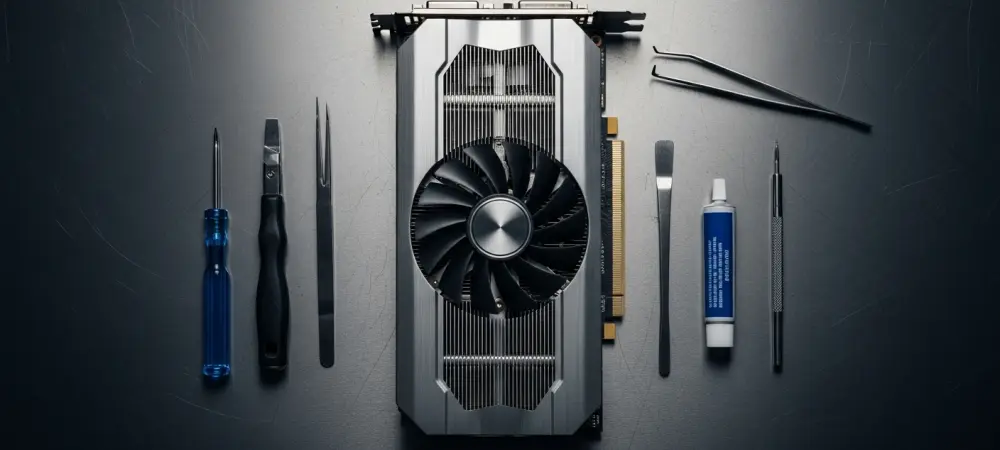
When a graphics card fails prematurely, the culprit is often found in the cooling system rather than the sophisticated electronic components of the circuit board. Cooling fans represent the only moving parts on a standard GPU and are therefore the most susceptible to mechanical wear and eventual seizure. Fortunately, these fans are usually replaceable, allowing diligent owners to restore thermal efficiency without purchasing an entirely new card. Another critical factor in hardware longevity is the integrity of the thermal interface material used to bridge the gap between the chip and the heatsink. Over several years, this paste can dry out and lose its effectiveness, leading to a steady rise in operating temperatures that can cause permanent thermal degradation. Performing basic maintenance, such as re-applying thermal compound every few years, remains one of the most effective ways to ensure that the card continues to run within safe limits and avoids the performance throttling.
Future Planning: Actionable Steps for Sustained Graphics Performance
Effective management of high-end hardware required a balanced approach that prioritized both regular physical maintenance and realistic software expectations. Users who monitored their thermal performance with dedicated software tools were able to identify cooling issues before they led to permanent chip damage. It became clear that the most successful owners were those who established a routine for cleaning and thermal compound replacement, effectively extending the physical life of their cards well beyond the industry average. Furthermore, a shift in focus toward optimizing software settings, such as utilizing upscaling technologies, allowed many to maintain playable frame rates even as their hardware aged out of the high-end bracket. By treating the GPU as a maintainable asset rather than a disposable commodity, enthusiasts maximized their return on investment. This proactive strategy ensured that the hardware served its purpose reliably until the next meaningful architectural leap arrived.