

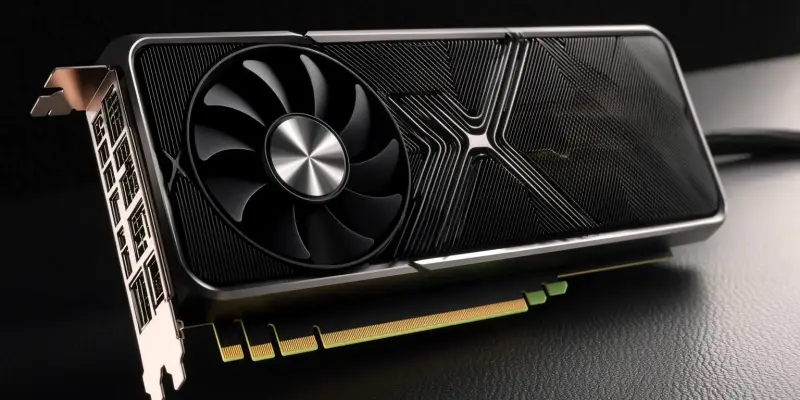
In an industry where innovations arrive almost as fast as new graphics cards hit the market, NVIDIA consistently remains at the forefront, pushing technological boundaries. Recently, leaks have surfaced about the prototype of their upcoming graphics card, the GeForce RTX 5090. This new prototype packs an impressive range of features and promises substantial performance gains compared to its predecessor, the RTX 4090. The prototype sports the full GB202 GPU, which includes more than 24,576 cores, a notable 13% increase from the standard RTX 5090 that features 21,760 cores. The buzz surrounding this new model highlights the rapid progress in GPU performance and the potential implications for gamers and professionals alike.
Cutting-Edge Specifications and Performance Enhancements
The RTX 5090 prototype details illustrate significant upgrades, aiming to enhance power and performance. With dual 16-pin connectors, this prototype requires an 800W TBP (Total Board Power), marking an almost 40% increase from the official model. This higher power draw is directly linked to its substantial performance capabilities, which include clock speeds starting at 2100 MHz as a base and reaching up to 2514 MHz in boost mode. Compared to the RTX 4090, these elevated speeds suggest notable advances in terms of GPU performance efficiency. Furthermore, the GPU integrates 16 GDDR7 memory dies rated at 32 Gbps, promising exceptional memory bandwidth and performance improvement crucial for high-demand applications.
Perhaps most striking is the use of new technologies which could yield up to a 50% increase in performance under specific scenarios when pitted against the RTX 4090. Even so, this enhanced power demands adept cooling solutions, posing an engineering challenge that NVIDIA needs to strategically address before the GPU enters market availability. The attention to memory die configuration, clock speeds, and power consumption reveals a well-rounded approach by NVIDIA in designing a GPU that not only pushes raw performance but also establishes new benchmarks for future models. This approach ensures that users experience fewer bottlenecks and seamless performance boosts across various applications.
Prototype Positioning and Future Prospects
The RTX 5090 prototype functions as an intermediary step showcasing the potential of even more advanced models, such as the rumored RTX 5090 Ti or a potential RTX Titan Blackwell. Its leaked specifications reflect a forward-looking design, yet its prototype nature means the final consumer versions may vary significantly from the leaked model. One of the critical factors in this innovation pipeline will be addressing the high power demands and cooling needs, inherently linked to the prototype’s current configuration. As engineers work on these challenges, the feedback loop between prototype testing and refinement will indeed determine how effectively the final product meets market needs.
While considerable performance gains are a highlight, practical constraints should not be overlooked. The 800W TBP requires advanced power supply considerations and innovative cooling mechanisms to maintain operational stability, particularly in consumer environments. As a result, potential buyers may encounter higher costs not only for the GPU but also for compatible hardware upgrades needed to accommodate this powerhouse. With the GPU industry trends steering towards higher performances and integrating more advanced features quickly, the RTX 5090 prototype emphasizes both the opportunity for technological advances and the practical hurdles that manufacturers must navigate.
Implications for the Market and High-Performance Computing
In an industry where innovations roll out nearly as quickly as new graphics cards hit the shelves, NVIDIA manages to consistently stay at the cutting edge, continually pushing the limits of technology. Recently, leaks have emerged revealing a prototype of their highly anticipated graphics card, the GeForce RTX 5090. This new prototype boasts an impressive array of features and promises significant performance improvements over its predecessor, the RTX 4090. One of its standout features is the full GB202 GPU, which includes more than 24,576 cores, representing a notable 13% increase from the standard RTX 5090, which features 21,760 cores. This surge in core count alone suggests an exponential leap in power and efficiency. The hype surrounding this new model underscores the rapid advancements in GPU performance, holding exciting implications for both gamers and professionals. It marks a significant milestone in the evolution of computer graphics, pushing the envelope for what is possible in visual computing and gaming experiences.