

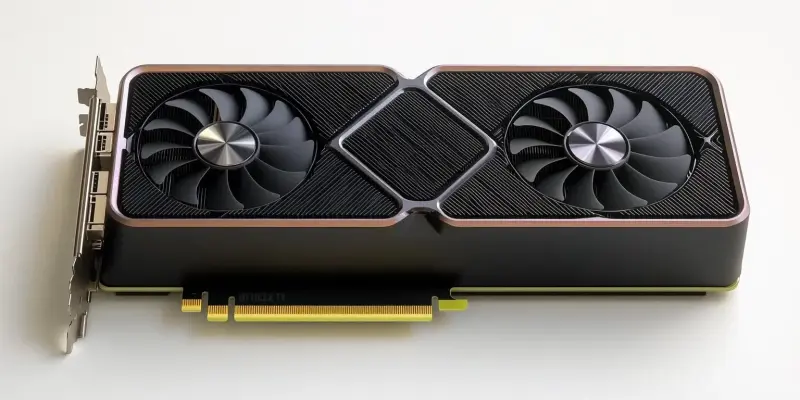
NVIDIA’s latest high-end gaming GPUs, the GeForce RTX 5090 and RTX 5080, have experienced an unexpected market situation marked by severe supply shortages and resultant price surges. Miscommunications between NVIDIA and its board partners have been identified as major contributors to these shortages, with the bottleneck expected to persist until at least late Q1 or Q2 of 2025. Launched on January 30th, these GPUs have already seen their prices double in some regions, exemplifying an acute scarcity further amplified by various logistical challenges.
Severe Supply Shortages and Price Surges
Miscommunications with Board Partners
One of the leading causes behind the severe supply shortages is the persisting communication issues between NVIDIA and its board partners, such as ASUS, MSI, and Gigabyte, which have hindered smooth transactions and efficient distribution. These miscommunications have resulted in forecasts misaligning with actual production capabilities, leading to uneven distribution of available stock. The anticipatory nature of manufacturing has compounded these issues, revealing production bottlenecks that could not cater to the hastened demand, further inflaming this crunch in availability.
Additionally, the Chinese New Year holiday has exacerbated these inventory issues, bringing about operational pauses and delayed shipments. Reports suggest that the situation, expected to ameliorate slightly after February, currently dictates a bleak outlook with substantial impacts. For example, one US dealer reported receiving only 20 RTX 5080 units and no RTX 5090 units for the first month. Consequently, potential buyers have been left in dire straits, scrambling to secure these coveted GPUs at almost unattainable prices. The scarcity has also led to price spikes, with RTX 5090 units potentially commanding up to $4000 and RTX 5080 units reaching $2000.
Impact of Chinese New Year and Other Logistical Challenges
The timing of the release coinciding with the Chinese New Year has only intensified the supply chain challenges. Festive periods often result in factory shutdowns and logistic halts, leading to production slowdowns and delayed shipments. The renowned Chinese New Year, a significant holiday, traditionally sees many businesses pause operations, further backlogging already strained supply chains. This essential pause in production activities has exacerbated the already existing supply bottlenecks due to miscommunication and misaligned forecasts, extending the period of scarcity and hindering initial recovery attempts.
Moreover, these shortfalls are not geographically localized but are a global phenomenon impacting markets proportionately. For regions like the EU, additional premiums and taxes compound the shortages’ effects, leading to even more pronounced price hikes. The resultant scenario is a surging demand with a grossly underwhelming supply, driving up the prices drastically. Analysts indicate that until the Spring Festival concludes and normalcy is restored in the production facilities, obtaining these GPUs at the manufacturer-suggested retail price (MSRP) remains near impossible. This situation has inevitably led to one of the most challenging launch periods for NVIDIA in recent years.
Market Implications and Future Outlook
Expected Stabilization and Benefits for AIBs
Despite the seemingly unmanageable present, some stability is anticipated with the culmination of the Spring Festival. Industry experts project that as factories resume operations, the inventory will begin to restock, albeit gradually, relieving some pressure off the desperate market. This anticipated stabilization offers a glimmer of hope, suggesting that while the correction may not be immediate, it is within sight, aligning more closely with the general market recovery timelines. Nonetheless, achieving a balance where these GPUs are easily accessible at MSRP is an arduous task and likely to stretch well into the beginning of 2025.
Additionally, AIBs like ASUS, Gigabyte, and MSI, which play critical roles in the supply chain, are expected to benefit from these price hikes, albeit indirectly. While the overall market downturn paints a grim picture, these board partners are likely to enjoy increased margins owing to the scarcity-induced premiums. Their profitability aligns with continuing demand even at inflated prices, reflecting complexities where scarcity translates indirectly to higher profit margins benefiting these key players to sustain their operations amidst troubled times.
Long-Term Solutions and Resolved Supply Chain Issues
NVIDIA’s recently released top-tier gaming GPUs, the GeForce RTX 5090 and RTX 5080, are facing an unexpected market crisis characterized by severe supply shortages and soaring prices. Key issues identified include miscommunications between NVIDIA and its board partners, which have significantly contributed to these shortages. The supply bottleneck is projected to continue at least until late Q1 or Q2 of 2025. Launched on January 30th, these GPUs have already witnessed their prices doubling in certain regions, highlighting the acute scarcity. Several logistical challenges are exacerbating the situation, making it increasingly difficult for consumers to get their hands on these high-demand products. The unforeseen supply chain disruptions and increased demand have created a market imbalance, frustrating both enthusiasts and professionals in the gaming community. NVIDIA is actively working to address these issues, but the resolution is expected to take time, affecting availability and pricing for the foreseeable future.