

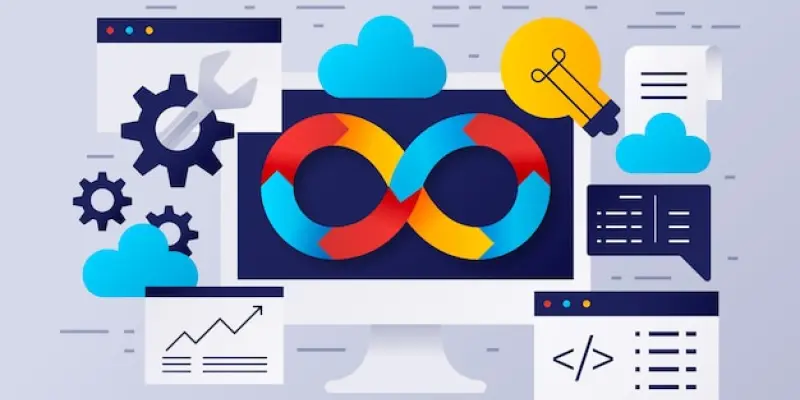
The rapid integration of advanced artificial intelligence (AI) tools into the DevOps landscape has taken a major stride forward with NVIDIA’s latest partnership with JFrog and Dynatrace. This strategic collaboration is pivotal in the transition towards seamlessly blending AI capabilities with efficient software development practices. The unveiling of this initiative at Taiwan’s COMPUTEX conference signaled a critical advancement in NVIDIA’s Enterprise AI Factory, where the efficiencies of DevOps meet the transformative potential of AI. With the introduction of enhanced AI-centric frameworks, the partnership holds significant promise for leveraging NVIDIA’s platform to streamline the creation and deployment of AI agents.
Integrating DevOps with AI Technology
The Role of JFrog’s Software Supply Chain Platform
Central to this transformation is the incorporation of JFrog’s Software Supply Chain Platform within NVIDIA’s framework, a move that significantly enhances the efficiency and accessibility of AI model management. Acting as a singular source of record, JFrog’s platform facilitates meticulous tracking of software artifacts and AI models, ensuring a cohesive management system that serves the dynamic needs of AI development. Furthermore, with support for more than 40 software package types, including NVIDIA’s Inference Microservices (NIM), the platform embodies a robust tool for managing AI artifacts that include models, datasets, containers, and dependencies.
The innovation does not stop with integration; JFrog has notably improved its platform’s performance by enabling it to run natively on NVIDIA’s powerful Grace Blackwell GPUs. This development ensures that the platform retains its high functionality, aligning with the new demands of AI model utilization. The partnership enhances the adaptability and flexibility of the AI production process, facilitating a smoother transition from AI concept to application. Such advancements are not solely technical improvements but signal a fundamental shift in how AI projects are executed within the DevOps environment.
Managing Challenges of AI Model Development
One of the distinctive challenges in integrating AI models within DevOps frameworks lies in their incompatibility with previous versions, as opposed to traditional software, which creates unique barriers. The incorporation of AI agents demands new tactics for development, where data scientists emerge as pivotal end-users. This shift necessitates an evolved approach to development processes, urging DevOps teams to evaluate and refine their practices. By embracing these challenges, teams can foster a culture of adaptability and prepare for the future scale and complexity of AI applications.
Collaboration with Dynatrace complements JFrog’s offerings by introducing advanced observability capabilities into NVIDIA’s enterprise environment. By enabling comprehensive troubleshooting and management of AI-driven applications, Dynatrace ensures that businesses can maintain operational excellence, even amidst complex AI integrations. These enhancements mark a significant leap forward for organizations seeking to optimize their AI capabilities, underlining the importance of an observability platform that effectively addresses the intricacies of AI models. The combination of JFrog’s and Dynatrace’s solutions creates a synergistic ecosystem that prepares DevOps teams for the challenges of modern AI applications.
The Expanding Horizon of AI and DevOps
Future Implications for AI-Driven DevOps
The collaboration between NVIDIA, JFrog, and Dynatrace signifies more than just an enhancement in existing infrastructure; it is a foundational shift in how AI and DevOps intersect and interact. This partnership holds the promise of setting new standards for the development, deployment, and management of AI models, positioning NVIDIA’s Enterprise AI Factory as a frontrunner in AI innovation. As the demand for AI integration continues to grow, these advancements suggest a rapidly evolving landscape where seamless blending of AI capabilities into workflow processes becomes a standard industry practice.
By embracing innovations such as AI Blueprints and validated designs for AI agents, NVIDIA has paved the way for creating smart AI teammates, further enriching AI’s role in business operations. The initiative encourages increased collaboration between IT and research teams, fostering an environment supportive of creative AI solutions tailored to specific business needs. As businesses increasingly turn to AI to enhance operational efficiency and product innovation, these developments offer a comprehensive framework for achieving unprecedented levels of productivity and intelligence within the enterprise landscape.
Impacts on DevOps Teams and Industry Evolution
Looking ahead, the rapid advancements facilitated by this strategic partnership necessitate a recalibrated approach for DevOps teams, emphasizing continuous adaptation and innovation in AI application processes. DevOps teams must actively assess their current models and operations to ensure that their approaches remain agile and scalable, meeting the demands of sophisticated AI ecosystems. This evolution also introduces cultural considerations, challenging traditional paradigms and encouraging teams to adopt strategies that embrace AI as an integral component of development.
The path forward involves leveraging the insights gained from this collaboration to anticipate future trends in AI application. By focusing on scalability, efficiency, and cross-departmental collaboration, organizations are better equipped to navigate the complexities of AI-driven application development. As AI technology continues to develop, the partnership between NVIDIA, JFrog, and Dynatrace underscores the importance of integration and adaptability in shaping the next generation of intelligent systems and applications.
Pioneering a New Era of AI-Integrated DevOps
The integration of sophisticated artificial intelligence (AI) tools into the DevOps ecosystem is taking significant strides with NVIDIA’s recent collaboration with JFrog and Dynatrace. This strategic partnership is a key development in merging AI capabilities with effective software development methods. Announced at Taiwan’s COMPUTEX conference, this initiative marks a substantial milestone in NVIDIA’s Enterprise AI Factory, combining the efficiencies of DevOps with AI’s transformative potential. The introduction of advanced AI-centric frameworks in this collaboration promises to utilize NVIDIA’s platform effectively to optimize the creation and deployment of AI agents. This blending offers enhanced capacity for developers to implement AI-driven solutions seamlessly, revolutionizing how software development processes are conducted. Furthermore, the collaboration underlines a forward-thinking approach on NVIDIA’s end, focusing on revolutionizing software workflows and maximizing AI utility for more streamlined and potent DevOps solutions.