

Setting the Stage for Industrial AI Dominance
The industrial sector in Europe stands at a critical juncture, with artificial intelligence (AI) poised to revolutionize manufacturing and logistics, setting the stage for transformative change. Recent data indicates that the European AI market for industrial applications is projected to grow at a compound annual rate of over 25% from 2025 to 2030, driven by the urgent need for automation and efficiency. Amid this surge, Nvidia and Deutsche Telecom have announced a transformative venture—a state-of-the-art AI data center in Munich, Germany, set to begin operations in early 2026. This strategic move not only addresses the escalating demand for localized, high-performance computing but also positions Munich as an emerging epicenter for industrial tech innovation.
This market analysis delves into the implications of this groundbreaking collaboration, exploring how it aligns with current trends in AI infrastructure and industrial digitalization. By examining the technological capabilities, market positioning, and economic impact of this initiative, the discussion aims to uncover its potential to reshape the competitive landscape. The focus is on understanding how such specialized facilities can drive growth while addressing regional challenges like data sovereignty and energy constraints.
Unpacking the Market Dynamics of AI Infrastructure
Technological Edge Driving Market Growth
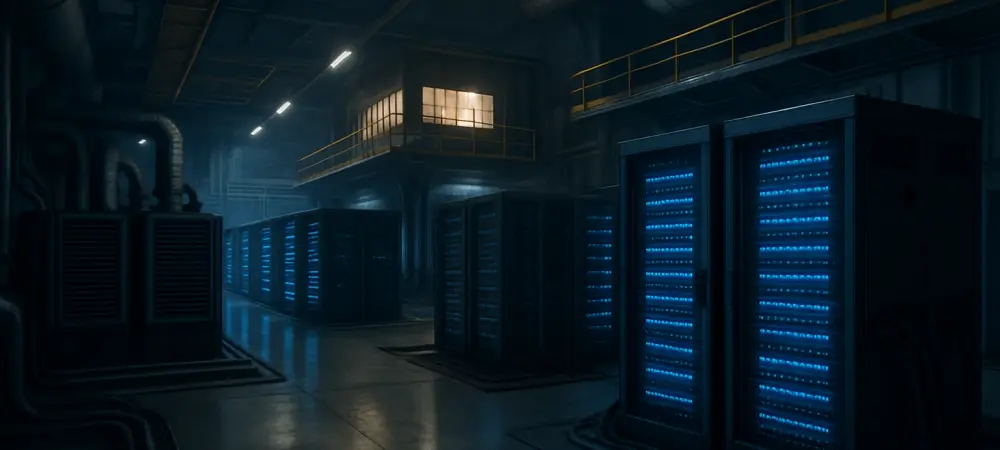
The Munich data center represents a significant leap in AI hardware capabilities, featuring Nvidia’s deployment of over 1,000 DGX B200 systems and RTX Pro servers powered by up to 10,000 Blackwell GPUs. This configuration is expected to deliver a staggering 500 petaflops of computational power, though the exact benchmark—whether optimized for AI workloads or raw compute strength—remains unspecified. Such technological prowess places the facility among the most advanced in Europe, catering specifically to the intensive demands of industrial AI applications like predictive maintenance and robotic automation.
Beyond hardware, the partnership with SAP, which integrates its Business Technology Platform, enhances the facility’s appeal by ensuring seamless software support for enterprise needs. This combination of cutting-edge technology and robust operational frameworks signals a shift in the market toward specialized AI infrastructure. However, challenges such as high energy consumption and the need for advanced cooling systems could impact cost structures, potentially influencing pricing models for end users in the industrial sector.
Market projections suggest that the demand for such high-performance computing will continue to rise, particularly as manufacturers seek to integrate AI into existing workflows. The focus on industrial applications differentiates this venture from general-purpose cloud services, creating a niche that could attract significant investment. As companies increasingly prioritize digital transformation, facilities like this one are likely to become critical assets in maintaining competitive advantage.
Strategic Positioning in a Competitive Landscape
Deutsche Telecom’s extensive infrastructure, managing 390MW of capacity across 184 data centers in Europe, provides a solid foundation for this project. Munich, identified as Germany’s third-largest data center market after Frankfurt and Berlin in recent industry reports, offers a strategic location by balancing proximity to industrial hubs with the advantages of a less saturated secondary market. This positioning aligns with a broader trend of decentralizing tech infrastructure to support regional economic growth and comply with stringent European data regulations.
The collaboration has already garnered interest from key players, with approximately ten companies, including Siemens, Agile Robots, and Quantum Systems, committing to utilize the facility. A notable early application is Agile Robots’ #0-W robot assisting in server rack installation, demonstrating the practical integration of AI even during the setup phase. This early adoption underscores the market’s readiness for industrial AI solutions and highlights the potential for rapid scalability across manufacturing sectors.
Competitively, this venture sets a benchmark for localized AI clouds, addressing a gap in the market for region-specific, high-performance computing resources. While global cloud providers dominate in scale, the Munich facility’s focus on industrial needs and compliance with data sovereignty standards offers a unique value proposition. This could spur similar initiatives across Europe, intensifying competition while fostering innovation tailored to local industries.
Economic and Regional Market Implications
From an economic perspective, the Munich data center is poised to catalyze growth in Bavaria, a region known for its industrial strength. By establishing a hub for AI innovation, the project supports small and medium-sized enterprises (SMEs) often hesitant to adopt cloud technologies due to compliance concerns. The involvement of Polarise, a European data center specialist, further ensures that the initiative is attuned to market-specific needs, enhancing its relevance to the local ecosystem.
Market analysis indicates that such localized infrastructure can significantly reduce latency and improve data security, key factors driving adoption among European businesses. The emphasis on data sovereignty addresses a critical barrier, positioning the facility as a trusted partner for industries wary of foreign data storage risks. This regional focus could also stimulate job creation in tech and industrial sectors, contributing to economic decentralization beyond traditional tech hubs like Frankfurt.
Looking forward, the success of this project may influence investment patterns, with venture capital and government funding likely to target similar regional AI initiatives. However, rising energy costs and the need for skilled talent to manage advanced systems pose potential risks to market expansion. Stakeholders must navigate these challenges to sustain growth, particularly as demand for sustainable and cost-effective solutions intensifies in the European market.
Reflecting on Market Insights and Future Pathways
Looking back, the analysis of Nvidia and Deutsche Telecom’s Munich AI data center reveals a pivotal moment in the industrial AI market, highlighting the convergence of advanced technology and regional strategy. The facility’s unmatched hardware capabilities, strategic market positioning, and alignment with European economic priorities underscore its transformative potential. It stands as a testament to the growing importance of specialized infrastructure in driving industrial digitalization.
The implications of this venture prompt critical considerations for businesses and policymakers alike. Companies are encouraged to assess their readiness for AI integration, identifying specific use cases that could leverage such high-performance facilities. Strategic partnerships with localized data centers offer a pathway for SMEs to access cutting-edge technology without the burden of extensive capital investment. Meanwhile, addressing energy and talent challenges emerges as a priority to ensure long-term viability. As the market evolves, this initiative serves as a blueprint, guiding stakeholders toward innovative and sustainable growth in the industrial AI landscape.