

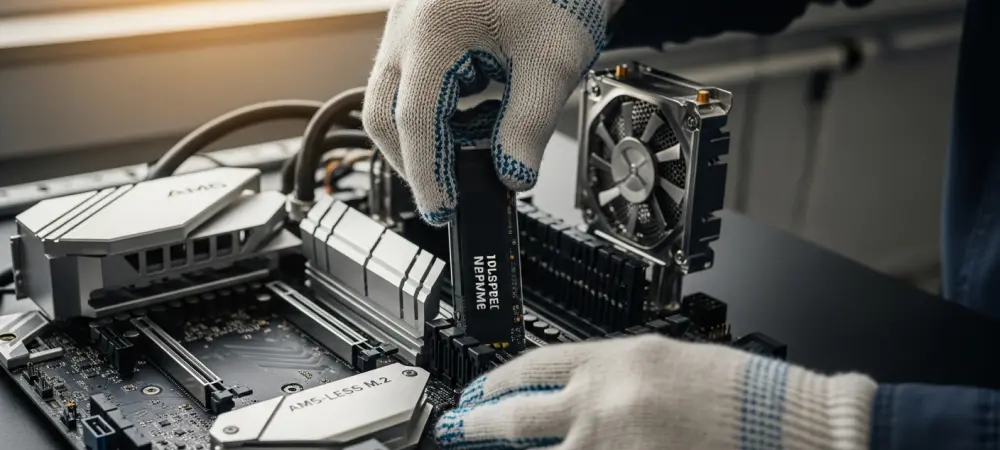
The architectural evolution of the AMD AM5 platform has reached a pivotal junction where the introduction of the X870 and X870E chipsets defines the standard for high-speed connectivity and long-term processor support. This mid-cycle update, released alongside the Ryzen 9000 series, serves as a bridge between current performance needs and the upcoming hardware demands expected through the latter half of the decade. While the physical AM5 socket remains the constant foundation, the motherboard ecosystem has undergone a radical transformation to accommodate USB4 and PCIe 5.0 as baseline requirements rather than premium luxuries. This analysis of 53 distinct motherboard models reveals a market deeply divided between conservative refinements and aggressive engineering experiments. Manufacturers are no longer just competing on raw power delivery; they are now focused on BIOS longevity, user-friendly assembly, and the elimination of bandwidth bottlenecks that plagued previous generations. As consumers look toward building systems that must remain relevant for several years, the nuances of these 800-series boards become critical. The shift toward a mandatory USB4 implementation ensures that every user has access to 40 Gbps transfer speeds, effectively future-proofing the platform for external storage and high-resolution display interfaces. This standard update marks the first time AMD has mandated such high-speed connectivity across the entire high-end chipset stack, signaling a move to compete directly with high-bandwidth solutions previously dominated by rival platforms.
The Architectural Divide: Single versus Dual Chipset Designs
The distinction between the X870 and X870E chipsets is fundamental to understanding the performance potential of the 53 boards evaluated in this comprehensive study. At the heart of the X870E lies a dual-chipset architecture, which essentially doubles the available downstream PCIe lanes compared to the single-chipset X870 variant. This “Extreme” designation is not merely a marketing term but a structural necessity for power users who intend to utilize multiple high-speed NVMe drives alongside modern graphics cards and high-bandwidth networking. By utilizing two Promontory 21 dies, X870E motherboards offer a significantly more flexible input-output layout, allowing for complex configurations without forcing the user to choose between different hardware features. This eliminates the common frustration found in lower-tier boards where installing a second M.2 drive might reduce the available lanes for the primary graphics slot or disable specific USB ports. The dual-chipset approach provides the breathing room required for high-end workstations and enthusiast gaming rigs that demand maximum throughput across all connected peripherals.
Conversely, the standard X870 chipset employs a single-chipset design that presents unique engineering challenges for motherboard manufacturers attempting to meet the mandatory USB4 and PCIe 5.0 requirements. Because the total number of lanes is limited, designers must implement clever lane-sharing strategies to maintain the necessary feature set. This often leads to “either-or” scenarios where a user must decide if they value additional storage over high-speed external connectivity. In the evaluation of 53 models, it became clear that the single-chipset boards are best suited for mainstream users who prioritize a clean, efficient build over maximum expandability. However, the requirement for USB4 on all 800-series boards means that even these more constrained models offer a higher baseline of connectivity than the previous generation of X670 products. The trade-off is often found in the reduction of general-purpose PCIe slots or a decrease in the number of secondary M.2 slots operating at full speed. Understanding this architectural split is the first step for any builder looking to navigate the complex landscape of modern AM5 motherboards, as it dictates the long-term expandability of the entire system.
MSI: Prioritizing BIOS Capacity and Power Efficiency
MSI has adopted a forward-thinking strategy for its latest AM5 motherboard lineup by addressing a critical but often overlooked aspect of long-term platform support: BIOS memory capacity. Many of the new MSI models now carry a “Max” designation, which indicates the integration of a 64 MB BIOS chip, doubling the capacity found on most competing products. This hardware choice is specifically designed to accommodate the increasingly large AGESA code updates that AMD provides to support future processor generations, such as the upcoming Zen 6 architecture. As the feature set of the AM5 platform grows, the physical space required to store microcode, graphical user interfaces, and advanced overclocking settings has expanded significantly. By providing a larger memory buffer today, MSI ensures that users will not have to suffer through the “stripped-down” text-only BIOS menus that were forced upon owners of older platforms when storage limits were reached. This commitment to future-proofing the software interface is a major selling point for those who plan on keeping their motherboards through multiple CPU upgrade cycles without losing functionality or ease of use.
In the mid-range and entry-level enthusiast categories, the MAG X870E Gaming Plus Max WiFi demonstrates MSI’s ability to balance cost with high-end power delivery. Testing indicated that this model performs on par with flagship boards costing twice as much, proving that excessive over-engineering of power stages is often unnecessary for stable performance. Furthermore, MSI has refined its connectivity options by removing legacy USB 2.0 ports from the rear panels of its higher-end boards, such as the X870E Carbon Max WiFi, in favor of 10 Gbps and 40 Gbps ports. This transition toward a completely high-speed rear I/O panel reflects the changing needs of modern users who are increasingly moving away from slow legacy devices. For the most demanding enthusiasts, models like the Unify-X Max provide a specialized two-slot memory layout designed to minimize electrical interference and maximize DDR5 frequencies, showcasing a deep focus on the specific needs of the overclocking community.
Asrock: Value Leadership and Technical Challenges
Asrock continues to carve out a significant portion of the market by offering motherboards that frequently provide more hardware features per dollar than their competitors. The X870 LiveMixer WiFi stands out as a prime example of this philosophy, catering specifically to content creators and streamers who require an extensive array of USB connections. While many high-end boards offer ten or twelve USB ports, the LiveMixer provides a staggering 23 connections, effectively eliminating the need for external hubs in most setups. This focus on practical, real-world utility at a competitive price point is a hallmark of Asrock’s current design language. Additionally, the X870E Challenger WiFi serves as one of the most affordable entry points into the dual-chipset ecosystem, providing users with the expansive PCIe 5.0 lane count of the “E” series without the premium price tag associated with high-end aesthetics. This makes Asrock an attractive choice for builders who prioritize functional density and connectivity over elaborate lighting or unnecessary armor plating.
However, the pursuit of aggressive pricing has occasionally led to technical hurdles that were highlighted during the evaluation of the current product stack. A notable issue was identified with the X870 Taichi Creator, where the “Ultra USB Power” ports exhibited a hardware-level flaw in their over-current protection circuitry. Specifically, devices drawing more than a modest amount of power would trigger a safety shutdown of the port that could only be resolved by a full system reboot. This sensitivity makes these specific ports unreliable for high-performance external storage devices, which is a significant drawback for a board marketed toward creative professionals. Furthermore, Asrock had to address concerns regarding default BIOS settings that pushed voltage and current limits to levels that posed a risk to Ryzen 9000 series processors. While firmware updates have since corrected these electrical parameters, it underscores the importance of immediate BIOS maintenance for users of these boards. These challenges suggest that while Asrock offers incredible value on paper, buyers must be vigilant regarding specific model quirks and stay updated on manufacturer recommendations.
Gigabyte: Thermal Solutions and Aesthetic Differentiation
Gigabyte has oriented its 800-series product stack around the immense popularity of AMD’s X3D processors, branding several of its new models with an “X3D” suffix. These motherboards are marketed as being optimized for gaming performance through a specialized “Turbo Mode” in the BIOS, which aims to maximize the efficiency of the 3D V-Cache by fine-tuning voltage curves and memory latency. While these performance gains are often incremental compared to manual tuning on other boards, the accessibility of a “one-click” optimization makes Gigabyte an appealing option for users who want the best gaming experience without diving deep into complex manual settings. Beyond the marketing focus on gaming, Gigabyte has also experimented with unique aesthetic choices, such as the Aero X3D Wood model. This board features genuine timber accents, providing a sophisticated alternative to the aggressive RGB lighting and “gamer” aesthetics that dominate the market. This move toward lifestyle-oriented design reflects a broader trend in the industry toward PC hardware that can blend seamlessly into modern home office environments.
On the technical front, Gigabyte continues to lead in thermal management through its high-end Aorus lineup. The Aorus Xtreme X3D AI Top represents the pinnacle of this effort, featuring a massive 24-phase power delivery system that remained the coolest among all 53 boards during rigorous multi-core stress tests. This exceptional thermal performance is aided by the inclusion of active cooling accessories, such as dedicated memory fans and oversized heatsinks for PCIe 5.0 M.2 drives, which are notorious for generating significant heat under load. Gigabyte’s commitment to thermal stability ensures that the motherboard itself will never be the bottleneck for system performance, even in poorly ventilated cases or during extended high-intensity workloads. Furthermore, the brand has embraced the “Stealth” movement by introducing models like the Stealth Ice, which relocates power and cable headers to the rear of the PCB. This design allows for incredibly clean cable management, though it requires specific chassis compatibility, highlighting Gigabyte’s role in pushing the boundaries of traditional motherboard layouts.
The Convergence of High-Speed Standards: USB4 and Wi-Fi 7
One of the most significant takeaways from the analysis of the 53 new AM5 motherboards is the industry-wide transition to high-bandwidth wireless and wired connectivity as a standard feature. The inclusion of USB4 across the entire 800-series stack is a transformative move that brings 40 Gbps transfer speeds to the mainstream consumer. This allows for a new generation of external peripherals, including high-speed RAID arrays and external GPU enclosures, to function with minimal latency and maximum throughput. In previous generations, such speeds were often relegated to expensive add-in cards or specific premium models, creating a fragmented ecosystem. Now, the consistency of USB4 support ensures that software developers and hardware manufacturers can target a unified high-speed interface, which will likely accelerate the development of advanced external devices. This shift is particularly beneficial for professionals who need to move massive amounts of data between systems quickly and reliably, effectively narrowing the gap between internal and external storage performance. The wireless networking landscape has also seen a major upgrade with the widespread adoption of Wi-Fi 7 across the X870 and X870E lineups. This new standard offers significantly higher peak data rates and improved reliability in crowded spectrum environments, making it a vital addition for users who cannot run physical ethernet cables to their workstations. Many manufacturers have also upgraded their wired networking options, with 5 Gbit LAN becoming more common on mid-range boards and 10 Gbit LAN appearing on premium enthusiast models. This holistic approach to connectivity reflects a world where high-speed internet and local network storage are becoming the norm. The integration of these standards directly into the chipset and motherboard design reduces the complexity of modern builds while providing a level of performance that was previously reserved for enterprise-grade hardware. As a result, the 800-series motherboards are not just about supporting new CPUs; they are about modernizing the entire data path for the next several years of computing.
Evaluating Long-Term Viability and Build Strategy
When choosing among the dozens of available X870 and X870E motherboards, the primary consideration for any builder should be the balance between current needs and future expandability. The evaluation of 53 models has shown that while the most expensive boards offer impressive over-engineering and luxury features, the real value lies in the mid-range X870E options that provide the full PCIe 5.0 lane count without excessive pricing. For users who plan to upgrade their CPU again within the next two to three years, prioritizing boards with larger BIOS chips and robust VRM cooling is a wise investment. The move toward user-friendly features, such as tool-less M.2 installation and simplified BIOS interfaces, has made the building process more accessible than ever before. However, the complexity of lane sharing on single-chipset X870 boards requires careful reading of the manual to ensure that intended hardware configurations are actually supported without performance penalties. This level of diligence is necessary to avoid surprises when adding secondary storage or expansion cards later in the system’s life cycle.
The current state of the AM5 motherboard market reflects a mature platform that has learned from the mistakes of the past while aggressively pushing toward new standards. The 800-series refresh is less about radical performance gains and more about refining the user experience and ensuring that the platform remains the most capable option on the market. Whether it is through MSI’s focus on software longevity, Asrock’s push for connectivity density, or Gigabyte’s thermal and aesthetic innovations, there is a specialized solution for every type of user. As the hardware ecosystem continues to evolve, the motherboards released in this cycle will serve as the backbone for high-performance computing through the end of the AM5 lifecycle. By selecting a board that aligns with both immediate connectivity requirements and long-term upgrade paths, builders can ensure their systems remain relevant and powerful for years to come. The diversity of the 53 boards analyzed proves that the competition remains fierce, resulting in better features and more choices for the end-user.
Strategic Recommendations for Future Hardware Integration
The comprehensive analysis of the latest motherboard offerings demonstrated that navigating the transition to high-bandwidth standards required a more nuanced approach than previous platform upgrades. Builders who prioritized a dual-chipset X870E architecture successfully avoided the lane-sharing limitations that hampered the flexibility of more affordable single-chipset models. This was particularly evident for professionals who integrated multiple PCIe 5.0 NVMe drives, where the additional bandwidth provided by the secondary chipset prevented the down-clocking of primary graphics interfaces. Those who selected boards with enhanced BIOS capacity, such as the MSI Max series, secured a smoother path for future processor compatibility, effectively extending the lifespan of their initial investment. The shift toward modern rear I/O configurations also signaled the end of legacy connectivity, forcing a movement toward high-speed peripherals that fully utilized the 40 Gbps capabilities of the integrated USB4 controllers. Looking forward, the successful deployment of these systems depended on an immediate focus on firmware stability and thermal management. Users were encouraged to adopt a proactive maintenance schedule, ensuring that AGESA updates were applied as soon as they were released to maintain electrical safety and performance optimization. For those focused on aesthetics and cable management, the move toward rear-mounted headers necessitated a more careful selection of compatible chassis, emphasizing the need for holistic system planning. Ultimately, the 800-series motherboards provided a robust foundation for the next several years of high-performance computing, provided that the initial component selection was based on technical requirements rather than brand loyalty alone. Future upgrades will be significantly easier for those who accounted for the increased power and cooling demands of high-speed storage and memory from the outset. Taking these steps allowed for the creation of a versatile workstation or gaming rig that remained at the cutting edge of technology.