

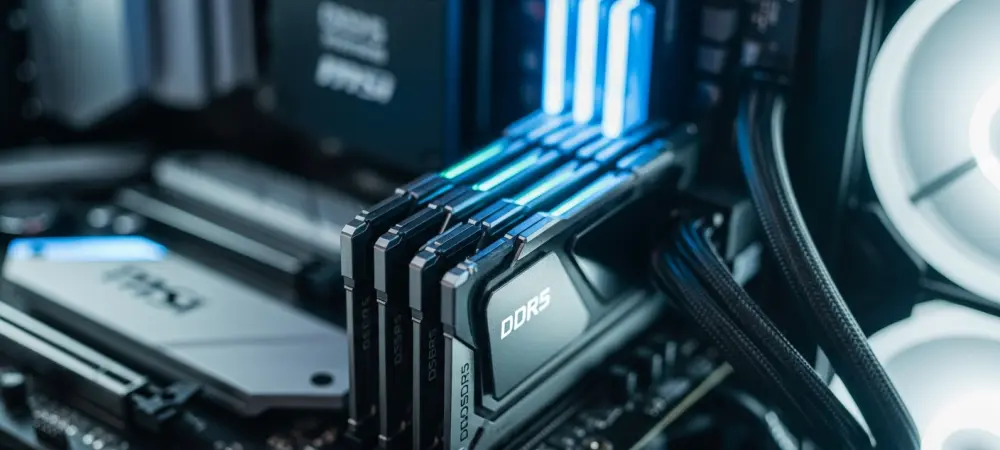
The technical race to reach the upper limits of DDR5 performance has shifted from raw silicon manufacturing toward the sophisticated firmware optimizations that govern how motherboards interact with memory modules. While the enthusiast market has long been dominated by a select few DRAM manufacturers, the sudden rise of alternative memory foundries has created a new frontier for speed and efficiency. MSI recently signaled a major shift in this hierarchy by releasing a series of BIOS updates specifically designed to push ChangXin Memory Technologies (CXMT) modules to unprecedented frequencies. This development is not merely an incremental upgrade but a significant validation of new players in the global semiconductor supply chain. By refining the electrical signaling and timing parameters within the firmware, engineers managed to bridge the gap between niche production and flagship-level performance. This move ensures that consumers seeking high-speed memory are no longer tethered to a limited pool of suppliers, fostering a more robust and competitive marketplace for 2026 and beyond.
Breaking Performance Barriers: The CXMT Evolution
Achieving a stable frequency of 8,200 MT/s requires a delicate balance of voltage regulation and signal integrity that was previously thought to be the exclusive domain of established tier-one memory bins. The technical challenge involved in optimizing CXMT DDR5 chips centered on the inherent latency profiles and voltage requirements that differ from more common industry standards. MSI addressed these variances through the implementation of specialized “Memory Try It!” profiles, which allow users to select pre-validated settings that bypass the conservative limitations of standard JEDEC specifications. This firmware-level intervention effectively compensates for minor silicon variations, enabling the CXMT modules to operate reliably at speeds that were considered experimental just a few months ago. Moreover, the integration of advanced thermal management protocols within the BIOS ensures that the increased power draw associated with such high frequencies does not lead to thermal throttling or long-term hardware degradation. This strategic optimization has effectively redefined the value proposition of budget-friendly silicon by proving that firmware maturity is just as vital as raw material quality.
Strategic Implementation: Optimizing System Stability
Users who sought to maximize their system potential found that the installation process for these BIOS updates was straightforward yet required a disciplined approach to testing. The transition to 8,200 MT/s necessitated a clear verification of cooling capacity, as the increased bandwidth placed additional strain on the integrated memory controllers of modern processors. Enthusiasts adopted a methodology of incremental frequency testing, starting with base profiles before committing to the maximum speeds provided by the new MSI firmware. This cautious rollout helped maintain system integrity while identifying the specific cooling configurations needed to sustain peak performance during heavy workloads. Beyond these gains, the success of this collaboration suggested that future hardware development would rely heavily on the synergy between manufacturers and foundries. System integrators prioritized regular firmware audits to ensure that their hardware remained compatible with the latest stability patches. This proactive stance toward software maintenance became a cornerstone of high-end computing, ensuring that the performance gains realized through these updates remained consistent across diverse application scenarios.