

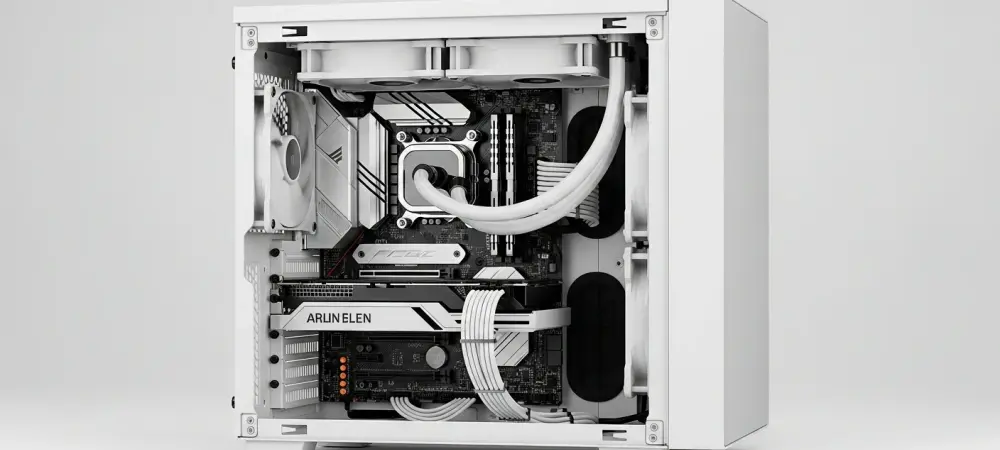
The pursuit of extreme computing power within the restrictive confines of a small form factor chassis has long been a journey defined by compromise, yet the latest hardware innovations are finally closing the gap between size and performance. Historically, enthusiasts choosing the Mini-ITX route were forced to navigate a minefield of thermal throttling, limited expansion slots, and lackluster power delivery systems that often crippled high-end silicon. The emergence of the X870 chipset on a compact platform signals a shift in this dynamic, offering a high-density foundation for those who refuse to settle for anything less than flagship-level throughput. By successfully integrating complex power phases and advanced cooling solutions into a tiny footprint, hardware manufacturers are enabling a new generation of workstation-class performance that fits comfortably within living room entertainment centers or minimalist office setups. This evolution is not merely about shrinking components; it is about re-engineering the very architecture of the motherboard to handle the massive data requirements of current AI-driven workloads and 4K gaming without the traditional bulk of a full-tower PC.
Physical Design and Build Quality
Robust Construction: Engineering for Resilience
The structural integrity of a motherboard serves as the literal and figurative foundation for any high-performance build, particularly when dealing with the high-density requirements of a compact system. To address these demands, this motherboard utilizes a sophisticated 12-layer PCB designed specifically to handle high-speed signal isolation and the physical weight of modern, heavy-duty cooling solutions. The high layer count is not just for durability; it provides the necessary pathways to prevent electrical interference between the memory traces and the primary PCIe lanes, ensuring that data moves without corruption even at peak frequencies. Visually, the board adopts a striking silver-and-white aesthetic that breaks away from the aggressive dark tones common in enthusiast gear, offering a clean palette for builders who prioritize visual harmony in their setups. This shift toward a more professional and versatile appearance allows the board to blend seamlessly into either a high-tech gaming station or a sleek, modern office environment, proving that compact hardware can be as visually impressive as it is technically capable.
Builder Features: Simplifying the Assembly Process
Designing for the Mini-ITX form factor requires a deep understanding of the physical challenges builders face when working inside cramped interiors where every millimeter of clearance matters. One of the most practical innovations included in this design is the EZ PCIe Release button, which solves the perennial problem of trying to reach a plastic retention clip hidden beneath a massive graphics card or a large air cooler. In a standard ATX case, this is a minor annoyance, but in a small form factor build, it can necessitate the disassembly of half the system just to swap a single component. By moving the release mechanism to a more accessible location, the design acknowledges the reality of the building experience and prioritizes user convenience without sacrificing the secure mounting required for heavy GPUs. Furthermore, the inclusion of integrated I/O shielding and reinforced slots reflects a commitment to long-term reliability, ensuring that the motherboard can withstand the stresses of transportation and frequent hardware updates that enthusiasts often perform throughout the lifecycle of their computers.
Advanced Storage and Expansion Solutions
Space-Saving Utility: The 5-in-1 Xpander Card
Storage capacity has traditionally been a significant bottleneck for small form factor systems, often limiting users to just one or two drives and forcing them to rely on slower external solutions for their bulk data needs. This motherboard tackles the limitation head-on by featuring a primary PCIe 5.0 x4 slot that connects directly to the CPU, unlocking the full potential of modern NVMe drives with read speeds exceeding 12,000 MB/s. To further push the boundaries of what is possible on a Mini-ITX board, MSI includes a proprietary 5-in-1 Xpander Card, which acts as a vertical daughterboard to maximize the available surface area. This clever piece of engineering provides an additional PCIe 4.0 x4 M.2 slot and two SATA 6 Gbps ports, effectively doubling the internal storage potential of the system. Additionally, the Xpander Card serves as a hub for front-panel connectivity, housing headers for high-speed USB Type-C ports. This consolidation of features into a single modular card is a masterclass in space utilization, allowing the motherboard to offer the expansion capabilities of a much larger board while maintaining its diminutive physical footprint.
Compatibility Considerations: Managing High-Density Layouts
While the introduction of the Xpander Card provides unprecedented utility, it also introduces specific challenges regarding physical clearance that builders must carefully consider before finalizing their component lists. Because the daughterboard sits in close proximity to the DDR5 memory slots, the total volume of the internal space becomes incredibly dense, leaving little room for error when installing large cooling fins or thick heat spreaders. Users who prefer to use third-party M.2 heatsinks may find that these bulky accessories interfere with the memory modules or the chassis itself, potentially leading to mechanical stress on the PCB. To avoid these issues, it is highly recommended to opt for low-profile storage drives and standard-height RAM modules that adhere closely to official specifications. This careful selection process ensures that the system maintains optimal airflow and avoids the physical interference that can occur when mixing oversized aftermarket parts in a confined area. Understanding these spatial dynamics is crucial for achieving a clean build that functions as intended, as the tight integration of the Xpander Card requires a methodical approach to component installation and cable management.
Technical Specifications and Thermal Dynamics
Processing Power: Clean Energy and High Speeds
The heart of this platform is built around the AM5 socket, providing a stable and high-performance home for the latest AMD Ryzen processors, ranging from efficient mid-range chips to high-wattage flagship models. This socket continuity ensures that users can upgrade their processing power as new Zen architectures emerge throughout 2026 and beyond, providing a level of longevity rarely seen in the tech industry. Supporting this processing power is an advanced memory subsystem that, despite being limited to two DIMM slots by the form factor, can handle up to 128 GB of DDR5 RAM. This is particularly beneficial for professionals involved in memory-heavy tasks such as high-resolution video rendering or complex data simulations that require massive datasets to be held in active memory. Perhaps even more impressive is the board’s ability to support memory overclocking speeds reaching up to DDR5-10000 MT/s. This high ceiling ensures that users can squeeze every bit of performance out of their hardware, provided they have the appropriate memory kits, making the board a prime candidate for those looking to set performance records in a small chassis.
Thermal Management: Maintaining Peak Efficiency
Delivering clean, stable power to high-performance CPUs is a daunting task on a small PCB, yet this motherboard utilizes an 8+2+1 Duet Rail Power System equipped with 110A Smart Power Stage MOSFETs to get the job done. This robust VRM setup is governed by a Renesas RAA229139 controller, which manages voltage fluctuations with extreme precision to prevent system instability during heavy workloads. However, with great power comes the inevitable challenge of heat generation, and the compact nature of the board means that thermal energy is concentrated in a very small area. During intensive benchmarking sessions, VRM temperatures can reach approximately 70°C, which, while safe, highlights the importance of active cooling within the case. Builders should prioritize high-efficiency cooling solutions, such as 240mm or 280mm All-in-One liquid coolers, to ensure that the VRM heatsinks receive enough airflow to dissipate heat effectively. By maintaining these temperatures within optimal ranges, the system can sustain its maximum boost clocks for longer periods, ensuring that performance remains consistent whether the user is engaged in a marathon gaming session or a long-render project.
Connectivity and User Interface
Cutting-Edge Standards: Networking and Audio
The rear input and output panel of this motherboard is remarkably comprehensive, offering connectivity options that rival many full-sized ATX boards currently available on the market. At the forefront of these features are two USB4 Type-C ports, which provide 40 Gbps transfer speeds, making them ideal for professionals who need to move massive files to external storage arrays or connect to multi-monitor docking stations with a single cable. Networking is equally advanced, featuring the Wi-Fi 7 standard for wireless connectivity, which offers significantly lower latency and higher throughput than previous generations. For those who prefer a wired connection, the 5G LAN port provides a substantial upgrade over the older 2.5G standard, ensuring the system is ready for the fastest fiber-optic internet plans available. Audio quality has not been overlooked either, as the board utilizes the Realtek ALC4080 codec to deliver 7.1-channel high-definition sound. This inclusion of premium networking and audio components ensures that the motherboard is a versatile powerhouse capable of serving as a high-end gaming machine, a professional workstation, or a sophisticated home theater PC.
Software Integration: Control and Customization
A premium hardware experience is only as good as the software that manages it, and the inclusion of Click BIOS X provides a user-friendly yet powerful interface for fine-tuning system settings. The BIOS is designed with a high-capacity 64 MB chip, ensuring there is plenty of room for future firmware updates and compatibility patches as new hardware is released. For users who prefer to stay within the Windows environment, the MSI Center software suite offers a modular approach to system management, allowing builders to install only the utilities they actually need, such as fan curve controls or RGB lighting synchronization. This prevents the “bloatware” feel that often plagues motherboard software and allows for a more streamlined user experience. In practical use, this software and hardware synergy results in a system that performs on par with much larger machines, proving that the miniaturization process has been refined to the point where small form factor enthusiasts no longer have to sacrifice raw throughput or ease of use. The result was a platform that successfully bridged the gap between compact convenience and uncompromising technical excellence for high-end computing. The most effective strategy for utilizing this motherboard involved a focus on balanced thermal planning and the use of low-profile high-performance components to maximize internal airflow. Users found that by pairing the board with a high-quality liquid cooling system and prioritizing the fastest available DDR5 memory, they could achieve performance metrics indistinguishable from larger desktops. The implementation of the Xpander Card became the standard for modern SFF builds, as it provided the necessary expansion for professional workloads without increasing the overall footprint of the machine. Future considerations for builders should include monitoring firmware updates to leverage the ongoing optimizations for high-frequency memory and the latest processor architectures. This motherboard proved that through thoughtful engineering and the clever use of vertical space, the limitations of the Mini-ITX form factor could be successfully overcome, providing a clear path forward for the next generation of compact, high-powered personal computers. In the end, the system established a new benchmark for what enthusiasts expected from small-scale hardware in a demanding market.