

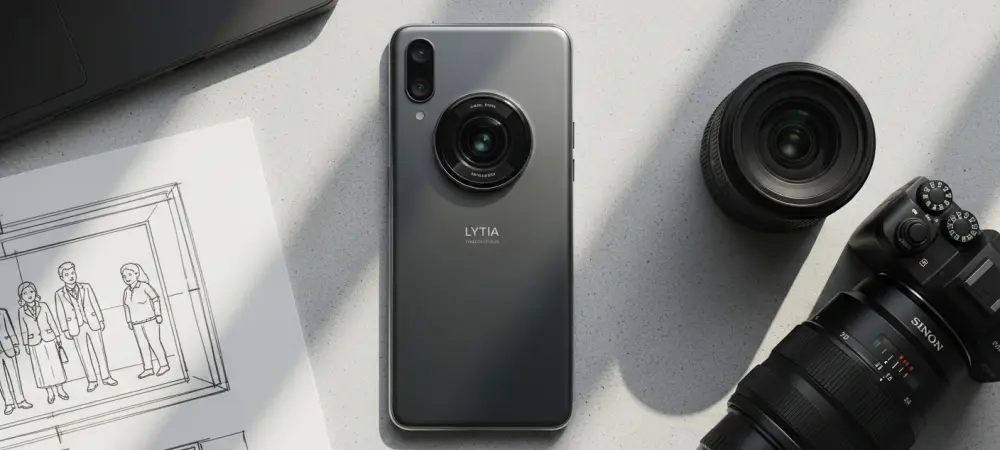
The quest for a smartphone that seamlessly bridges the gap between delicate flagship aesthetics and the rugged resilience of industrial equipment has reached a pivotal moment with this latest release. This device represents a significant advancement in the premium mid-range sector, blending a lightweight frame with extreme durability to satisfy modern user demands.
Evolution: The Motorola Edge Series and the 2026 Market Context
Historically, the Edge series prioritized curved aesthetics and high refresh rates, but the current market demands a more pragmatic approach. Today, consumers seek a balance of portability and toughness that avoids the bulk of traditional rugged phones. This shift reflects a landscape where high-end performance is no longer sacrificed for environmental resistance.
Core Hardware: Technical Innovations
The internal architecture demonstrates a sophisticated mastery of compact engineering. Designers prioritized a chassis that maintains structural integrity without adding unnecessary mass.
Compact Engineering: High-Durability Design
Weighing only 160 grams, the device is impressively light, yet it boasts military-grade MIL-STD-810H certification. This allows it to withstand drops and shocks that would compromise standard glass-back phones. The dual IP68 and IP69 ratings ensure the hardware remains functional even after exposure to high-pressure water jets or deep submersion.
Advanced Display Technology: Visual Performance
The 6.3-inch AMOLED display pushes the limits of mobile visibility. With a 1.5K resolution and 120Hz refresh rate, it offers fluid motion and crisp detail. Most notably, the 5,200 nits peak brightness ensures that the screen remains perfectly legible even under the direct glare of high-altitude sunlight.
Next-Generation Imaging: The Sony Lytia System
Photography relies on the Sony Lytia 710 sensor, which utilizes a stacked architecture to maximize light capture. The triple rear camera system provides versatile focal lengths, while the 50-megapixel front camera ensures consistent high-resolution output across all lenses, making visual content creation professional and efficient.
Processing Power: Software Integration
The MediaTek Dimensity 7450 chipset provides a steady balance of speed and thermal efficiency. Paired with LPDDR5x RAM and Android 16, the device handles multitasking with ease. The Hello UI skin adds subtle software optimizations that enhance the native features of the latest operating system, ensuring a smooth user experience.
Battery Longevity: TurboPower Charging
A 5,000mAh battery provides enough energy for nearly 50 hours of operation on a single charge. When power is low, the 68W wired TurboPower system restores levels rapidly, while the 15W wireless option offers convenience for stationary charging. This efficiency highlights a commitment to long-term reliability for active users.
Emerging Trends: The Mobile Industry
The industry is currently shifting toward ultra-bright displays and the integration of rugged durability into sleek, pocketable form factors. Manufacturers are moving away from fragile luxury toward devices that survive the rigors of active lifestyles. Early adoption of the newest operating systems also signals a shift toward longer software support cycles in the mid-range category.
Real-World Applications: Industry Impact
Outdoor professionals and photography enthusiasts benefit immensely from the combination of high-resolution sensors and environmental protection. For media consumers, the ultra-bright screen makes streaming content enjoyable in any setting. This versatility allows the hardware to serve as a reliable tool for both high-stakes content creation and everyday communication in extreme conditions.
Technical Hurdles: Adoption Challenges
The device faces intense competition in the $600 price bracket from established rivals. The 128GB storage limit may also challenge power users who record significant amounts of high-resolution video. However, software optimizations and cloud integration strategies are being deployed to mitigate these potential physical storage limitations and improve data access.
Future Prospects: Technological Trajectory
The trajectory of the series points toward even deeper integration of AI-driven photography and faster charging protocols. Future iterations will likely refine the balance between battery density and chassis weight. These advancements will continue to challenge the traditional distinction between consumer-grade electronics and professional-grade durable tools.
Final Assessment: The Motorola Edge 2026
The Motorola Edge 2026 successfully demonstrated that durability and high-end specifications did not have to be mutually exclusive. It provided a compelling alternative to traditional flagships by offering military-grade protection in a remarkably slim design. By prioritizing user needs like screen visibility and battery longevity, it set a high standard for future mobile innovation.