

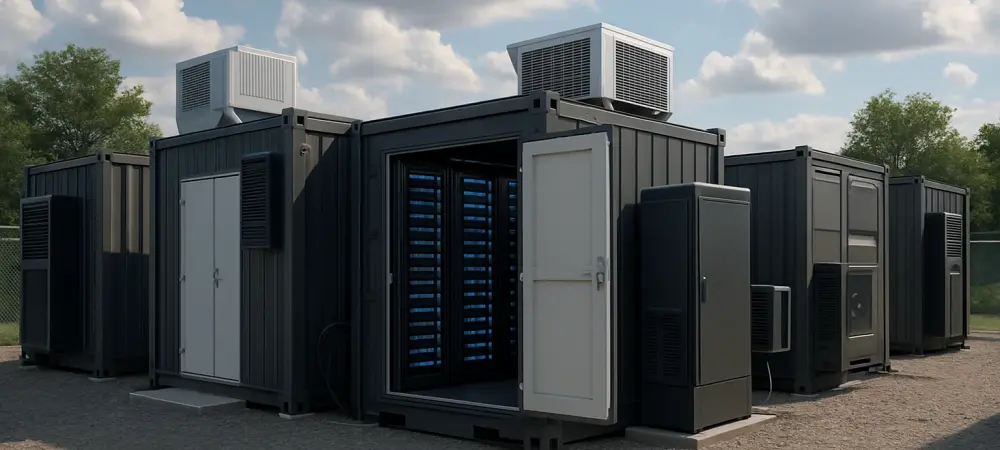
Unveiling the AI Infrastructure Challenge
In today’s rapidly advancing technological landscape, the artificial intelligence (AI) sector faces an unprecedented challenge: managing the colossal data demands with infrastructure that is both efficient and sustainable. As AI applications proliferate across industries, from healthcare to finance, the strain on traditional cloud-based data centers has become evident, with escalating costs and latency issues hampering real-time performance. This market analysis delves into the burgeoning role of modular data centers as edge solutions, examining how they address these critical pain points while aligning with environmental and regulatory imperatives. By exploring current trends, data-driven insights, and future projections, this examination aims to illuminate why businesses are pivoting toward localized infrastructure. The purpose is to equip stakeholders with a clear understanding of this transformative shift and its implications for scalable AI growth.
Market Dynamics and Emerging Trends in AI Infrastructure
Cloud Constraints Driving Edge Adoption
The AI infrastructure market is undergoing a seismic shift as the limitations of centralized cloud systems come under scrutiny. Industry data indicates that AI workloads, which often involve intensive data movement for training and inference, are incurring significant egress costs, sometimes accounting for up to 30% of total cloud expenditure for large enterprises. Latency, a critical factor for real-time AI applications such as autonomous vehicles or telemedicine, remains unpredictable in remote cloud setups, often exceeding acceptable thresholds by milliseconds that impact user experience. Modular data centers, positioned at the edge closer to end users, are emerging as a countermeasure, reducing data travel time and ensuring consistent performance. Market reports suggest that the edge computing sector, driven by such solutions, is projected to grow at a compound annual growth rate (CAGR) of 25% from 2025 to 2030, reflecting a robust demand for localized infrastructure.
Beyond performance, security vulnerabilities and frequent outages in cloud environments are pushing organizations to seek alternatives. Regulatory pressures, particularly in regions with strict data protection laws like the European Union, further complicate reliance on third-party facilities, as compliance with local storage mandates becomes non-negotiable. Modular data centers offer a compelling response by enabling on-premise control, mitigating risks associated with external data handling. While initial setup costs for these facilities can be substantial, often ranging between $500,000 and $2 million depending on scale, the long-term savings on operational expenses and enhanced data sovereignty are driving adoption across sectors. This trend underscores a broader market movement toward infrastructure that prioritizes stability and autonomy over traditional scalability models.
Sustainability as a Market Differentiator
Sustainability has emerged as a pivotal factor in the AI infrastructure market, with environmental concerns reshaping purchasing decisions. Traditional hyperscale data centers are notorious for their energy consumption, often requiring extensive cooling systems that contribute to a significant carbon footprint—estimates suggest that data centers globally account for nearly 2% of total greenhouse gas emissions. In contrast, modular data centers are being designed with eco-efficiency at their core, utilizing low-power hardware and innovative construction techniques that minimize environmental impact. For instance, some providers have adopted materials and designs that reduce embodied carbon by up to 40% compared to conventional facilities, appealing to organizations under pressure to meet net-zero targets.
Market analysis reveals that green technology in data infrastructure is not just a niche but a growing expectation, with 60% of surveyed IT leaders in a recent industry study prioritizing sustainability in vendor selection. The ability of modular solutions to operate with reduced energy needs—sometimes consuming as little as 300 watts for a petabyte of storage—positions them as frontrunners in this space. However, scalability remains a challenge, as expanding eco-friendly designs without compromising efficiency requires ongoing innovation. This dynamic is creating a competitive landscape where vendors differentiating on sustainability metrics are likely to capture significant market share over the next five years.
Data Sovereignty Fueling Regional Demand
A critical driver in the modular data center market is the rising importance of data sovereignty, particularly for industries handling sensitive information. Regulatory frameworks across various regions mandate that personal and proprietary data remain within jurisdictional boundaries, a requirement often at odds with centralized cloud architectures. In sectors like healthcare and finance, where breaches can result in fines exceeding millions of dollars, the ability to maintain local control over data processing and storage is paramount. Modular data centers address this by facilitating on-premise setups, ensuring compliance while safeguarding intellectual property from external vulnerabilities. Geographic analysis highlights that regions with stringent data protection policies, such as Europe and parts of Asia-Pacific, are witnessing accelerated adoption of modular solutions, with market penetration expected to rise by 15% annually through 2027. This demand is reshaping vendor strategies, as providers tailor offerings to meet localized needs, often customizing infrastructure for specific regulatory environments. Misconceptions about cloud security being inherently superior are being dispelled, with market insights showing that localized systems offer better oversight and risk management. This shift is creating opportunities for businesses to align infrastructure investments with both operational goals and legal obligations, driving a nuanced but significant market expansion.
Innovations and Future Projections
Looking to the horizon, the modular data center market is poised for transformative growth fueled by technological advancements and evolving economic factors. Rapid deployment capabilities stand out as a key innovation, with prefabricated units becoming operational in as little as six months, a stark contrast to the multi-year timelines of traditional facilities. This speed addresses urgent capacity needs in fast-growing AI sectors, positioning modular solutions as agile responses to market demands. Projections indicate that by 2028, nearly 30% of new data center deployments will leverage such rapid-build models, driven by increasing data volumes estimated to grow at 30% per year.
Storage technology is another area of progress, with advancements like higher-capacity drives and ultra-efficient file systems enabling cost-effective scaling within confined modular spaces. Economic pressures, including rising energy costs, are expected to further accelerate adoption, as businesses seek infrastructure that minimizes operational overhead. Regulatory forecasts suggest tighter compliance laws will continue to push demand for sovereign solutions, particularly in emerging markets. Speculatively, hybrid models balancing cloud training with on-premise inference are likely to dominate, offering flexibility while maintaining control. As AI permeates diverse sectors, modular data centers could integrate into unconventional locales, from urban hubs to remote regions, democratizing access to sustainable infrastructure and reshaping market accessibility.
Reflecting on Market Insights and Strategic Pathways
Looking back, this analysis of modular data centers as sustainable AI edge solutions reveals a market at a pivotal juncture, transitioning from cloud dependency to localized, efficient infrastructure. The examination highlighted how escalating cloud costs, latency challenges, and regulatory demands drive a surge in edge computing adoption, with projections pointing to robust growth over the coming years. Sustainability emerged as a defining competitive edge, while data sovereignty shaped regional demand patterns, underscoring the nuanced needs of global markets. As a strategic next step, businesses are encouraged to assess workload-specific requirements and geographic constraints to tailor modular deployments effectively. Partnering with providers offering integrated, low-power solutions proves essential for simplifying implementation and ensuring scalability. Additionally, adopting hybrid strategies—leveraging cloud resources for intensive training while maintaining on-premise control for inference—offers a balanced approach to resource management. Moving forward, organizations need to prioritize investments in adaptable infrastructure to stay ahead of regulatory and environmental pressures, positioning themselves to harness AI’s potential responsibly and efficiently in an evolving landscape.