

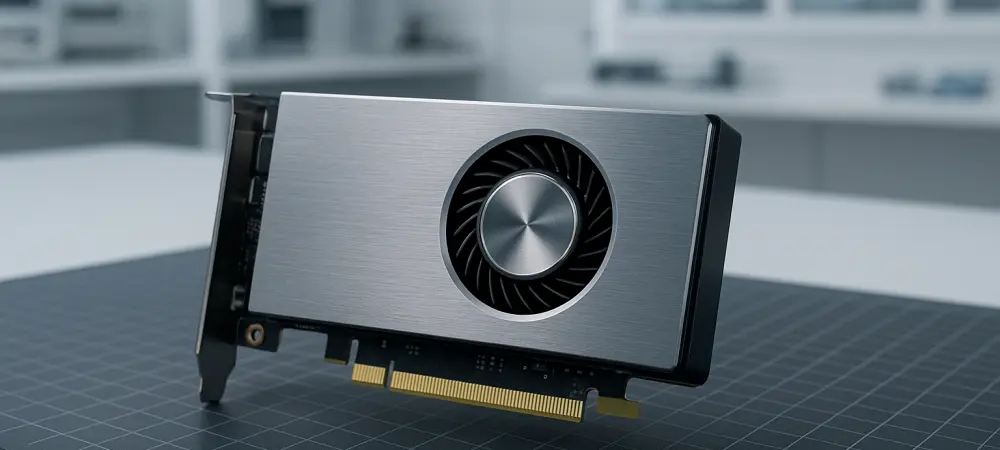
Initial testing of the single-slot RTX 3060 reveals that forcing a 170W card to run on 75W leads to a massive collapse in clock speeds and overall stability. This particular project features a radical redesign where the standard external power connectors have been entirely removed, leaving the card to draw its necessary current exclusively from the motherboard’s PCIe x16 slot. While the prospect of a cableless high-performance card remains a highly sought-after goal for enthusiasts specializing in Small Form Factor builds, the practical implementation of such a power-constrained design presents significant engineering challenges. This modification essentially attempts to shoehorn a mid-range silicon die into an electrical and thermal envelope that was never intended to support its architecture.
The hardware enthusiast community has long experimented with pushing the boundaries of component density, yet this experiment highlights the rigid physical limitations of current-generation silicon. By eliminating the six-pin or eight-pin power delivery system, the card is forced into a state of permanent energy starvation. Consequently, the resulting hardware operates far below its original specifications, raising questions about the viability of such extreme modifications in the pursuit of compact computing solutions without considering the fundamental laws of thermodynamics and electrical efficiency. As internal components are compressed into a smaller volume, the margin for error disappears, leading to the erratic behavior and performance degradation observed in the latest series of bench testing.
Engineering Challenges: Power and Heat Management
Hardware Interventions: The Reverse Shunt Modification
To achieve a functional state within the strict 75W limitation, the creator utilized a technique known as a reverse shunt modification, which involves replacing specific resistors on the circuit board. In a standard overclocking scenario, shunt mods are employed to trick the GPU into believing it is drawing less power than it actually is, thereby bypassing safety limits for higher performance. This specific application, however, does the exact opposite by forcing the GA106 silicon to operate under severe current restriction, effectively starving the chip of the energy required for high-frequency operation. This hardware-level intervention ensures that the device does not exceed the physical power delivery capacity of the PCIe slot, which would otherwise risk damaging the motherboard components.
The necessity of this mechanical starvation highlights a significant hurdle in modern GPU engineering where software limits are often insufficient to prevent power spikes. By physically altering the resistance values, the modder created a hard ceiling that the GPU cannot cross, regardless of the workload complexity. An interesting side effect observed during testing was the inaccuracy of software monitoring tools, which reported power draw figures that did not align with the actual physical constraints of the modified hardware. This discrepancy demonstrates that when low-level hardware sensors are manipulated, the entire telemetry system of the graphics card becomes unreliable, making it difficult for the operating system to manage resources efficiently.
Physical Design: Cooling and Form Factor Flaws
The physical footprint of this card is remarkably small, comparable in dimensions to a modern smartphone, yet this compactness introduces severe thermal bottlenecks that cripple the device under load. A close inspection of the internal components reveals a cooling solution that is significantly underpowered for the task, consisting of a rudimentary metal shroud and a tiny blower-style fan. The assembly lacks a traditional fin stack and omits a backplate, while critical areas like the GDDR6 memory modules are left without proper thermal pads to facilitate heat transfer. Without the necessary surface area to dissipate thermal energy, the metal components quickly become saturated, leading to a rapid rise in internal temperatures. During high-intensity benchmark sessions, the GPU hotspot temperatures quickly surged beyond 90 degrees Celsius, triggering aggressive thermal throttling mechanisms built into the silicon. This heat accumulation forced the card to drop its operating frequencies even lower than the power limit alone would have necessitated, illustrating that physical space for heat dissipation is just as critical as electrical headroom in GPU design. The blower fan, despite spinning at high speeds, proved incapable of moving enough air to cool the dense internal layout effectively. This thermal failure underscores the reality that downsizing a card requires more than just cutting the board size; it necessitates a complete re-engineering of the cooling ecosystem to maintain hardware longevity.
Performance Outcomes: Real-World Testing Results
Benchmarking DatThe Efficiency Collapse
Performance metrics gathered from synthetic benchmarks highlight a dramatic reduction in capability when compared to standard retail versions of the same GPU model. While a typical desktop RTX 3060 is designed to maintain boost clocks in the range of 1,770 MHz, this power-starved variant struggled to maintain even 900 MHz under sustained workloads. This deficit in clock frequency translated directly into a 3DMark Time Spy score of 4,821, a figure that is roughly half of what a standard-spec card produces in identical testing environments. Such a significant drop in performance underscores the non-linear relationship between wattage and efficiency, as the architecture becomes increasingly unstable when pushed below its optimal operating voltage.
The data suggests that once a certain power threshold is crossed, the architectural advantages of the Ampere generation are almost entirely negated. For users expecting the performance traditionally associated with this tier of hardware, the resulting output proved to be a major disappointment, rendering the underlying silicon’s potential largely inaccessible. Furthermore, the instability caused by the low power limit led to frequent micro-stuttering and inconsistent frame times during actual gaming applications. This collapse in performance efficiency demonstrates that high-end silicon cannot be simplified into a low-power device without losing the very characteristics that make it desirable for modern computing tasks.
Comparative Analysis: Legacy and Optimized Hardware
When viewed through the lens of market alternatives, this custom experiment fails to offer a compelling value proposition compared to existing low-profile hardware solutions. The modified card found itself trailing behind legacy mid-range components such as the GeForce GTX 1060 and the Radeon RX 580, both of which are considered aged technology by current standards. Despite the newer architecture, the lack of adequate power prevented the card from leveraging its superior transistor count or advanced feature set. This outcome illustrates that older, properly powered hardware can often outperform newer, restricted designs, making the modification more of a novelty than a practical tool.
Furthermore, purpose-built devices like the RTX 3050 6GB provide a superior user experience because they utilize silicon that is specifically binned and optimized for a 75W power envelope. Unlike the starved GA106 chip found in this modification, these native low-power cards can maintain higher consistent clock speeds and operate with significantly lower noise and heat levels. This suggests that simply downsizing a powerful chip is far less effective than using hardware designed from the ground up for energy efficiency. The native designs avoid the instability and extreme thermal issues seen in this custom modification, providing a much more reliable platform for users who require compact graphics power without the risks of manual board alteration.
Future Considerations: The Limits of Compact GPU Mods
The project provided a fascinating look into the physical boundaries of graphics card engineering and the inherent risks of forcing hardware beyond its design specifications. It was demonstrated that while achieving a single-slot, cableless form factor is technically possible, the trade-offs in performance and thermal stability were too severe for practical daily use. This experiment highlighted that power delivery remains a non-negotiable bottleneck in high-performance computing, especially as silicon reaches the limits of traditional air cooling. Moving forward, enthusiasts were encouraged to prioritize balanced thermal designs over pure aesthetics to ensure that their compact machines remain both functional and reliable over long-term operation.
Looking toward the progress from 2026 to 2028, manufacturers could take note of the high demand for single-slot solutions, potentially developing more refined versions of entry-level silicon that do not require external power. Builders who participated in the discussion of this modification suggested that future efforts should focus on undervolting and software optimization rather than invasive hardware shunt mods. Ultimately, the results proved that high-performance chips require a symbiotic relationship with their power and cooling systems to function as intended. For the Small Form Factor community, the best path forward involves supporting hardware that is natively efficient, ensuring that compact builds do not have to sacrifice the stability of the entire system for a smaller footprint.