

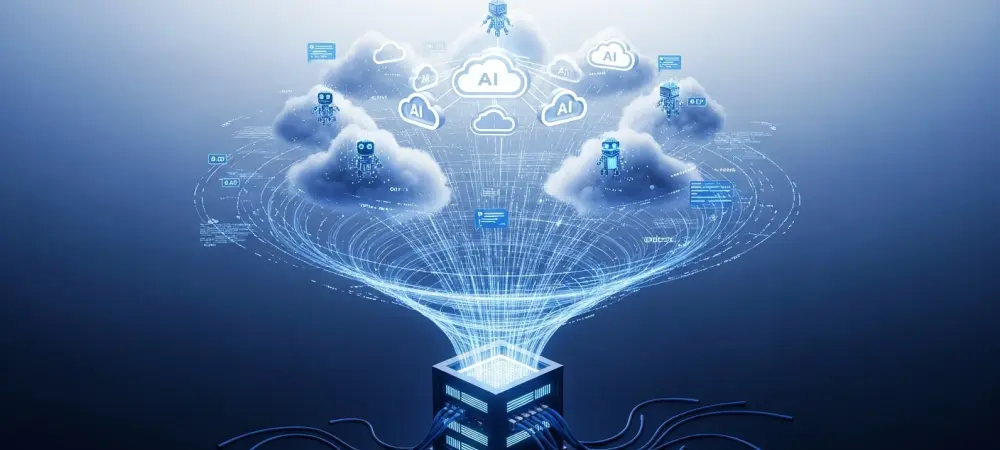
Modern software engineering has reached a critical inflection point where the traditional boundary between a developer’s local workstation and the vast capabilities of remote processing has finally begun to dissolve into a seamless execution layer. For years, the promise of artificial intelligence in the developer environment remained confined to a subservient role, acting as a predictive text engine that required constant attention. The arrival of Mistral Vibe marks a definitive change in this trajectory, signaling a departure from the days when engineers were forced to watch every line of generated code appear in real time. By moving the operational logic to the cloud, the industry is witnessing a fundamental shift in how software is conceptualized and delivered.
Moving Beyond the “Babysitting” Era of AI Development
For the past year, developers using AI coding assistants have found themselves trapped in a cycle of constant supervision, hovering over terminal outputs to approve every minor step. This “tethered” approach treats AI as a sophisticated autocomplete rather than a true collaborator. The manual overhead of managing these local interactions often negated the time-saving benefits they were supposed to provide. Instead of focusing on architecture or logic, engineers spent their mental energy monitoring the reliability of an assistant that could not be trusted to work alone. Mistral AI is challenging this dynamic by decoupling the agent from the local machine and moving the heavy lifting to the cloud. This evolution transforms the AI from a simple tool into an independent worker capable of managing complex, multi-step operations without a human hand on the steering wheel. By shifting the human role from an active process monitor to a high-level final reviewer, developers can finally step away from the keyboard while complex, asynchronous tasks are executed in parallel. This newfound freedom allows for deep focus on high-level design while the agent handles the granular implementation details in a remote environment.
The Strategic Transition from Local Hardware to Cloud-Native Autonomy
The shift to cloud-based execution addresses a growing bottleneck in the software engineering lifecycle: the limitation of local compute and the need for constant human presence. While local agents provided a sense of security, they required developers to sacrifice their own machine’s resources and focus. In an era where engineering teams are expected to ship faster with fewer resources, the move toward cloud autonomy represents a critical trend in operational efficiency. It enables a workforce to multiply its output by delegating the most resource-intensive and time-consuming tasks to scalable remote infrastructure.
This evolution allows AI to function as an independent execution layer, handling the un-glamorous maintenance work that typically slows down innovation cycles. Legacy code updates, extensive refactoring, and complex environment configurations are no longer constrained by the memory or processing power of a single laptop. Instead, these tasks are offloaded to a purpose-built cloud environment where they can run to completion regardless of whether the developer is online. This transition signals a broader industry movement where the value of a developer is increasingly found in their ability to orchestrate autonomous systems rather than in their individual typing speed.
Inside the Unified Engine of Mistral Medium 3.5 and Vibe
Mistral Medium 3.5 serves as the core of this transformation, consolidating reasoning, coding, and agentic functions into a single dense model. A standout feature is the Reasoning Effort Control, which allows users to toggle between rapid-fire responses and deep architectural analysis depending on the task’s complexity. This flexibility ensures that the model can be as nimble or as rigorous as the situation demands, providing a level of precision previously unseen in generalized models. On the SWE-Bench Verified benchmark—a rigorous test of resolving real-world GitHub issues—the model achieved a 77.6% success rate, outperforming larger competitors like Qwen3.5 397B.
This technical prowess is paired with the “teleportation” capability of the Vibe platform, which allows a developer to start a task in a local terminal and seamlessly transfer the entire state—history and pending approvals included—to the cloud for completion. This mechanism ensures that there is no context loss when shifting environments, maintaining the integrity of the development session across different hardware. Whether an engineer is moving from a desk to a commute or simply handing off a long-running process, the transition remains fluid. The ability to maintain a persistent state in the cloud effectively creates a virtual workstation that is always active and ready to execute.
Governance and Security in the Age of Remote Execution
While cloud autonomy offers speed, it introduces significant questions regarding data locality and enterprise security. Industry experts, including Mitch Ashley of The Futurum Group, note that moving agent execution to the cloud shifts the burden of governance from the developer’s laptop to the provider’s infrastructure. This change requires a fundamental rethinking of how code privacy and intellectual property are protected during the development phase. Organizations can no longer rely solely on endpoint security; they must now evaluate the robustness of the remote environments where their code is being analyzed and modified. Mistral mitigates these concerns by running each coding session in an isolated sandbox, ensuring that broad edits or dependency installations do not compromise the host environment. This containerized approach provides a layer of defense that prevents cross-contamination between different development projects or client data. However, for organizations in highly regulated sectors like finance or healthcare, this shift necessitated a new “procurement-grade” evaluation of how and where code was processed during the development cycle. Ensuring that the cloud provider adheres to strict compliance standards became as important as the efficiency of the AI itself.
Frameworks for Integrating Autonomous Agents into Existing Workflows
To leverage Mistral Vibe effectively, engineering teams should focus on delegating high-volume, repeatable tasks that traditionally bog down sprints. The Mistral Vibe CLI and “Le Chat” interface were designed to integrate directly with standard tools like GitHub for pull requests and Linear or Jira for issue tracking. Teams applied a specific framework for delegation: starting by offloading unit test generation and dependency upgrades, then moving to refactoring entire code modules. By utilizing native function calling and JSON output formatting, developers automated the investigation of Continuous Integration failures, allowing the agent to diagnose bugs and submit fixes to GitHub automatically. The transition toward cloud-native autonomy redefined the standard development lifecycle by prioritizing results over manual oversight. Notifications were sent via Slack or Microsoft Teams for final human sign-off, ensuring that engineers remained in control of the final deployment without being burdened by the intermediate steps. As these autonomous frameworks became more sophisticated, they allowed organizations to maintain a higher velocity of innovation while reducing the technical debt associated with manual code maintenance. The successful integration of these agents ultimately proved that the future of software development was not about doing more work, but about managing more intelligence. This era of development highlighted the necessity of adopting specialized AI governance to balance the massive gains in speed with the critical requirements of security and data integrity.