

The rigid architecture of legacy enterprise resource planning systems has increasingly become a bottleneck for organizations striving to maintain agility in a rapidly evolving digital marketplace. Rather than embarking on the perilous journey of a full-scale platform replacement, forward-thinking enterprises are now embracing a modular strategy known as ERP extension. This methodology leverages the Microsoft Power Platform to bridge the gap between antiquated back-end databases and the modern requirement for real-time, mobile-first accessibility. By situating a layer of low-code tools atop existing infrastructure, businesses can effectively bypass the traditional limitations of monolithic software without the exorbitant costs associated with a complete overhaul. This shift addresses the pervasive issue of data silos, where critical information remains trapped within disconnected modules, preventing a unified view of corporate operations. As leaders seek to reduce technical debt, the focus has pivoted toward enhancing what already exists, ensuring that legacy investments continue to provide value while meeting the sophisticated demands of the current workforce. This specific approach fosters an environment where updates are measured in weeks, maintaining a competitive advantage in a world where speed is the primary currency.
The Strategic Choice: Extension Over Total Replacement
Deciding whether to discard a deeply embedded ERP system or revitalize it with modern layers is one of the most critical decisions a chief information officer must face today. For large-scale organizations, the complete replacement of a core system often involves multi-million dollar investments and implementation timelines that stretch well beyond eighteen months before delivering any tangible business value. This “rip-and-replace” strategy frequently introduces significant operational risks, including data migration errors and extensive downtime that can paralyze essential functions. Consequently, the popularity of total system overhauls has declined in favor of more surgical, iterative improvements that protect the foundational stability of the business. By choosing to extend the existing system, companies maintain their historical data integrity and established workflows while slowly introducing more efficient digital interfaces. This preserves capital for other innovation projects, ensuring that the technology budget is spent on high-impact user experiences rather than redundant back-end architecture. The focus remains on stabilizing the core while aggressively modernizing the periphery to satisfy the growing expectations of a digitally native workforce.
Modernization through extension specifically targets the user experience friction that typically plagues older enterprise software versions. Employees frequently encounter clunky, non-intuitive interfaces that require hours of specialized training, leading them to develop inefficient manual workarounds in Excel or third-party tools to bypass system limitations. These “shadow IT” practices create massive security risks and fragmented data that leadership cannot easily track or verify. By applying the Microsoft Power Platform as a front-end layer, organizations can provide their staff with streamlined, task-oriented applications that look and feel like modern consumer software. These tools require minimal training and can be customized to match the specific needs of different roles within the company, from the warehouse floor to the executive boardroom. This targeted approach dramatically increases software adoption rates and ensures that data is entered accurately at the point of origin. Ultimately, the goal is to empower the workforce by removing the technical barriers that hinder productivity, allowing employees to focus on their primary roles rather than struggling with the tools meant to support them.
Connective Intelligence: Core Components of the Platform
The Microsoft Power Platform functions as a sophisticated connective tissue that integrates disparate business processes into a cohesive digital ecosystem. Power Apps serves as the primary tool for building customized user interfaces, allowing non-technical staff and professional developers alike to create applications that interact directly with the legacy ERP database. This capability enables the creation of mobile forms that workers can use in the field, ensuring that data flows instantly back to the central system without the need for manual transcription. Complementing this is Power Automate, which handles the invisible logic behind the scenes by orchestrating complex workflows and repetitive tasks across various software programs. By automating approval chains and data synchronization, the platform effectively eliminates the human error that often occurs during high-volume manual entry. This combination of intuitive front-end tools and robust back-end automation creates a seamless bridge between modern business needs and legacy technical constraints. The result is a more responsive organizational structure that can adapt its digital processes in real-time, responding to internal shifts or external market pressures with unprecedented speed and precision.
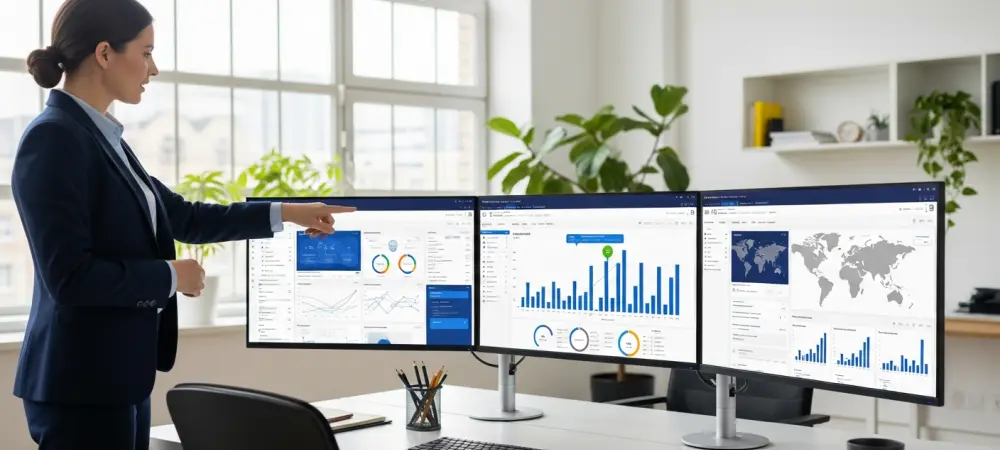
Beyond just facilitating data entry and movement, the platform provides essential operational intelligence through the integration of Power BI. In a traditional ERP environment, management often relies on static, retrospective reports that are frequently outdated by the time they are reviewed. This delay makes it nearly impossible to make proactive decisions based on current conditions in the supply chain or the sales pipeline. Power BI transforms this static data into dynamic, interactive dashboards that provide a real-time pulse of the organization. Leaders can drill down into specific metrics to identify the root causes of inefficiencies or identify emerging trends before they become critical issues. By centralizing data from both the legacy system and new low-code applications, the platform creates a “single version of the truth” that aligns every department under a unified set of objectives. This transparency fosters a culture of accountability and data-driven decision-making, where every team member has access to the information they need to perform effectively. The ability to visualize complex data sets in a clear and actionable format is the final piece of the puzzle, turning a stagnant legacy database into a powerful engine for strategic growth and operational excellence.
Operational Impact: Transforming Departments With Practical Tools
The practical application of these tools is perhaps most visible within finance and field operations, where manual processes have historically caused significant delays. In the financial sector, AI-driven automation within the Power Platform can now extract data from incoming invoices, verify the information against purchase orders, and route the documents for approval automatically. This reduces the invoice processing cycle from several days to just a few minutes, significantly improving cash flow management and vendor relations. Similarly, warehouse and field service teams have moved away from paper-based tracking in favor of mobile-optimized inventory apps. These applications allow workers to scan items and update stock levels in real-time, providing immediate visibility to the procurement team. This synchronization prevents the stockouts or overstock situations that frequently occur when central offices rely on delayed physical counts. By digitizing these frontline activities, organizations gain a level of granular control over their physical assets that was previously unattainable with legacy ERP systems alone. The integration of high-level automation and localized mobile access ensures that every link in the supply chain is operating with the same accurate and timely information.
Sales and human resources departments also experience a profound transformation when leveraging low-code extensions to supplement their core enterprise systems. Sales professionals often deal with fragmented customer data across multiple platforms, which can lead to errors in quoting and fulfillment that damage client relationships. By utilizing guided applications built on the Power Platform, sales teams can ensure that every lead is qualified and every order is configured correctly from the start, reducing the administrative burden on the back office. In the realm of human resources, the platform streamlines the complex onboarding process by consolidating diverse tasks—such as IT provisioning, payroll setup, and training enrollments—into a single, automated workflow. This ensures that new hires are productive from their first day and that all compliance requirements are met without the need for constant oversight. These departmental improvements demonstrate that the value of ERP modernization is not just in the technology itself, but in how it enables specific teams to work more effectively. When every department has tools tailored to its unique challenges, the overall efficiency of the enterprise increases exponentially, creating a more cohesive and agile business environment.
Strategic Execution: A Framework for Implementation Success
Successfully modernizing a legacy environment requires a disciplined strategic framework rather than a haphazard deployment of new technology features. Organizations must begin by identifying the specific operational bottlenecks that have the highest impact on their bottom line or customer satisfaction. This targeted approach ensures that early projects provide a clear return on investment and build momentum for broader digital transformation efforts. It is equally important to establish a center of excellence that governs the use of low-code tools, ensuring that all new applications adhere to corporate security standards and data governance policies. Partnering with technical specialists who understand both the legacy ERP architecture and the capabilities of the Microsoft Power Platform can help bridge the gap between old and new systems. These experts ensure that the integration is robust and that the new digital layers do not compromise the performance of the core database. By focusing on solve-first initiatives and maintaining strict architectural standards, companies can create a sustainable modernization roadmap that delivers continuous value. This methodical progression allows the business to evolve at a pace that matches its internal capacity for change while maintaining complete operational continuity.
Executives recognized that the path to a truly modern enterprise did not require the destruction of existing infrastructure, but rather its thoughtful evolution. They identified that by implementing a layered strategy, the organization successfully avoided the pitfalls of traditional software migration and achieved faster time-to-market for critical business apps. The decision to empower citizen developers while maintaining centralized IT oversight ensured that innovation occurred across all levels of the hierarchy. Moving forward, the most successful leaders established a continuous feedback loop where frontline employees regularly identified new areas for automation and optimization. They prioritized the creation of a unified data strategy that treated information as a shared corporate asset rather than a departmental secret. By fostering a culture that valued iterative improvement over stagnant stability, these organizations prepared themselves for any future market volatility. The transition to a modular ERP environment provided the necessary flexibility to pivot operations quickly when external conditions changed. Ultimately, the focus shifted toward building a resilient digital foundation that supported long-term growth and sustained technical relevance in a competitive global economy.