

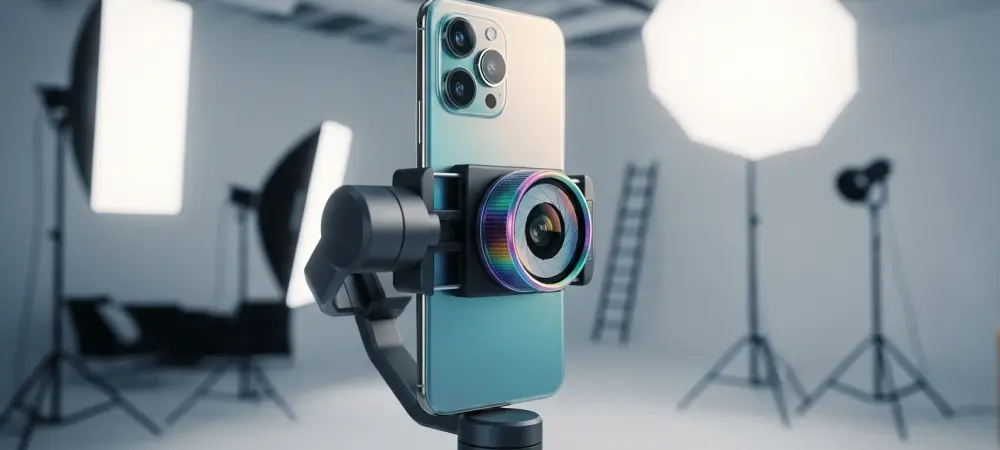
The 2026 flagship smartphone market represents a significant advancement in the mobile technology sector, where the convergence of design and ultra-premium hardware has reached an unprecedented pinnacle of engineering. These devices are no longer merely communication tools; they have transitioned into primary computing hubs that bridge the gap between portable gadgets and high-performance workstations. The maturation of the industry has led to a point where “no-compromise” is the baseline expectation, forcing manufacturers to innovate through the refinement of user experience rather than simple spec-sheet additions. As users demand more from their handheld tech, the focus has shifted toward how these devices integrate into a broader technological ecosystem, serving as the neural center for both personal and professional lives.
Evolution of the 2026 Flagship Landscape
The current state of high-end mobile devices is defined by a remarkable convergence in design and a total maturation of ultra-premium hardware. In the current year, the distinction between a flagship and a “pro” model has largely evaporated, as the industry standard now demands a holistic approach to engineering. Manufacturers like Apple and Samsung have reached a peak where physical durability, aesthetic elegance, and internal performance exist in a state of near-perfect equilibrium. This evolution suggests that we have moved past the era of experimental features and into an era of deep refinement, where the subtle curves of an aluminum unibody or the tactile response of a dedicated camera button are as important as the processor speed.
At the core of this landscape is the principle of the “no-compromise” user experience, a philosophy that dictates that a device must excel in every possible metric simultaneously. For the modern professional, these smartphones have become indispensable computing hubs that effectively replace the traditional laptop for a significant portion of daily tasks. Whether it is managing high-frequency trading, editing 4K video on a commute, or coordinating global logistics via AI-driven interfaces, the 2026 flagship is designed to handle sustained, heavy workloads without the thermal or battery penalties that plagued earlier generations. This shift reflects a broader technological trend where the power once reserved for desktop towers is now condensed into a 6.9-inch slab of glass and metal.
Critical Hardware and Performance Components
High-Fidelity Display and Visual Engineering
The 6.9-inch OLED panels that define the 2026 standard represent the current zenith of mobile visual technology. Apple’s Super Retina XDR and Samsung’s Dynamic AMOLED 2X have pushed the boundaries of what is possible regarding color accuracy and peak luminance. These screens are not just larger; they are smarter, employing LTPO (Low-Temperature Polycrystalline Oxide) backplanes that allow for a truly variable refresh rate from 1Hz to 120Hz with zero latency. The introduction of specialized privacy layers in mobile screens is a particularly notable development this year, allowing users to limit viewing angles through software-controlled polarization, which is essential for security-conscious professionals working in public spaces.
The significance of peak brightness levels reaching 3,000 nits cannot be overstated when considering real-world usability. This extreme brightness is not just for direct sunlight visibility but is crucial for the accurate reproduction of HDR (High Dynamic Range) content, where specular highlights require immense power to appear lifelike. Furthermore, the 2026 display standard incorporates advanced anti-reflective coatings that utilize nanostructures to mitigate glare, ensuring that the screen remains legible even under the harshest studio lighting or mid-day sun. These panels are no longer just passive output devices but are active, responsive canvases that adapt their color temperature and brightness to the user’s environment with microscopic precision.
Silicon Architecture and Neural Processing
The A19 Pro and Snapdragon 8 Elite Gen 5 chipsets serve as the twin engines driving the 2026 mobile revolution. Both chips have moved to an advanced 2-nanometer process, which significantly reduces the physical distance between transistors, thereby increasing energy efficiency and reducing heat generation. Thermal management has been a critical focus, with manufacturers implementing oversized vapor cooling chambers that utilize phase-change materials to dissipate heat away from the core silicon. This allows for sustained performance during intensive tasks like real-time ray tracing in gaming or complex generative AI operations, which would have caused previous generations to throttle their speeds within minutes.
High-RAM configurations, now reaching up to 16GB as a standard for Ultra models, are essential for the current generation’s focus on neural processing. The integrated silicon now includes dedicated NPU (Neural Processing Unit) cores that are specifically optimized for “on-device” AI, meaning that sensitive data processing does not need to leave the phone for the cloud. This dedicated hardware enables features like live subject tracking in video and real-time language translation with zero lag. Unlike competitors who rely heavily on cloud-based processing, these flagships use their massive silicon overhead to ensure that the AI ecosystem is responsive, private, and capable of operating even in areas with limited connectivity.
Advanced Imaging and Optical Systems
The shift toward high-resolution sensor arrays has reached a point of logical consistency, moving away from “pixel binning” as a gimmick and toward true optical fidelity. Samsung’s 200MP main sensor remains a marvel of detail, but the more significant trend is the move toward 48MP uniform lenses across the entire rear array. This uniformity ensures that when a user switches from the ultra-wide to the telephoto lens, there is no shift in color science, dynamic range, or detail. The result is a seamless photographic experience where the software does not have to “guess” how to match the output of different hardware components, providing a level of professional-grade consistency that was previously only available on dedicated DSLR systems.
Beyond still photography, the 2026 flagships have cemented their place as legitimate cinematic tools through the support of advanced video formats like ProRes and ProRes RAW. The mechanical versatility of dual-telephoto zoom systems—offering both 3x and 10x optical magnification—allows for a range of framing options that cover almost any professional use case. Manufacturers have also introduced variable aperture lenses on the main sensors, allowing for physical control over depth of field and light intake. This mechanical innovation, combined with computational photography, means that the “bokeh” effect is no longer just a software blur but a result of actual optical physics, providing a more natural and pleasing aesthetic for portraiture and filmmaking.
Emerging Trends in Mobile Innovation
The narrative of the 2026 market is defined by a transition from hardware-centric competition to software-driven value. While the physical components are undeniably impressive, the true differentiation now occurs in how the software leverages that hardware to create a unique user experience. We are seeing a move toward ergonomic refinements, such as thinner chassis and aluminum unibodies, despite the increasing screen sizes and larger battery cells. This is achieved through the use of high-density stacked battery technology and more compact internal component layouts, proving that a device can be both a “maximalist” powerhouse and a comfortable, everyday tool. The rising influence of “Generative AI” ecosystems is perhaps the most transformative trend, as these tools are now dictating consumer behavior and upgrade cycles. Users are no longer just looking for a better camera; they are looking for a device that can act as a personal assistant, a creative collaborator, and a security officer. These AI tools are deeply integrated into the operating system, learning the user’s habits to optimize battery life, suggest creative edits, and even pre-load applications before they are needed. This shift suggests that the smartphone is evolving from a reactive device into a proactive one, fundamentally changing the relationship between the user and their handheld technology.
Real-World Applications and Sector Deployment
The deployment of flagship smartphones as professional tools has expanded into the creative arts, journalism, and corporate sectors with remarkable success. In cinematic production, the iPhone 17 Pro Max is frequently used as a “B-cam” or even a primary camera for documentary filmmaking, thanks to its ability to record directly to external SSDs via high-speed USB-C ports. The high fidelity of the sensor allows for significant color grading in post-production, making it a viable alternative to much more expensive and bulky equipment. Similarly, journalists are utilizing these devices to broadcast live, high-definition streams from the field, using the integrated AI to suppress background noise and enhance speech clarity in real-time. In the corporate world, the Galaxy S26 Ultra has effectively become a mobile workstation, particularly for executives and remote professionals who rely on the S Pen and multitasking software. The ability to run three or four applications simultaneously on a 6.9-inch screen, combined with the precision of a stylus for document markup, means that many professionals can leave their laptops behind for most of the workday. Secure mobile computing has become a priority, with these devices offering hardware-level encryption and biometrics that meet the rigorous standards of government and financial institutions. High-fidelity subject tracking in teleconferencing ensures that even during a mobile meeting, the user appears professional and well-centered, further erasing the line between mobile and office-based work.
Technical Obstacles and Market Challenges
Despite the rapid progress, several technical hurdles remain, most notably the plateau in battery chemistry. While software optimization has improved longevity, the fundamental physics of lithium-ion technology has reached its limit, leading to a situation where phones can only get so thin before battery life suffers. Manufacturers are forced to balance the demand for high-refresh-rate screens and powerful NPUs with the physical volume of the battery. Furthermore, while charging speeds have improved, there is a clear limitation in wired charging due to heat generation and long-term battery health concerns, creating a bottleneck for users who need to replenish their devices quickly during a busy day.
Market obstacles created by “walled garden” ecosystems continue to hinder the widespread adoption of new hardware for users who are locked into competing services. The difficulty of transferring deep AI-learned preferences and integrated cloud data between iOS and Android remains a significant barrier to entry for many consumers. Additionally, there are ongoing development efforts required to mitigate thermal throttling in such slim devices. Housing a massive 200MP sensor and a 2nm processor in a device less than 8mm thick creates a physical constraint on airflow, meaning that even with vapor chambers, these phones can become uncomfortably warm during high-end gaming or 8K video recording, representing a persistent challenge for engineers.
Future Projections for Mobile Technology
The outlook for the smartphone industry beyond the 2026 cycle points toward a fascinating era of foldable-flagship parity. As hinge technology and flexible display durability improve, the gap between the traditional “slab” phone and the folding device is expected to close, potentially making the foldable form factor the standard for the ultra-premium tier. We are also likely to see breakthroughs in under-display technology, where the front-facing camera and various sensors will become completely invisible without any loss in image quality. This will lead to a “true” all-screen experience that has been the goal of industrial designers for over a decade. The potential for breakthroughs in solid-state battery integration is the most anticipated development on the horizon, as it would solve many of the current thermal and density issues. Solid-state batteries would allow for much faster charging and significantly higher energy density, potentially doubling the battery life of a device without increasing its weight. Long-term, these increasingly intelligent devices are expected to eventually replace traditional laptops for the vast majority of the population. As mobile operating systems become more capable and external display connectivity becomes more seamless, the 2026 flagship is seen as the final bridge toward a truly “mobile-first” era of global computing.
Final Assessment and Summary
The 2026 flagship cycle highlighted a clear distinction between the refined, seamless nature of the iOS ecosystem and the versatile, maximalist approach of the Galaxy line. While Apple focused on perfecting the intersection of hardware and software through the A19 Pro and its cinematic video capabilities, Samsung pushed the boundaries of what a single device could do by emphasizing multitasking and optical zoom range. Both companies successfully addressed the needs of their respective audiences, yet they also highlighted that the industry had reached a physical limit in terms of screen size and chassis dimensions. The market discovered that the next frontier of competition was not in the physical world but in the digital intelligence housed within the silicon.
The landscape was characterized by a move away from flashy, temporary features and toward long-term, sustainable performance. Manufacturers recognized that the modern user valued reliability and intelligent automation over mere raw speed. Consequently, the narrative for high-end mobile tech became one of orchestration, where the NPU, the display, and the imaging system worked in a synchronized dance to anticipate the user’s needs. Stakeholders in the mobile industry had to acknowledge that the hardware had become so powerful that the software was now the primary limiting factor. Developers began to look toward the next phase of mobile evolution, which promised even deeper integration between the human user and the increasingly sentient machine.