

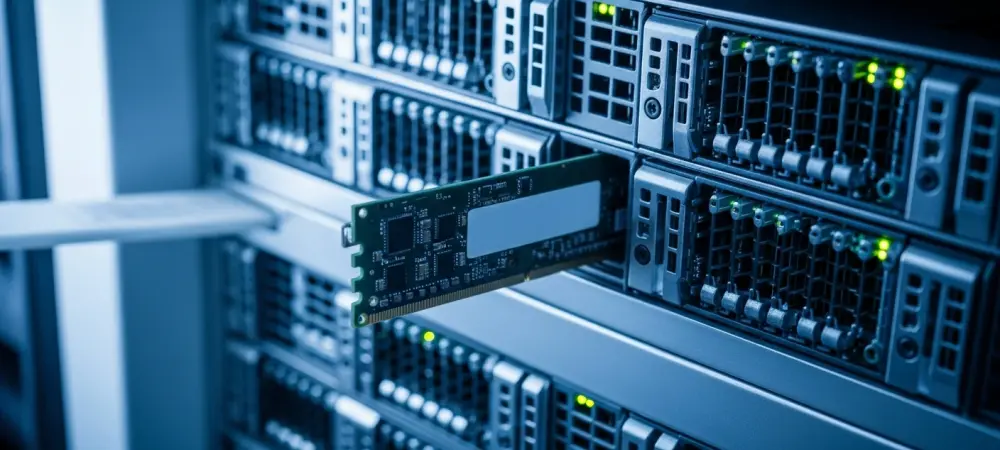
The global technology industry has long operated under the assumption that hardware capabilities would expand indefinitely while costs plummeted, yet the current landscape of 2026 presents a jarring reversal where manufacturers are aggressively scaling back system memory to combat unprecedented component pricing. For over a decade, the tech community generally agreed that 8GB of RAM was the bare minimum for any functional computer, while 16GB was the recommended standard for serious work. However, we are witnessing a strange and frustrating reversal of this long-standing trend. Instead of moving toward a future of unlimited memory, the market is seeing a comeback of 4GB and 8GB configurations in both laptops and smartphones. This regression is driven by a global storage price crisis that has turned a once-basic component into a luxury item. This crisis is not just a minor pricing fluctuation but a fundamental shift in how memory is produced and sold, leaving the average consumer with devices that feel significantly less capable than those available just a few years ago.
The Economic Shift: Impact of Artificial Intelligence Demand
The primary catalyst for this hardware regression is the massive profit potential of the artificial intelligence sector, which has fundamentally reorganized the global supply chain. Large-scale AI models require a specialized type of memory known as High Bandwidth Memory, or HBM, which offers much higher profit margins than the standard RAM found in a typical phone or laptop. To capitalize on this, manufacturers like Samsung and SK Hynix have dedicated their most advanced factories to producing these high-end chips. This shift has left the consumer market in a state of artificial scarcity, causing the price of everyday memory components to skyrocket. Consequently, device brands are forced to make difficult choices about their product lineups, often sacrificing performance to maintain price points that the general public can still afford.
While the companies producing these memory chips are reporting record-breaking profits and handing out large bonuses to their employees, the brands that build the actual devices are struggling to stay afloat. These manufacturers now face a dilemmthey can either raise their retail prices significantly or cut the hardware specifications to keep their products accessible to the average buyer. Most have chosen to reduce memory capacity, leading to a downsizing trend that prioritizes corporate profit margins over the quality of the user experience. This economic reality means that the cost of a single 16GB module today is nearly double what it was in previous years, effectively wiping out a decade of progress in hardware affordability and leaving the entry-level market with severely underpowered machines.
System Regression: Declining Specifications in Phones and PCs
The mobile industry is feeling the weight of this crisis particularly hard, with specifications retreating at an alarming rate. Only a few years ago, mid-range smartphones were frequently released with 16GB of RAM at very accessible prices. In 2026, however, flagship phones are retreating to 12GB baselines, and many youth or budget models have returned to 8GB as their primary configuration. Even companies like Apple, which have historically been conservative with memory, are feeling the pressure to keep costs down. Their latest models continue to stagnate at 8GB because the financial cost of a base-level upgrade has become too high for the average buyer to absorb. This creates a situation where the hardware inside a brand-new device is functionally equivalent to or even weaker than the model it is intended to replace.
The situation in the PC market is arguably even more dire because desktop operating systems like Windows 11 are notoriously heavy on resources. Modern software relies on browser-based engines and complex background processes that consume large amounts of RAM just to keep basic applications running smoothly. Despite industry leaders suggesting that 16GB is the real-world minimum for a decent experience, major brands like HP and Lenovo are launching 8GB laptops to keep their prices competitive in a crowded market. Some entry-level models have even appeared with a mere 4GB of RAM, a specification that most experts argue is virtually unusable for a modern operating system. This technical mismatch leads to constant system lag and a frustrating user experience that contradicts the marketing promises of modern, high-speed computing.
The Software Bottleneck: Demands Versus Hardware Scarcity
This reduction in memory is happening at the worst possible time because modern software is more demanding and resource-intensive than ever before. We are now in the age of super apps, where single programs integrate dozens of background modules that each eat up system resources independently. When a device lacks enough memory, it begins to kill background tasks to stay functional, leading to constant reloading, lost data, and significant system lag. This creates a massive bottleneck where a processor might be incredibly fast, but the lack of RAM prevents the device from ever reaching its full potential. Users find themselves unable to multitask effectively, as switching between a web browser and a document editor becomes a slow and tedious process that drains productivity.
There is a deep irony in the fact that manufacturers are cutting memory while simultaneously trying to sell the public on the benefits of AI-powered devices. On-device AI features, such as real-time translation and advanced image editing, require a significant amount of memory redundancy to function correctly and quickly. By stripping devices down to 4GB or 8GB of RAM, manufacturers are effectively disabling the very capabilities they are using as their primary selling points. A device with low memory simply cannot support an always-on AI assistant or complex local processing, leading to a failure of the AI era at the consumer level. This disconnect between marketing and reality leaves buyers with expensive hardware that cannot perform the advanced tasks they were promised during the sales pitch.
Market Evolution: Strategic Purchasing and Future Resilience
The public reaction to these low-memory devices was overwhelmingly negative as the practical limitations of 8GB configurations became apparent in daily use. On social media and tech forums, the consensus grew that anything less than 16GB was no longer a viable option for a new purchase, and savvy consumers began warning others to avoid budget models entirely. This led to a notable stagnation in the upgrade cycle, as many people realized that a new phone or laptop often offered a worse multitasking experience than a three-year-old model. The lack of clear performance incentives meant that consumers held onto their older devices for longer, further straining the revenue streams of manufacturers who had initially cut specifications to save on production costs. Industry analysts recommended that buyers shifted their focus toward professional-grade workstations or sought out remaining inventory of higher-spec models from previous cycles to ensure longevity. It became clear that prioritizing user-upgradeable hardware, where possible, was the only effective way to bypass the planned obsolescence inherent in the new low-memory standard. Consumers who invested in external processing or leaned more heavily into cloud-based computing resources found more stability than those who relied solely on the diminished internal specs of recent budget releases. Ultimately, the crisis dictated a new rule for technology procurement: the physical memory capacity of a device served as its most reliable indicator of long-term value, far outweighing the superficial marketing promises of software-driven artificial intelligence.