

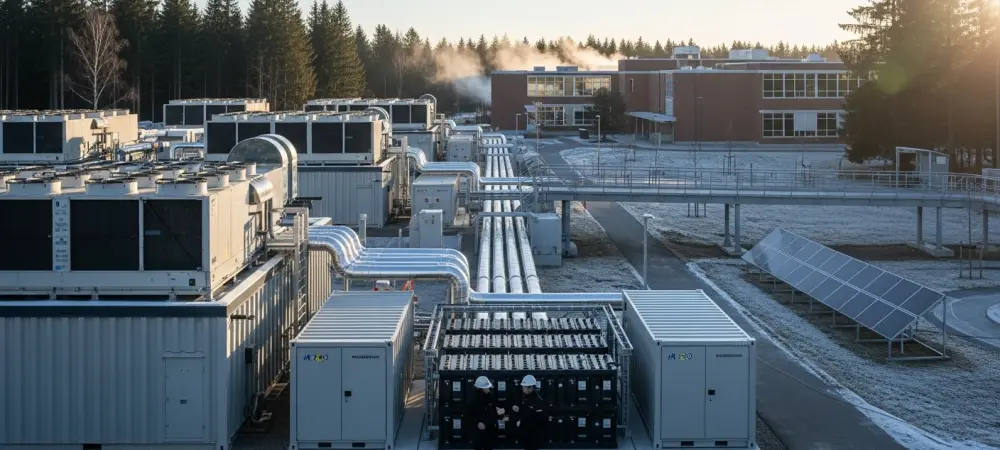
Dominic Jainy has spent years at the intersection of AI workloads and the physical world they depend on—power, cooling, and community infrastructure. With hands-on experience guiding machine learning and blockchain deployments into real facilities, he translates abstract compute growth into megawatts, water loops, and rate cases. In this conversation, he unpacks Maine’s veto of an 18‑month pause on 20‑megawatt‑plus data centers, the $550 million Jay proposal promising 800 construction jobs and 100 permanent roles, the specter of a 36% rate hit, and what a credible state response should look like—down to verification steps, safeguards, and timelines. Expect concrete trade‑offs, crisp metrics, and a pragmatic path between economic revival and grid reality.
Maine vetoed an 18‑month moratorium on 20‑megawatt‑plus data centers. What trade-offs drove that decision, and how would you quantify the short‑term economic gains versus the long‑term grid and rate impacts? Please walk through the key metrics you’d use.
The veto balanced immediate, place‑based recovery against system‑wide uncertainty. On the gains side, I’d stack the $550 million investment, 800 construction jobs, and 100 permanent roles, then translate them into tax receipts and wage flows for a town that lost hundreds of mill jobs. On the risk side, I’d track incremental load at or above 20 megawatts against local substation headroom and the statewide warning of up to a 36% rate increase if data center growth isn’t managed. The scorecard I’d use includes interconnection queue position, feeder capacity margin, committed on‑site resources that ensure “no new grid strain,” and bill impact scenarios tied to that 36% figure, all compared quarter by quarter across the 18‑month window the moratorium targeted.
The Jay project promises $550 million in investment, 800 construction jobs, and 100 permanent roles. How should communities validate such projections, and what safeguards ensure those jobs are high-quality and lasting? Share examples of contract clauses or clawbacks that work.
Start by cross‑checking the $550 million with itemized spend: building reuse, water systems, and power upgrades the developer says are already in place. Tie the 800 and 100 figures to a staffing plan with crafts, shifts, and retention milestones, and require third‑party audits at commissioning and at the first and second anniversary. Strong agreements pair performance‑based incentives with clawbacks if job counts, wage standards, or local hiring targets fall short, and they backstop promises with letters of credit. I also like automatic pauses in any public support until “no new grid strain” is independently certified, aligning community benefits with real‑world performance.
Developers say the Jay site reuses existing buildings, water, and power, with no new grid strain. What verification steps and tests would you require to confirm that claim, and what monitoring should continue after commissioning?
I’d require a pre‑commissioning load test up to the 20‑megawatt threshold, witnessed by the utility, proving the substation and feeders hold steady voltage and thermal limits. A water system test should show closed‑loop reuse with documented intake and discharge that match historic permits for the old mill. After go‑live, mandate continuous metering with a public dashboard that reports hourly load, plus an annual attestation that interconnection headroom remains intact. If monitoring ever flags drift toward system overload, a pre‑agreed curtailment plan kicks in before bills or reliability take a hit.
Some analyses warn of up to a 36% electricity rate increase tied to data center load growth. What modeling assumptions typically drive that number, and how can rate design or on‑site generation change the outcome? Please detail scenarios and sensitivities.
That 36% usually bakes in rapid load additions without matching upgrades, with costs socialized across all ratepayers. If you instead model time‑bound demand charges that reward off‑peak operation, the same load can ride under existing capacity longer. A scenario where large users fund site‑specific infrastructure and commit to “no new grid strain” softens the trajectory compared to an indiscriminate rollout. Sensitivities I’d run include an 18‑month slowdown, a threshold at 20 megawatts for enhanced contribution, and a case where on‑site resources cut net imports during peaks, each plotted against the 36% ceiling.
Critics cite water use, local heat, and air pollution from backup generators. What standards, cooling technologies, or heat‑recovery systems most effectively reduce these harms, and how would you phase them into permits? Give performance targets in concrete terms.
For a site reusing existing water systems, I’d set a permit condition to stay within historic intake and discharge envelopes established for the mill, with third‑party verification at commissioning. Heat reuse can be required to serve nearby public buildings, with a milestone for initial delivery within the first 90 days after final occupancy. Backup generators should be limited to testing windows coordinated with local air regulators, and any expansion past the 20‑megawatt class would trigger tighter conditions. The permit should state that any variance from “no new grid strain” reopens environmental controls automatically.
A statewide pause was rejected, but a governor’s council will study impacts. What mandate, expertise mix, and timelines would make such a council credible, and what decisions should it deliver in its first 90 and 180 days?
Give the council a clear mandate to evaluate 20‑megawatt‑plus interconnections, rate effects up to the 36% warning, and siting on brownfields like Jay. The makeup should mirror the 13‑member concept, blending utility engineers, local officials, workforce leaders, and environmental experts. In the first 90 days, publish hosting capacity maps and a template for “no new grid strain” certification; by 180 days, issue draft siting criteria and a standard benefits agreement that reflects the 800 and 100 job commitments seen in Jay. That cadence shows urgency without the blunt force of an 18‑month halt.
Lawmakers seek a two‑thirds override. How do you see the political calculus shaping up, and what compromises—like targeted exemptions or capacity thresholds—could realign support without gutting protections? Share precedents that actually moved votes.
The math is unforgiving when caucus unity is already fractured, so a two‑thirds path likely hinges on narrowly tailored exemptions. Carving out brownfields with proof of existing water and power, as claimed in Jay, can bring skeptics on board. Another lever is a temporary carve‑in for projects with signed contracts and permits before April 29, paired with faster rulemaking for new proposals. We’ve seen support swing when exemptions are time‑limited and tied to transparent, measurable benefits like the 800 and 100 positions, rather than open‑ended waivers.
Data centers are now excluded from certain state business tax breaks. What alternative tools—location-specific PILOTs, performance‑based incentives, or infrastructure cost‑sharing—best align private investment with public value? Please provide step‑by‑step funding structures that avoid ratepayer subsidies.
Start with a PILOT targeted to sites like Jay’s brownfield, pegged to verified spend within the $550 million envelope. Layer a performance‑based credit that vests only after independent confirmation of the 800 construction jobs and 100 permanent roles. For infrastructure, use developer‑funded special purpose vehicles to finance upgrades, with public participation limited to pre‑existing assets—preserving the pledge of “no new grid strain.” Finally, sunset everything on a fixed schedule, so incentives don’t outlive their public purpose.
If Maine adopts siting rules for 20‑MW‑plus facilities, what criteria should be non‑negotiable—interconnection headroom, water availability, emissions limits, community benefits? How would you score and weight them to make decisions defensible?
Make interconnection headroom the gatekeeper, explicitly tied to the 20‑megawatt class. Next, restrict water‑dependent cooling to locations with documented reuse capacity from prior industrial operations, as in Jay. Emissions limits for backup systems should default to conservative test schedules, and community benefits must be contractual, not aspirational—think the job counts already on the table. I’d score pass/fail on headroom and water, then weight community and air standards, publishing the rubric alongside approvals.
Utilities face aging infrastructure and surging AI demand. What near‑term actions—hosting capacity maps, pre‑approved substations, non‑wires alternatives—can be executed within 12–24 months, and how should costs be allocated between ratepayers and developers?
Within 12–24 months, utilities can post feeder‑level hosting capacity maps and identify pre‑approved substation sites where 20‑megawatt connections won’t tip the system. Non‑wires alternatives should be prioritized in areas where “no new grid strain” is plausible with operational tweaks. Developers should fund project‑specific upgrades, while broad system maintenance remains a ratepayer responsibility, protecting households from the kind of 36% shock that alarms people. Clear cost‑causation rules shorten interconnection fights and keep construction on schedule.
Community benefits agreements can make or break local support. What provisions deliver real value—workforce pipelines, heat reuse for public buildings, discounted municipal power, environmental monitoring—and how do you enforce them over a 10‑ to 20‑year horizon?
Put workforce pipelines in writing with targets that echo the 800 and 100 commitments, delivering training before groundbreak. Tie heat reuse to nearby schools or municipal buildings, with commissioning milestones in the first 90 days of operation. Discounted municipal power should be conditioned on the project maintaining “no new grid strain,” so the town isn’t undercut by broader system stress. Enforcement comes from annual third‑party audits and automatic clawbacks if performance slips, sustained through the full 10‑ to 20‑year span.
Workforce needs span electricians, HVAC techs, and high‑voltage specialists. What training pathways and apprenticeship ratios would you deploy now to meet an 800‑job construction surge, and how would you ensure local hiring without delaying schedules?
Start with fast‑start bootcamps aligned to data center crafts, timed so cohorts graduate as site work scales toward the 800 mark. Use pre‑hire agreements with local institutions so candidates step straight from classrooms to the jobsite. To avoid delays, phase hiring so critical paths—power rooms and water systems—get first pick, reflecting the reuse commitments at Jay. Track progress weekly, and if pipelines lag, tap regional partners before schedules slip.
Not all data centers are equal; AI training clusters can draw far more power than general cloud. How should policy differentiate them on interconnection priority, demand response, and on‑site generation requirements? Share specific thresholds and triggers.
Set a distinct lane for AI training above the 20‑megawatt class, with stricter proof of “no new grid strain” and earlier curtailment in demand response. Prioritize interconnection for reuse‑based sites that can demonstrate stable operation without system upgrades. Trigger enhanced conditions if modeled rates approach the 36% risk, shifting obligations onto projects with the steepest profiles. This keeps headroom for growth while preventing a few mega‑loads from driving statewide impacts.
Virginia’s experience shows rapid buildout alongside rising rates and congestion. Which lessons translate to Maine’s hydro‑heavy but capacity‑constrained grid, and which don’t? Please cite concrete grid metrics, permitting timelines, and reliability outcomes.
The transferable lesson is pacing—don’t let multiple 20‑megawatt interconnections stack onto the same constrained nodes. Maine’s hydro‑heavy profile is an asset, but without spare capacity, you can still drift toward that 36% scenario. What doesn’t translate wholesale are long, opaque permitting queues; Maine can move faster by using brownfields with existing water and power, as Jay proposes. Reliability improves when approvals track hosting capacity maps and “no new grid strain” is validated before ribbon‑cutting.
Protests and cancellations have risen while cold climates and cheap power attract new projects. What transparency practices—real‑time load reporting, water dashboards, outage risk maps—most effectively build public trust, and how would you implement them statewide?
The quickest win is a statewide portal with real‑time load feeds from each 20‑megawatt‑plus site, updated hourly. Add a water dashboard for facilities reusing industrial systems so residents can see intake and discharge staying within historic bands. An outage risk map tied to feeder headroom helps people grasp how projects interact with their neighborhoods, not just the abstract grid. Pair it with regular briefings from the governor’s council, echoing the 13‑member model, so data translates into decisions.
Utilities and policymakers are eyeing urgent timelines, from April 29 votes to rapid groundbreakings. How should state and local agencies synchronize decisions so communities aren’t whipsawed by last‑minute changes?
Anchor the calendar to Veto Day milestones and publish a coordinated docket that aligns council findings, siting reviews, and municipal approvals. For shovel‑ready projects like Jay, lock in a pre‑commissioning checklist that all agencies sign before contractors mobilize. Require developers to attest—publicly—that they can meet “no new grid strain,” or else slip to a later window to avoid conflicts. This turns political deadlines into operational certainty.
What is your forecast for Maine’s data center buildout and power demand through 2030?
I expect a measured buildout anchored by brownfields like Jay, where $550 million‑scale investments can move without tripping new wires work. If projects truly hold to “no new grid strain,” Maine can add capacity while keeping the 36% risk at bay. National demand might double by 2028, so Maine will feel pull from AI alongside protests and cancellations that have already quadrupled in 2025 narratives. My bet: a handful of 20‑megawatt‑class sites online by 2030, paced by hosting capacity maps, with communities insisting on the 800‑and‑100 style benefits before they say yes. Do you have any advice for our readers?Ask for the numbers in plain sight: the 20‑megawatt load profile, the $550 million spend map, the 800 and 100 job timelines, and how each project steers clear of that 36% rate risk. Support brownfield reuse and insist on “no new grid strain” in writing, backed by metering you can check on your phone. Engage early—before April 29‑style crunch points—so your town shapes the deal instead of reacting to it. And remember: durable wins pair local revival with system integrity; if either side is fuzzy, press pause until the facts are firm.