

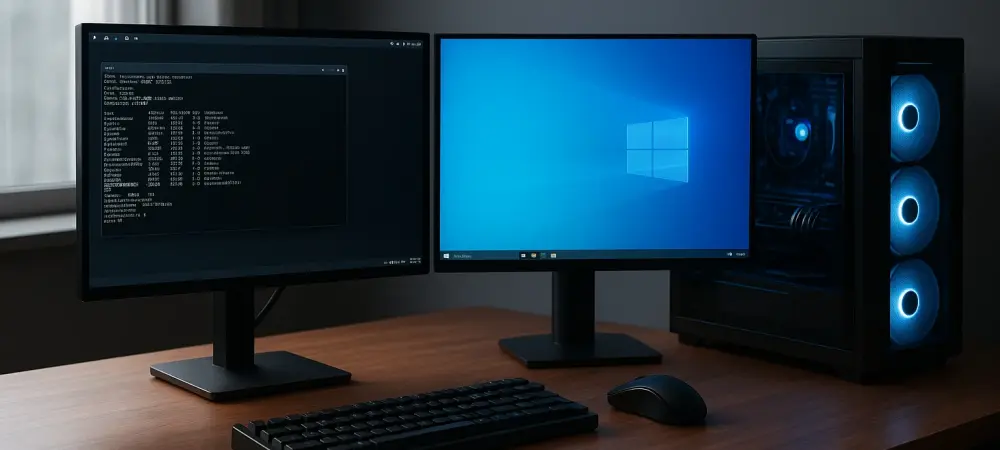
While legacy methods of Windows virtualization required dedicated physical ports on a GPU, the new Virtual Display Driver enables efficient headless operation without occupying hardware slots. This technological shift represents a major milestone for the Looking Glass project, an open-source initiative that has redefined the boundaries of high-performance guest-to-host interaction. By leveraging a high-speed frame relay system, developers have created a pathway for users to execute demanding Windows applications on a Linux host with negligible performance overhead. The project addresses the historical pain points of virtual machine usage, such as sluggish graphical updates and input lag, by utilizing shared memory segments that bypass traditional network-based protocols. As more professionals transition to Linux-based workstations while maintaining a need for Windows-exclusive software, the role of such integrated virtualization tools becomes increasingly vital for maintaining a streamlined and professional desktop environment.
Evolution: Historical Hurdles of Integration
For a long time, the technical barrier between host and guest systems was defined by the limitations of standard emulation protocols like VNC and Spice. These older standards were designed for remote management rather than local interactivity, leading to a frustrating experience characterized by stuttering frame rates and noticeable input delays. Users attempting to bridge the gap between Linux and Windows found themselves caught between the simplicity of software emulation and the raw power of hardware pass-through. While hardware pass-through offered the necessary performance, it frequently demanded an entire secondary graphics card, which was both expensive and physically taxing on system resources. This reliance on dedicated hardware effectively locked out laptop users and those with smaller workstation builds from enjoying a high-fidelity virtualized experience, creating a significant divide within the community regarding accessibility and the feasibility of running modern software.
Beyond the hardware cost, the practical implementation of high-end virtualization often required obscure workarounds that felt more like a chore than a feature. One of the most common issues involved the need for physical dummy plugs, which are small HDMI or DisplayPort dongles that trick a graphics card into believing a monitor is connected. Without these plugs, Windows would often refuse to initialize a display buffer, leaving the virtual machine in a state of graphical limbo. This physical requirement added another layer of clutter and complexity to the desktop setup, making it difficult for users to swap configurations or travel with their workstations. The development of a native virtual display driver aims to solve these issues once and for all by moving the logic from a physical dongle into the software layer itself. This shift simplifies the hardware stack and allows for a more robust environment where the guest operating system can behave naturally without being tethered to a physical port.
Breakthrough: The Virtual Display Driver
The introduction of the Indirect Display Driver (IDD) within the Looking Glass ecosystem serves as a breakthrough by eliminating the need for physical workarounds. This software-based driver acts as a drop-in replacement for physical monitors, allowing the Windows guest to create a virtualized high-performance display. By integrating directly into the Windows display stack, the IDD presents a valid output target that the operating system recognizes as a legitimate high-resolution monitor. This allows the guest to render frames at high refresh rates without searching for a hardware connection, effectively enabling a headless operation that is still fully accessible to the host. The removal of the hardware dependency means that users no longer have to worry about the specific limitations of their physical graphics ports or the compatibility of different dummy plugs. This innovation democratizes high-performance virtualization, as it removes the requirement for secondary GPUs, making a smooth experience accessible to many.
This software-centric approach allows the system to pipe frames directly into a shared memory space that the Linux host can read and display almost instantly. The architecture behind this process is designed for maximum efficiency, utilizing the KVMFR interface to facilitate the rapid exchange of pixel data between the two kernels. Because the driver is integrated at the system level, it can bypass the overhead associated with traditional display capturing methods. This results in a cleaner physical workspace and a more resilient software environment where the virtual machine can be launched and managed without any manual intervention at the hardware level. This streamlined architecture not only cleans up the physical workspace by removing unnecessary dongles but also allows the virtual machine to operate in a headless state while maintaining full graphical responsiveness. The transition between using native Linux applications and the virtualized Windows instance feels more like switching between two native desktop windows.
Integration: Performance and Polish
One of the most immediate benefits of the new Looking Glass build is the near-total elimination of input latency, which has historically been the primary detractor of virtualized environments. Unlike traditional remote desktop solutions, the transition of mouse and keyboard data occurs so rapidly that the distinction between the host and guest environments becomes invisible to the user. This responsiveness is critical for professionals who require a native feel during their daily workflows, ensuring that the virtualized Windows environment does not feel like a secondary, lagging window. The synchronization of the cursor across both environments is so precise that users can move across the desktop boundary without experiencing the sticky cursor effect common in older virtualization stacks. This level of fluidity is essential for creative tasks like video editing or high-speed data entry where every millisecond counts toward productivity and overall user satisfaction in a high-demand professional setting.
Beyond speed, the software introduces essential quality-of-life features such as dynamic resolution resizing, which provides a modern feel to the guest environment. In older high-performance setups, changing the window size on the Linux host would not automatically update the resolution within the Windows guest, often leading to blurry upscaling or black borders. The new IDD build solves this by allowing the Windows desktop to scale its resolution in real-time as the user adjusts the window on the Linux desktop. This behavior mirrors the responsiveness of native operating system windows and eliminates the need for manual resolution adjustments within the guest settings. Additionally, built-in support for audio pass-through and OBS integration makes it an ideal tool for content creators who need to capture Windows applications within a Linux-based production pipeline. This level of polish ensures that the virtual machine integrates seamlessly into the broader Linux ecosystem, making it a viable daily driver for all.
Requirements: Stability and Configuration
To get the most out of these advancements, users are generally encouraged to utilize the development branch of Looking Glass rather than the older stable versions. The development build contains the cutting-edge IDD features and has proven stable enough for daily productivity tasks throughout the 2026 cycle. It is vital for users to ensure that the version of the host application installed on Windows exactly matches the version of the client software running on the Linux host to prevent compatibility issues. Because the software interacts so closely with the memory space of the operating systems, even minor version mismatches can lead to graphical glitches or system crashes. Maintaining a synchronized build ensures that the communication protocols between the guest driver and the host viewer are perfectly aligned. This rigorous approach to version control allows the development team to push frequent updates that improve the stability and feature set of the IDD without breaking existing workflows for the professional user base.
Achieving peak performance also requires the use of the KVMFR module, which serves as the backbone for low-latency communication. This module facilitates the high-speed transfer of frames through shared memory, which is the technical foundation for the software’s lack of lag. While the setup requires a more hands-on approach than standard emulated drivers, the result is a level of efficiency and responsiveness that far exceeds traditional virtualization methods like QXL. Users must configure the shared memory file correctly on the Linux host, ensuring that the appropriate permissions are set for both the user and the virtualization service. By bypassing the traditional networking stack entirely, Looking Glass ensures that the video stream is limited only by the speed of the system’s RAM and the processing power of the GPU, rather than the constraints of a virtualized network interface card.
Outlook: Future Standards and Refinement
While the Looking Glass VDD provides a flawless desktop experience for office tasks and general software, it is important to distinguish it from full 3D hardware acceleration. For intensive 3D rendering or high-end gaming, a dedicated GPU pass-through remains the most effective path for users seeking maximum performance. Other industry projects like VirGL and Venus aim to provide 3D acceleration via Virtio drivers, but these currently remain in a complex beta state and are not yet ready for mainstream daily use. Looking Glass effectively acts as the interface layer that makes these high-power setups usable in a windowed environment. It does not replace the need for a capable graphics processor but rather optimizes how that processor’s output is delivered to the user. Understanding this distinction is key for users setting up their workstations, as it helps them allocate hardware resources appropriately based on whether they need 2D productivity or 3D rendering capabilities within their virtual machines.
To finalize the implementation, users verified their kernel configurations and successfully integrated the KVMFR module into their boot parameters. This move secured the high-speed memory bridge necessary for sustained productivity throughout the 2026 work year. Those who adopted the IDD system reported a significant reduction in setup time, as the software eliminated the physical troubleshooting previously associated with dummy plugs and external cabling. The community pivoted toward standardized shared memory sizes, which simplified the deployment of virtual machines across diverse hardware configurations. Moving forward, the focus shifted to refining the automated installation scripts to further lower the barrier to entry for new Linux converts. By prioritizing these software-driven optimizations, developers ensured that the Windows-on-Linux experience reached a level of maturity that supported professional-grade creative work. This transition proved that sophisticated software drivers could effectively replace redundant hardware components.