

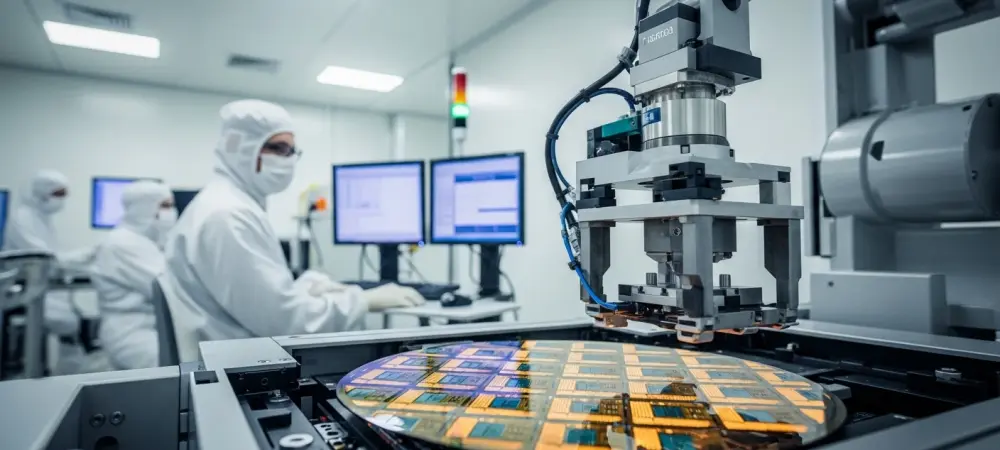
For decades, the high-performance graphics card market has been a story of two titans, but a new chapter is beginning with the arrival of a determined challenger aiming to reshape the competitive landscape. The emergence of the Lisuan G100 GPU represents a significant advancement in an industry long defined by an established duopoly. This review explores the G100’s proprietary architecture, its key features, initial performance metrics, and the considerable impact it seeks to make on both professional and consumer applications. The purpose is to provide a thorough understanding of this new technology, its current capabilities, and its potential to introduce a new era of competition.
Introducing the Lisuan G100 A New Contender in the GPU Market
The Lisuan G100 series is China’s ambitious entry into the high-performance discrete graphics card market, directly challenging the long-standing dominance of NVIDIA and AMD. Developed by Lisuan, the G100 is far more than just another GPU; it represents a strategic push for domestic technological independence. Its arrival signals a potential shift in market dynamics, introducing new competition and fostering innovation.
This new hardware enters the field with a clear strategy, focusing initially on professional ‘digital twin’ applications. However, a planned expansion into the vast consumer gaming sector is firmly on the roadmap. This dual-pronged approach allows Lisuan to build a stable foundation in a demanding enterprise environment while preparing for a broader, more mainstream audience.
Core Architecture and Technical Breakdown
Under the Hood The Lisuan 7G106 Specifications
The Lisuan 7G106 model serves as the flagship of the G100 series and is positioned as a strong mid-range contender. It features 12 GB of GDDR6 memory on a 192-bit bus, a specification that aligns it well with modern performance expectations. This is complemented by 192 Texture Mapping Units (TMUs) and 96 Render Output Units (ROPs). This configuration is clearly designed to offer a balanced and capable performance profile for both contemporary gaming and demanding professional tasks.
Power Efficiency and Connectivity
Built on TSMC’s efficient 6nm process, the G100 architecture prioritizes a careful balance of raw performance and power efficiency. The 7G106 has a maximum Thermal Design Power (TDP) of 225W, drawing power from a single 8-pin connector, which is a standard and widely compatible setup for its performance class. Furthermore, it leverages the modern PCIe 4.0 x16 interface to ensure maximum bandwidth and seamless integration with a wide range of current motherboards.
NRSS Lisuans Answer to AI Upscaling
A key feature of the G100’s proprietary architecture is the inclusion of an in-house upscaling technology called NRSS (Native Resolution Super Sampling). This innovation aims to compete directly with established solutions like NVIDIA’s DLSS and AMD’s FSR. By using artificial intelligence to boost frame rates at high resolutions while maintaining visual fidelity, NRSS stands as a critical and necessary feature for delivering a competitive modern gaming experience.
Performance and Competitive Positioning
Early Benchmarks vs The Competition
Initial performance reports and early benchmarks place the Lisuan G100 in direct competition with popular mid-tier offerings from the industry leaders. The data suggests that its performance can rival NVIDIA’s perennially popular 60-series SKUs. This positioning makes it a potentially compelling alternative for gamers seeking strong 1080p and 1440p performance without necessarily paying the premium price often associated with the established brands.
A Strategic Advantage Pioneering Windows on ARM Support
One of the G100’s most significant potential advantages is its reported support for the ‘Windows on ARM’ initiative. Being among the first discrete GPUs to offer this feature could give Lisuan a crucial foothold in the growing market for ARM-based PCs. This is especially relevant within China, where ARM CPUs are gaining considerable traction, and this unique capability sets it apart from its primary competitors in a meaningful way.
Real World Applications and Target Markets
Initial Focus Professional Digital Twin Applications
While a consumer launch is on the horizon, the G100’s initial shipments are strategically targeted at the professional market. The GPU is being deployed in ‘digital twin’ applications, which require significant rendering power to create complex, real-time virtual models of physical objects or entire systems. This focused strategy allows Lisuan to establish a solid foothold and meticulously refine its drivers in a controlled professional environment before a wider release.
The Road to a Consumer Release
With mass production having begun, a retail launch for gamers and general consumers is anticipated by the first quarter of 2026. This phased rollout indicates a deliberate and thoughtful strategy to build momentum. It also ensures that the product and its software ecosystem are mature enough to meet the demanding expectations of the global gaming community, where first impressions are paramount.
Challenges and Market Hurdles
Breaking the Duopoly
Lisuan’s greatest challenge is entering a market dominated for decades by the powerful duo of NVIDIA and AMD. Building brand recognition, consumer trust, and a loyal user base will require not only a competitive product but also aggressive marketing, robust post-purchase support, and an undeniably compelling value proposition to lure customers away from familiar ecosystems.
The Critical Role of Software and Driver Maturity
Hardware is only half the battle in the GPU arena. The ultimate success of the G100 will depend heavily on the quality and consistency of its driver support. Gamers and professionals alike expect stable, optimized drivers that deliver day-one support for new releases and continuously improve performance over the product’s lifespan, a feat that requires immense and sustained software engineering investment.
Future Outlook and Industry Impact
A Potential Shift in the Global GPU Landscape
The successful launch of the Lisuan G100 could herald a new era of competition in the GPU market. A viable third player has the potential to disrupt current pricing structures, foster greater innovation across the board, and provide consumers with more choice than they have had in years. The G100’s performance in the Chinese domestic market will serve as a key indicator of its potential for future global expansion.
The Long Term Vision for Lisuan
Beyond the G100, Lisuan’s journey will be one to watch closely. The development of a competitive, high-performance GPU from the ground up is a monumental achievement. Its future success will depend on the company’s ability to execute a long-term roadmap that includes next-generation architectures, an expanding and robust software ecosystem, and strategic partnerships that can elevate its standing on the world stage.
Conclusion A Promising and Disruptive Debut
The Lisuan G100 GPU was more than just a new piece of hardware; it was a clear statement of intent. With a solid technical foundation, competitive mid-range performance, and a unique strategic advantage in ARM-based computing, it had all the necessary components to become a serious contender in the graphics market. While significant challenges in software maturity and market penetration remained, the G100 marked an impressive and welcome entry that could invigorate the GPU industry for years to come.