

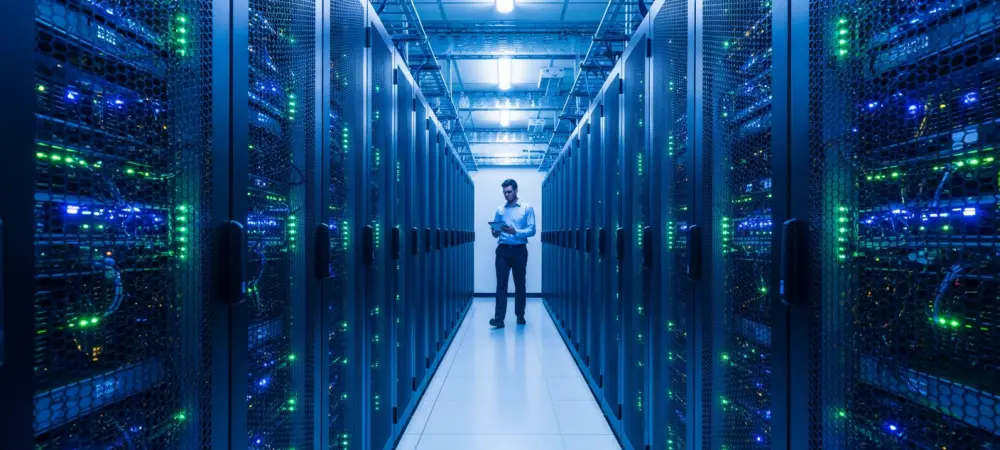
The sprawling plains of Sturgeon County are currently witnessing a transformation that mirrors the industrial shifts of the previous century, as Alberta attempts to pivot from its traditional fossil fuel roots toward a future defined by high-performance computing. This project, led by Meta Platforms Inc., represents a staggering $13 billion investment that serves as the cornerstone for a broader $100 billion provincial strategy. By positioning itself as a premier destination for artificial intelligence infrastructure, the United Conservative Party government is effectively betting the province’s economic stability on the continued dominance of large-scale generative models. This vision reimagines the vast natural gas reserves of the region not merely as a heating or power source, but as the raw fuel for a “digital refinery” system. However, the sheer scale of this ambition brings significant questions regarding environmental sustainability and whether this capital-intensive approach will deliver the promised long-term prosperity or simply create a new set of stranded assets.
Harnessing Energy for Digital Intelligence
Alberta currently generates approximately 60 percent of Canada’s total natural gas output, a resource that the provincial government now views as the perfect substrate for the 24/7 power requirements of hyperscale data centers. Unlike solar or wind, which remain subject to the intermittency of weather, natural gas provides the steady, high-capacity electricity essential for training the next generation of large language models and real-time inference engines. The Meta facility is anticipated to occupy nearly 700 hectares, making it the largest infrastructure project of its kind in Canadian history. To support this demand, the plan involves constructing dedicated gas-fired power plants that operate behind the meter, theoretically isolating the industrial load from the public residential grid. This strategy seeks to capitalize on local energy abundance by shortening the supply chain between fuel extraction and electricity consumption, creating a vertically integrated ecosystem where raw energy is immediately transformed into digital value.
This transition relies heavily on the “digital refinery” concept, which attempts to rebrand data centers as modern industrial hubs rather than passive storage warehouses. Instead of selling raw commodities to international markets through physical pipelines that often face regulatory hurdles and environmental protests, the province aims to export processed “intelligence” via high-speed fiber optics. This allows for the monetization of natural gas without the same level of political friction associated with new oil pipeline construction. By refining gas into compute power—essentially predictions, complex problem-solving, and generative content—Alberta is attempting to climb the value chain of the global digital economy. The government argues that this shift provides a hedge against the volatile global oil market, yet it simultaneously ties the province’s economic health to the highly concentrated and competitive tech sector. This narrative suggests that data is the new crude, and the province’s competitive advantage lies in its ability to provide the massive caloric energy required to process it.
Weighing Public Support and Resource Impacts
While the provincial administration presents a unified front of optimism, public sentiment regarding the rapid expansion of AI infrastructure remains surprisingly nuanced and fragile. Recent polling indicates that a majority of Albertans are initially hesitant about the massive land and energy requirements of these projects, with support only solidifying when specific safeguards are mentioned. Approval ratings tend to rise when citizens are assured that these facilities will utilize private energy generation rather than taxing the existing public grid infrastructure. This suggests that the political capital required to sustain a $100 billion investment cycle is contingent upon the government’s ability to maintain a clear separation between industrial needs and consumer costs. The narrow margin of support highlights a precarious balance between industrial growth and the everyday cost of living for the local population.
Beyond the financial optics, the physical environmental footprint of these facilities, particularly concerning water usage and carbon emissions, presents a significant technical challenge. Large-scale data centers generate immense amounts of heat, often requiring millions of gallons of water for evaporative cooling systems unless expensive closed-loop technologies are strictly enforced. While proponents claim that modern designs will minimize the impact on local watersheds, the sheer volume of water needed for a 700-hectare site remains a point of contention for local agricultural communities. Furthermore, the reliance on natural gas-fired power plants to run these centers complicates the province’s long-term emissions targets, as the continuous operation of these turbines adds a steady stream of CO2 to the atmosphere. Although the government emphasizes the economic benefits and job creation, the reality of managing these massive resource demands requires a level of regulatory oversight that has yet to be fully articulated. The tension between the desire for rapid digital expansion and the necessity of resource conservation continues to define the debate.
Navigating the Potential AI Bubble
The aggressive push toward a compute-heavy economy occurs at a time when several global financial analysts are raising alarms about the sustainability of the current AI investment frenzy. With technology conglomerates pouring trillions of dollars into specialized hardware and massive data center construction, there is a growing concern that the actual revenue generated by these services may not justify the enormous capital expenditures. If the market for high-end generative AI begins to cool or if the monetization strategies of major tech firms fail to meet expectations, Alberta could find itself over-indexed on a niche industrial sector. This speculative risk is compounded by the fact that data centers are highly specialized structures with limited alternative uses if the primary tenant decides to downsize or pivot. Unlike traditional manufacturing plants that can be repurposed, a hyperscale AI facility is a bespoke environment designed specifically for high-density cooling and power distribution, making it a high-risk asset in a volatile and rapidly evolving global technology market.
Furthermore, the rapid pace of innovation in software development may inadvertently undermine the necessity for the massive, power-hungry infrastructure currently being built. Researchers are increasingly focusing on “small language models” and more efficient algorithmic architectures that require significantly less compute power to achieve high-level results. If the industry shifts toward these lighter, more efficient models, the demand for sprawling, gas-fired data centers like the one in Sturgeon County could diminish faster than the facilities can be depreciated. By anchoring its economic future to the physical footprint of today’s most energy-intensive models, the province risks being left behind by an industry that prioritizes efficiency and decentralization over brute-force calculation. The possibility of these billion-dollar facilities becoming technologically obsolete within a decade is a factor that remains under-addressed in the current provincial narrative, which emphasizes physical expansion over the agility of software innovation.
Securing Accountability and Future Sustainability
Perhaps the most significant long-term concern involves the eventual decommissioning of these massive industrial sites and the potential for them to become a public financial burden. Alberta already faces a massive challenge with “orphan” oil and gas wells, where companies have abandoned sites without fulfilling their cleanup obligations, leaving the province with billions in unfunded liabilities. Critics argue that without strict upfront bonds and clear decommissioning requirements, these giant data centers could follow a similar path if the AI sector experiences a significant downturn. The complexity of removing thousands of servers, specialized cooling systems, and dedicated power infrastructure requires a robust financial framework that protects taxpayers from future costs. If these facilities are left to decay as “digital rust,” the environmental and economic legacy could be devastating for local municipalities. Ensuring that corporations remain accountable for the entire lifecycle of their infrastructure—from construction to demolition—is essential for preventing a repeat of the mistakes made during the height of the fossil fuel era.
In light of these challenges, policymakers and industry stakeholders recognized the need for a more balanced approach that integrated economic ambition with rigorous environmental and financial safeguards. Decision-makers eventually implemented mandatory decommissioning bonds for all hyperscale projects to ensure that the costs of site remediation would never fall on the provincial treasury. This shift toward a more conservative fiscal model was paired with a requirement for data centers to invest in carbon capture and storage technologies to mitigate the emissions from their dedicated power plants. By diversifying the digital strategy to include support for software startups and AI research, rather than focusing solely on physical infrastructure, the province successfully mitigated the risk of a singular industrial collapse. These measures provided a framework that allowed Alberta to benefit from the technology boom while protecting its long-term interests. Moving forward, the focus remained on creating a resilient digital economy that valued technological agility and environmental stewardship as much as raw computing power, ensuring that the province’s gamble yielded a sustainable and responsible return on investment.