

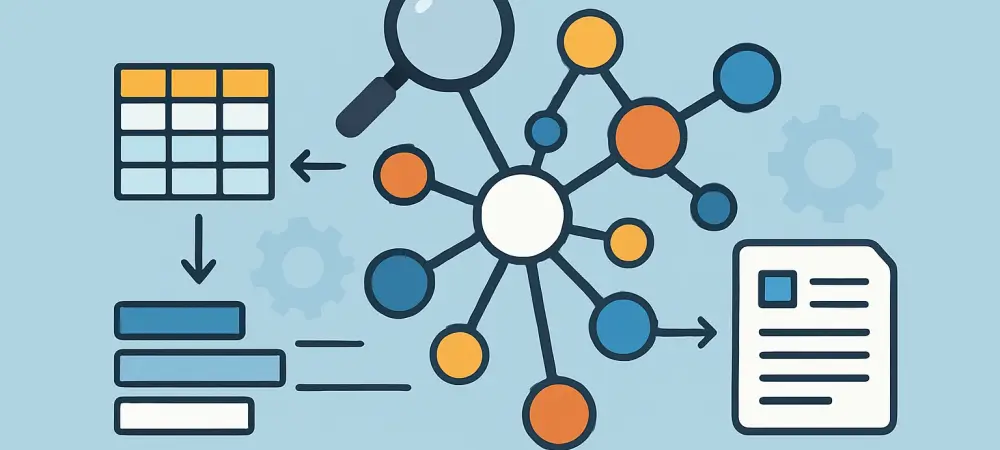
Imagine a global enterprise struggling to make sense of petabytes of data scattered across countless systems, from cloud databases to on-premises servers, with teams unable to access critical insights in real time due to fragmented information. This scenario is all too common in today’s data-driven landscape, where the sheer volume and variety of data can overwhelm even the most sophisticated organizations. Knowledge Graph Data Fabrics emerge as a transformative solution, weaving together disparate data sources into a cohesive, intelligent framework that not only integrates but also contextualizes information for smarter decision-making. This review delves into the core capabilities of this technology, exploring how it addresses modern data challenges and reshapes enterprise operations across industries.
Understanding the Foundation of Knowledge Graph Data Fabrics
At its core, a data fabric serves as an architectural approach to unify data access across diverse environments, eliminating the barriers posed by silos. When paired with knowledge graphs, which structure data as interconnected nodes and edges representing entities and relationships, this framework gains a semantic layer that adds meaning and context. This integration allows businesses to move beyond mere data storage, enabling a deeper understanding of how information interrelates, which is crucial for applications requiring nuanced insights.
The significance of this technology lies in its ability to provide a centralized point of access while preserving the complexity of data relationships. Unlike traditional systems that often require manual mapping, knowledge graphs automate the process of linking data, making it possible to uncover hidden patterns or dependencies. This capability positions the technology as a cornerstone for organizations aiming to leverage data as a strategic asset in competitive markets.
Key Features and Performance Analysis
Semantic Layer for Enhanced Analytics
One of the standout features of knowledge graph data fabrics is the semantic layer they introduce, which translates raw data into business-relevant terminology. This layer empowers non-technical users to query complex datasets using natural language or intuitive interfaces, significantly reducing reliance on specialized IT teams. For instance, a retail manager can ask about sales trends for a specific product category without needing to understand database schemas.
Performance-wise, this semantic capability excels in real-time analytics, delivering immediate insights by interpreting user intent and contextualizing queries. The technology ensures that results are not just accurate but also meaningful, aligning with specific business needs. Such efficiency is invaluable in fast-paced sectors where timely decisions can determine market success.
Moreover, the semantic layer enhances data governance by standardizing how information is interpreted across an organization. Consistency in data representation minimizes errors and misunderstandings, fostering trust in analytics outputs. This feature proves particularly beneficial for industries like healthcare, where precision in data interpretation is non-negotiable.
Dynamic Relationship Modeling
Another critical strength lies in the dynamic modeling of relationships, where knowledge graphs represent data through a flexible structure of nodes and edges. This approach allows for capturing intricate, cross-domain connections—such as linking customers, orders, and suppliers in a logistics network—and adapting to changes without disrupting existing models. Businesses can integrate new data sources seamlessly as their operations evolve.
The performance of this feature shines in scenarios requiring adaptability, such as tracking supply chain disruptions. By maintaining historical context through properties like validity dates on relationships, the technology enables organizations to analyze past and present data states, offering a comprehensive view of operational shifts. This depth of insight supports strategic planning in volatile environments.
Scalability is another area where dynamic modeling delivers, handling growing datasets and complex interdependencies without significant performance lags. As enterprises expand, the ability to traverse vast networks of relationships ensures that data remains actionable, providing a robust foundation for growth-oriented strategies.
Real-Time Operational Intelligence
Knowledge graph data fabrics also excel in operational intelligence, facilitating real-time monitoring and issue detection across industries. By embedding business rules directly into the graph structure, the technology can automatically flag anomalies, such as potential fraud in financial transactions or bottlenecks in manufacturing processes, enabling swift corrective actions.
The performance impact of this capability is profound, as it minimizes downtime and mitigates risks before they escalate. For example, in telecommunications, the system can analyze network telemetry data to optimize performance, reducing service interruptions. Such proactive management translates to enhanced operational efficiency and customer satisfaction.
Additionally, the contextual depth provided by knowledge graphs ensures that alerts and insights are not just reactive but also predictive, identifying patterns that might indicate future challenges. This forward-looking approach equips businesses with the tools to stay ahead of operational hurdles, reinforcing resilience in competitive landscapes.
Real-World Impact and Industry Applications
The practical applications of this technology span a wide array of sectors, demonstrating its versatility in addressing unique challenges. In manufacturing, knowledge graph data fabrics power supply chain transparency, linking suppliers, inventory, and delivery schedules to pinpoint inefficiencies instantly. This level of visibility enables companies to optimize resource allocation effectively.
In financial services, the technology transforms fraud detection by mapping intricate relationships between transactions, accounts, and user behaviors to uncover suspicious activities. Meanwhile, retail giants leverage intelligent metadata management to enhance data discovery, allowing for precise sales analytics through semantic searches that cut through vast datasets with ease.
Major technology providers have also adopted this approach to refine enterprise search functionalities. By integrating semantic understanding, these systems deliver highly relevant results, improving user experience and productivity. Such implementations highlight the technology’s capacity to drive innovation, proving its value as a catalyst for digital transformation across domains.
Challenges in Adoption and Implementation
Despite its strengths, integrating knowledge graph data fabrics is not without hurdles. Technical complexities arise when connecting heterogeneous data sources, often requiring specialized expertise to ensure seamless interoperability. This barrier can slow deployment, particularly for organizations with legacy systems resistant to modernization.
Scalability poses another concern, as managing expansive datasets in large-scale environments can strain system resources if not optimized. Performance bottlenecks may emerge under heavy loads, necessitating robust infrastructure investments to maintain efficiency. Addressing these issues remains a priority for widespread adoption.
Regulatory compliance adds further complexity, with mandates like GDPR imposing strict requirements on data handling and privacy. Ensuring that knowledge graph implementations align with such standards demands rigorous governance frameworks, which can be resource-intensive to develop and maintain. Overcoming these challenges is essential for maximizing the technology’s potential.
Final Thoughts and Next Steps
Looking back, this exploration of knowledge graph data fabrics revealed a technology that has redefined data integration with its semantic richness, dynamic modeling, and real-time intelligence. Its ability to unify disparate sources into a meaningful, accessible framework stands out as a remarkable achievement, impacting industries from manufacturing to finance with measurable gains in efficiency. Moving forward, organizations should prioritize investing in training and tools to simplify implementation, tackling the technical barriers that hinder adoption. Collaborating with vendors to develop scalable solutions tailored to specific industry needs could address performance concerns, ensuring the technology keeps pace with growing data demands.
Additionally, establishing strong governance practices to navigate regulatory landscapes is critical. By focusing on automation and advanced semantic technologies over the coming years, such as from now to 2027, enterprises could unlock even greater potential, positioning knowledge graph data fabrics as indispensable assets in the quest for data-driven excellence.