

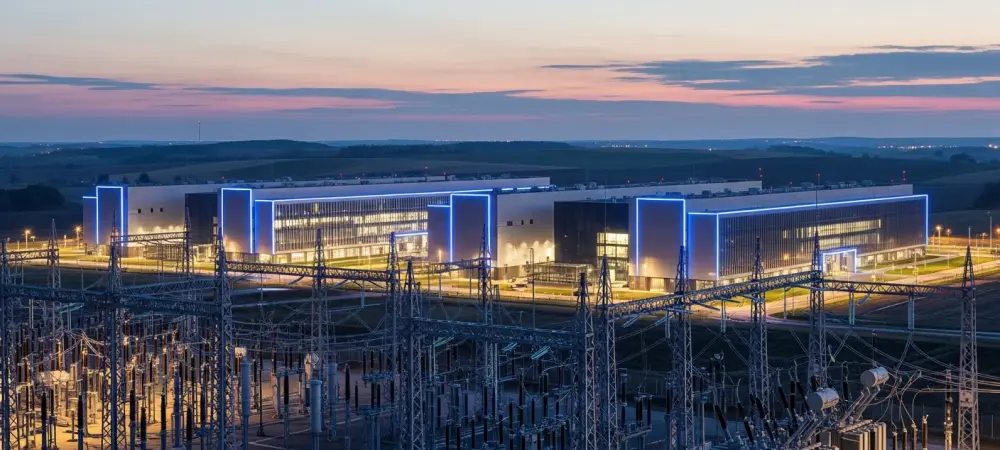
The horizon of Will County is set to change forever as a quiet stretch of Illinois farmland prepares to host one of the most powerful digital engines on the planet. By greenlighting the Joliet Technology Center, local officials have signaled a monumental shift from the region’s agricultural roots toward a future defined by high-speed processing and massive infrastructure. This 795-acre development represents a staggering $20 billion investment, transforming the outskirts of the city into a critical node for the global internet economy.
A Substation the Size of a Small City: Joliet’s $20 Billion Tech Pivot
The sheer magnitude of the Joliet Technology Center is difficult to overstate, as its 1.8GW power capacity marks a significant departure from standard industrial projects. This capacity is designed to fuel the relentless hunger of modern computing, effectively turning a single site into a power consumer larger than many mid-sized cities. Led by PowerHouse Data Centers and Hillwood Holding, the venture leverages the expertise of the Perot family to create a cornerstone for the region’s long-term economic strategy.
This pivot toward high-tech infrastructure suggests that Joliet is no longer content being just a logistics hub for physical goods. By securing a project of this scale, the city positions itself as a vital player in the virtual supply chain. The massive power requirements necessitate an unprecedented level of utility coordination, ensuring that the infrastructure built today will support the technological demands of the next several decades.
The Strategic Expansion of the Illinois Digital Corridor
Relocating the center of gravity 40 miles southwest of Chicago allows the Illinois digital corridor to breathe, expanding beyond the saturated markets of the immediate metropolitan area. As land and power become increasingly scarce in traditional hubs, Joliet offers the rare combination of available acreage and robust utility access. This expansion is a direct response to the global explosion in AI development and cloud storage needs, which require physical footprints that older urban centers simply cannot accommodate.
Moreover, this project reflects a broader trend of utility-scale investments migrating toward the Midwest, where stable geology and competitive energy markets provide a safe haven for data. By moving into Will County, the tech industry is not just finding space; it is building a new frontier for the “Silicon Prairie.” This strategic move ensures that Illinois remains a top-tier destination for global capital as the demand for digital resiliency continues to climb.
Architectural and Operational Scope of the Joliet Technology Center
The master plan for the campus is an exercise in technical precision, featuring 24 two-story buildings that will eventually span 3.5 million square feet. This massive footprint is organized into a four-phase development cycle, allowing the developers to scale operations in alignment with market demand. To support this density, the site will house four dedicated six-acre substations, providing the technical backbone required to keep thousands of servers humming without interruption.
From a financial perspective, the project stands out because it operates without the traditional safety net of public incentives or tax abatements. Estimates suggest that the city could see tax revenues ranging from $310 million to over $2.1 billion over the next thirty years. This revenue model provides a rare opportunity for a municipality to fund public services and infrastructure improvements through private investment rather than increasing the burden on local taxpayers.
Community Friction and the Vision for Local Prosperity
The approval process was not without its challenges, as a “jobs versus lifestyle” debate emerged during marathon public hearings. Local building unions strongly advocated for the project, citing the thousands of high-paying construction roles that will be sustained throughout the multi-phase buildout. For many labor leaders, the data center represents a generational opportunity to secure steady work and specialized training for the local workforce.
In contrast, some residents voiced concerns regarding the erosion of rural aesthetics and the potential for rising utility costs driven by the campus’s immense power draw. The friction between city officials and community members highlighted a growing need for transparency in large-scale land use decisions. Nevertheless, the absence of tax breaks has set a new precedent, suggesting that massive data centers can be successfully integrated into communities as self-sustaining economic engines rather than subsidized ventures.
Navigating the Shift from Industrial Farmland to High-Tech Hub
Integrating a project of this scale near S. Rowell Road requires a sophisticated framework for monitoring long-term environmental and utility impacts. As the city annexes this land, it must balance the influx of high-tech infrastructure with the needs of existing residents and the surrounding ecosystem. Best practices for municipal oversight will involve rigorous performance reviews to ensure that the developer meets its obligations regarding noise mitigation, water usage, and traffic management during the construction phases. Other municipalities looking to replicate Joliet’s success should view this deal as a blueprint for leveraging data center growth as a debt-free revenue stream. By focusing on site-readiness and robust power agreements, local governments can attract global tech giants while maintaining fiscal independence. The move transitioned the region from a traditional manufacturing mindset to a forward-looking digital strategy, establishing a clear path for sustainable technological integration in the years ahead.