

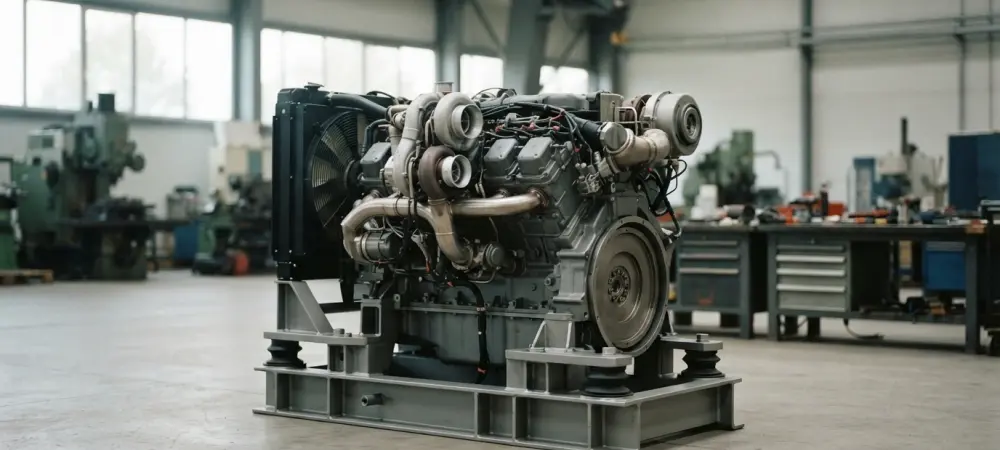
The massive influx of capital into generative artificial intelligence has created a paradoxical situation where billion-dollar models sit idle in sales departments because they lack the practical structure to function effectively. Organizations are investing heavily in foundation models, yet many are finding that these sophisticated tools fail to move the needle on actual revenue growth. The problem is not the intelligence of the models themselves, but how they are being deployed within the sales ecosystem. While a general-purpose AI represents a world-class engine, it is often delivered to sales teams without a vehicle—the necessary structure, user interface, and process to make it functional. This analysis explores why the current do-it-yourself approach to sales AI is failing and how leaders can bridge the gap between raw technological capability and disciplined sales strategy.
The Disconnect Between Raw AI Power and Strategic Sales Execution
The disconnect between technological potential and strategic execution remains a primary barrier to realizing a return on investment in today’s market. In many instances, the raw power of a model is simply dropped into a sales team’s workflow without any surrounding architecture or guidance. This results in a scenario where highly capable intelligence is used for trivial tasks, leaving the most complex and valuable sales activities untouched and unassisted. Without a vehicle to translate model outputs into actionable steps, the technology becomes a distraction rather than a multiplier.
Moreover, the lack of a specialized interface means that the intelligence remains detached from the actual sales motion. Executive leadership often assumes that the mere presence of AI leads to improved performance, but without a clear framework for application, the software remains an expensive curiosity. The alignment of technological capability with the nuances of high-stakes negotiation is the missing link in revenue generation strategies. By failing to integrate AI into the daily discipline of sales, companies are wasting the cognitive potential of the tools they have worked so hard to acquire.
From Foundation Models to the Era of Specialized Sales Tech
The history of sales technology has traditionally been defined by rigid CRM systems and manual data entry. However, the emergence of Large Language Models shifted the landscape almost overnight. Suddenly, the primary tools utilized by sellers shifted from specialized sales-tech stacks to general-purpose assistants. Recent data reveals a startling trend: while 95% of sales research is expected to originate with AI by 2027, only a small fraction of sellers currently use tools specifically designed for their profession. This shift highlights a historical pivot where the underlying technology has outpaced the applications built to house it.
Understanding this evolution is critical because it explains why so many organizations are currently stuck in a manual phase of AI adoption, attempting to use powerful engines to do work without the right machinery. In the past, software was built to solve specific problems; today, the engine exists first, and the problem-solving layer is being retrofitted. This reversal requires a new perspective on procurement, moving away from the assumption that a general tool can solve specialized professional challenges without significant modification or context-specific adaptation.
Bridging the Gap Between Capabilities and Execution
The Operational Inefficiency of DIY Prompt Engineering
When executive leadership mandates the use of general AI without providing a structured framework, they inadvertently turn their best revenue producers into amateur software engineers. In many organizations, top-performing sellers are spending hours crafting prompts and building personal automations rather than engaging with customers. This hands-off mandate creates a massive drain on productivity. Instead of a unified sales motion, the organization becomes fragmented into hundreds of individual, uncoordinated processes. This lack of consistency is the enemy of scale; if every representative is using a different homemade workflow, the company loses its ability to predict outcomes.
Moving Beyond Generation to Strategic Reasoning Capabilities
A common misconception among leadership is that sellers primarily need AI for content generation, such as writing emails or summaries. However, research into seller preferences tells a different story. Roughly 72% of B2B professionals value AI more for its reasoning and pattern recognition than its fluency in writing. Sellers are looking for a strategic teammate that can analyze a deal’s current stage, identify missing stakeholders, or suggest a next best action based on complex CRM data. A raw model lacks the specific context of a company’s unique pricing and product nuances, making its reasoned advice generic and often unactionable without a specialized intelligence layer.
Regional Nuances and the Human Element in AI Adoption
The adoption of AI in sales also faces cultural and functional hurdles, specifically the clash between the engineering mindset and the sales mindset. Engineers often appreciate technicalities, whereas sellers prioritize relationships and judgment. They have little interest in the under-the-hood mechanics of prompt engineering. Furthermore, misconceptions about AI replacing sellers have largely been debunked; the primary concern is accuracy, not job security. Sellers want tools that enhance expertise, not tools that require learning a new technical trade. Recognizing these human factors is essential for any successful rollout to ensure the technology is adopted rather than ignored.
The Future Landscape of Purpose-Built Sales Intelligence
The future of the industry lies in the transition from general-purpose assistants to specialized AI layers. We are moving toward an era where the foundation model is hidden behind a purpose-built interface that integrates directly with the CRM and understands specific sales methodologies. Experts predict that the companies winning the next decade will be those that offer AI-enabled guidance, which is already showing a 2.6 times higher likelihood of commercial growth compared to DIY approaches. We can expect a shift toward technology that offers real-time deal coaching and automated qualification based on company-specific frameworks, creating a seamless integration between the engine of the model and the vehicle of the sales process.
Strategic Best Practices for Sales Leadership
To capitalize on AI, sales leaders must stop viewing models as a standalone strategy and start viewing them as a component of a larger system. First, organizations should implement a specialized technology layer that sits between the foundation model and the user, ensuring that all AI outputs are grounded in the company’s specific data. Second, focus on reasoning use cases—such as deal gap analysis—rather than just generative tasks. This ensures the technology addresses the most critical bottlenecks in the sales cycle. Finally, preserve sales discipline by ensuring that AI tools reinforce, rather than disrupt, established methodologies. By providing a complete vehicle, leaders allow their teams to focus on building trust and closing deals.
Conclusion: Driving Revenue with a Complete System
The disconnect between AI capability and sales success presented a challenge that required intentional structure to resolve. As explored throughout this analysis, a powerful engine proved insufficient when the driver lacked a steering wheel or chassis to guide the momentum. Organizations that shifted away from raw, unmanaged models toward purpose-built, specialized applications achieved the consistency and scale necessary for long-term growth. This transition enabled revenue teams to leverage sophisticated reasoning without the burden of technical configuration. Leaders who prioritized a complete system ensured that their technological investments translated directly into market share. The focus moved toward integrating real-time insights into existing CRM workflows, which eliminated the fragmentation caused by individual experimentation. Ultimately, the successful deployment of intelligence depended on providing sellers with a vehicle designed specifically for the professional landscape.