

In the current hardware landscape of 2026, the dream of building a budget-friendly high-performance PC has morphed into a complex exercise in financial mitigation and strategic timing. Driven by supply chain disruptions and a pivot toward AI-centric manufacturing, the industry is grappling with a memory crisis that has sent DDR5 prices soaring to uncomfortable heights. In this climate, any opportunity to save on high-speed components attracts immediate attention from enthusiasts and professionals. A recent promotion on the G.Skill Flare X5 DDR5-6000 16GB module has sparked a debate: is a 16% discount enough to justify a purchase, or is it merely a minor relief in a volatile market? This analysis explores the technical merits of the G.Skill module against the harsh reality of current pricing.
The Evolution of the DDR5 Standard and the Current Memory Crisis
To understand why a $220 price tag for 16GB of RAM is considered a deal, one must look at the trajectory of the DDR5 transition. When this standard first launched, it promised massive bandwidth improvements over its predecessor but came with a heavy early-adopter tax. As production scaled, prices began to stabilize, reaching a low point a year ago when similar modules were found for roughly $169. However, the current crisis has reversed those gains, pushing retail prices back toward the $260 mark. This regression is frustrating for builders who remember the affordability of previous cycles. Consequently, today’s market is defined by how much less a purchase hurts the wallet, rather than its absolute historical value.
Evaluating the G.Skill Flare X5: Specs, Compatibility, and the Single-Channel Trade-off
Technical Prowess and the Low-Profile Advantage
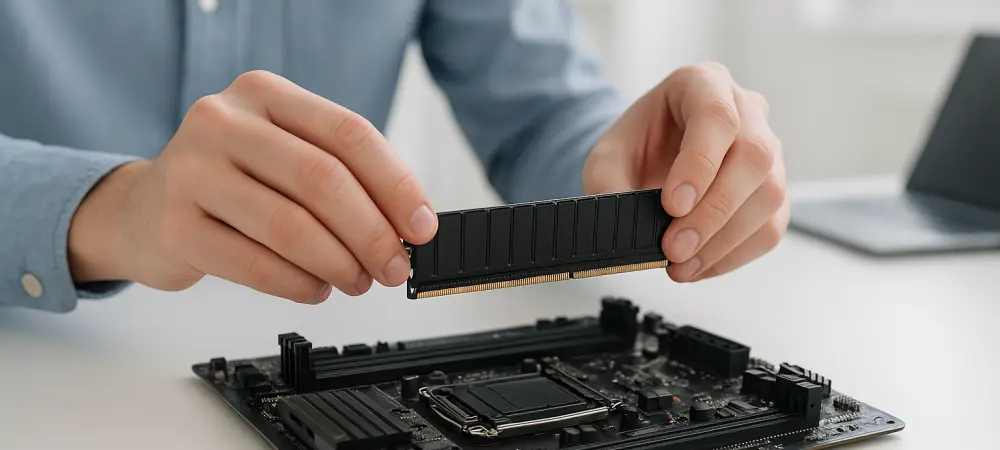
The G.Skill Flare X5 DDR5-6000 hits the sweet spot for modern processor architectures, operating at 6000MT/s with CL36 timings at 1.35V. It provides high-tier performance without generating excessive heat. Its 33mm low-profile design is a major advantage, fitting under the massive air coolers often required for high-end CPUs. By eschewing flashy RGB lighting, G.Skill focused on a sleek, matte black aesthetic that prioritizes functional clearance, making it ideal for compact builds where every millimeter matters.
The Universal Profile Conflict: AMD EXPO vs. Intel XMP
This module also bridges the gap between Intel’s XMP and AMD’s EXPO standards. Historically, cross-platform stability was an issue, but the Flare X5 supports both standards natively. This flexibility simplifies the building process, ensuring that whether a user chooses an AM5 or a modern Intel platform, they can achieve advertised speeds with one click. In an expensive market, the security of knowing a component will work across different builds adds significant intangible value.
The Single-DIMM Dilemma and Performance Bottlenecks
Despite these strengths, the deal applies to a single 16GB module, not a dual-channel kit. Using a single stick creates a bandwidth bottleneck that hinders performance in gaming and high-end productivity tasks. While DDR5 is more efficient than older standards due to internal sub-channels, it still cannot match the throughput of a proper pair. This makes the deal most attractive to those planning to buy two separate sticks or those on a strict budget who intend to add a second module later.
Future Outlook: Will Memory Prices Ever Stabilize?
The memory crisis is not expected to resolve quickly as we move through 2026 and into 2027, as manufacturers are prioritizing high-margin chips for AI and data centers. Prices may plateau rather than decline sharply in the coming quarters. Scarcity will likely remain the dominant market force, though innovations like CAMM2 modules might eventually disrupt the pricing of traditional DIMMs.
Strategic Buying Advice for Modern PC Builders
For those building a system now, the Newegg promo code (EPF5595) offers a mathematically superior choice at $220 compared to Amazon’s $255. The most effective strategy is to purchase two modules to ensure dual-channel operation, even if it increases the initial investment. If a build is not urgent, waiting for the market to stabilize remains the most prudent recommendation, as historical cycles suggest that supply eventually catches up.
Final Verdict: Balancing Necessity and Value
The analysis of the G.Skill DDR5 deal revealed a complex relationship between hardware performance and economic scarcity. While the Flare X5 proved to be a reliable and versatile component, the single-module configuration presented a performance risk for uninformed buyers. Builders who capitalized on the discount secured a high-tier part at a significant relative saving, yet they still paid more than the historical average. Moving forward, consumers should prioritize modularity over aesthetic features like RGB lighting and monitor fabrication shifts toward AI-centric hardware to better navigate future pricing cycles.