

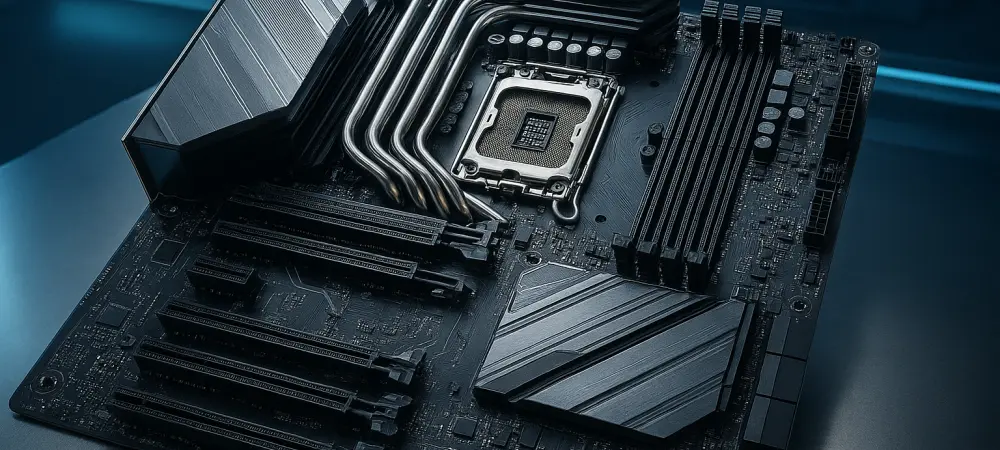
Automated cooling systems now monitor internal temperatures in real-time to adjust fan speeds dynamically, striking a precise balance between silent operation and aggressive thermal management. This evolution is central to the ASUS ROG Strix Z890-E Gaming WiFi, a motherboard that arrives at a pivotal moment in desktop computing history. As enthusiasts migrate toward the Intel Core Ultra Series 2 processors, the requirement for a motherboard that can handle the specific power and throughput demands of the Arrow Lake architecture has never been more pressing. Choosing a motherboard is no longer just about compatibility; it is about establishing a robust ecosystem that allows every other component to reach its maximum potential. The Z890-E positions itself as more than a simple entry point, acting instead as a comprehensive bridge for power users who demand professional-grade stability and next-generation features without the prohibitive costs associated with extreme flagship products.
Architectural Evolution: The LGA 1851 and Z890 Ecosystem
The move to the LGA 1851 socket represents a significant shift from the long-lived LGA 1700, bringing a higher pin density that facilitates improved power delivery and expanded I/O capabilities. This transition was necessitated by the intricate design of the Intel Core Ultra processors, which utilize a tile-based architecture to separate different functions like graphics and compute. By adopting the Z890 chipset, this motherboard ensures that users can leverage the full suite of improvements offered by the new platform, including native support for faster memory and integrated Thunderbolt features. This is not merely a seasonal refresh but a fundamental change in how the processor interacts with the motherboard, allowing for a more modular and efficient data path. Consequently, builders who prioritize longevity find that this socket provides the necessary physical and electrical framework to support the latest silicon innovations while maintaining peak operational efficiency across varying workloads. The Z890 chipset distinguishes itself by providing an extensive array of PCIe lanes, which are essential for handling the massive data requirements of modern graphics cards and storage solutions. With the integration of PCIe 5.0 throughout the primary slots, the ASUS ROG Strix Z890-E eliminates the bottlenecks that previously limited the performance of high-speed NVMe drives and top-tier GPUs. This bandwidth is crucial for data-intensive applications such as real-time 8K video editing and complex scientific simulations that rely on rapid data throughput between the CPU and peripheral devices. Furthermore, the chipset manages the sophisticated power states required by the Arrow Lake architecture, ensuring that the system remains responsive even when transitioning between idle and full-load states. The strategic allocation of these lanes allows for a versatile hardware configuration, enabling users to populate multiple expansion slots without compromising the speed of their primary storage or graphics interface.
Performance Engineering: Power Integrity and Intelligent Optimization
Stability begins with the voltage regulator module, and the Z890-E employs an 18+1+2+2 power stage design that is engineered to handle massive electrical loads with surgical precision. Each of these power stages is rated for up to 110A, providing a level of headroom that was previously reserved for the most expensive overclocking boards in the industry. This over-engineered approach ensures that the Core Ultra 9 processors can draw the power they need during sustained multi-threaded tasks without causing the VRM to overheat or throttle. The use of high-quality alloy chokes and durable capacitors further enhances the reliability of the power delivery system, shielding the delicate internal components from electrical noise and voltage fluctuations. For the user, this translates into a system that remains rock-solid during intense gaming sessions or overnight rendering marathons. The robustness of this electrical design is a testament to the engineering focus on creating a foundation that supports both high performance and longevity. The implementation of AI Overclocking represents a significant leap forward in how enthusiasts can extract performance from their hardware without spending hours in manual BIOS adjustments. By analyzing the unique thermal characteristics of the cooling system and the specific silicon quality of the installed processor, the motherboard can automatically calculate the most efficient frequency and voltage settings. This intelligent system continuously monitors system behavior, making real-time adjustments to ensure that the CPU operates at its peak safe limits. Parallel to this, AI Cooling II provides a sophisticated method for managing fan speeds, using a proprietary algorithm to reduce unnecessary noise while the system is under light loads. Once the workload increases, the system reacts instantly to ramp up cooling, ensuring that temperatures stay within optimal ranges. These features democratize high-end performance, allowing users of all skill levels to enjoy a tailored computing experience that balances speed, stability, and acoustics with minimal effort.
Strategic Implementation: Connectivity and Long-Term Value
The physical expansion capabilities of the ROG Strix Z890-E are tailored to meet the needs of users who maintain massive digital libraries or work with large datasets. With seven M.2 slots available on the board, the potential for high-capacity storage configurations is unparalleled in this class of hardware. Three of these slots are specifically designed to support the PCIe 5.0 standard, providing the necessary bandwidth for the fastest storage drives currently available on the market. This layout allows users to build a storage array that combines the speed of Gen5 drives with the vast capacity of Gen4 options, creating a versatile environment for both high-speed scratch disks and long-term data storage. The integration of Wi-Fi 7 and a 5Gb Ethernet port further enhances the connectivity profile, offering blistering speeds for both wireless and wired networking. These features ensure that the motherboard serves as a central hub for a complex workstation, providing the throughput necessary for seamless interaction with data-heavy resources.
The motherboard functioned as a catalyst for high-performance computing by bridging the gap between standard consumer hardware and elite enthusiast platforms. It successfully managed the transition to the LGA 1851 socket, proving that a stable and efficient foundation was essential for the success of the Intel Core Ultra series. Builders who prioritized this board secured a system that remained relevant through rigorous software updates and increasing hardware demands. The actionable takeaway for future configurations involved selecting components that emphasized electrical stability and intelligent thermal management rather than just raw speed. Moving forward, the industry utilized these design principles to create even more efficient systems, but the Z890-E remained the definitive starting point for this technological era. Those seeking to build a new system should have looked for a balance of massive storage and advanced networking to ensure their machine could handle the data-heavy environments of the coming years. This hardware provided the necessary tools for a high-performance desktop experience.