

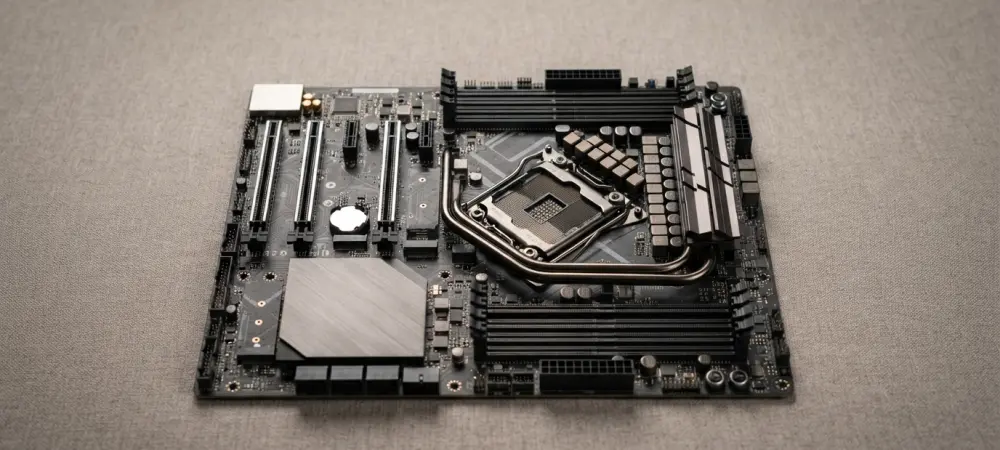
GIGABYTE introduces AI Snatch as a specialized utility for automatically scanning system parameters to generate custom, stable memory profiles for non-professional tuners. This advancement coincides with the company’s 40th year of operation, a milestone that has prompted a significant shift in its high-end hardware strategy. Instead of focusing solely on mass-market flagships that attempt to cater to every demographic, the manufacturer has pivoted toward high-concept, limited-edition designs like the X870 AORUS INFINITY. This motherboard represents a fundamental departure from conventional PC architecture, serving as a specialized instrument built for the singular pursuit of extreme memory overclocking and world-record benchmark scores. While it shares some foundational DNA with standard enthusiast boards, the radical engineering choices made here cater to a very specific and demanding demographic of performance purists. The result is a niche masterpiece that prioritizes raw speed over general-purpose versatility.
Architectural Innovation and Memory Speed
The most striking feature of the X870 AORUS INFINITY is the radical 90-degree rotation of the AM5 socket and the surrounding Voltage Regulator Module. This architectural shift is not merely an aesthetic choice but a calculated engineering move designed to minimize trace lengths between the processor and the memory modules. By repositioning the DIMM slots from their traditional location to the right of the CPU to a new position directly above it, GIGABYTE ensures maximum signal integrity for high-frequency operations. This layout necessitates a reduction in memory capacity, offering only two DIMM slots rather than the typical four-slot configuration found on mainstream boards. However, this trade-off is the essential key to its performance, allowing the motherboard to reach unprecedented memory speeds of up to 11400 MT/s. The physical reorganization also clears space for a repurposed x4 NVMe storage slot, effectively utilizing the board’s surface area for maximum throughput.
Beyond the core socket rotation, the physical layout of the X870 AORUS INFINITY addresses the unique needs of enthusiasts who operate on open-air test benches. GIGABYTE clustered the SATA, USB, and ATX power connections along the bottom half of the circuit board to streamline the building process and minimize cable interference during extreme tuning sessions. This strategic reorganization provides ample room for onboard diagnostic code displays and physical overclocking buttons, which are indispensable for users pushing hardware to its absolute limits. Furthermore, the board includes high-end internal components like 5GbE LAN and a cutting-edge wireless module to ensure that data transfer speeds keep pace with internal processing power. While the design imposes some limitations on lane splitting between the secondary NVMe slot and the USB4 controller, these are necessary compromises to maintain the high-speed throughput required for elite benchmarking and competitive validation.
Thermal Systems and Power Delivery
Thermal efficiency is managed through a comprehensive cooling solution that starts with a full-coverage, all-metal backplate. This component serves a dual purpose by providing structural rigidity to the PCB while simultaneously acting as a massive heat sink that improves thermal dissipation by a measured 14 percent. Real-world testing confirms that the VRM, chipset, and mainboard temperatures remain significantly lower than competing boards that lack such extensive protection. In addition to the backplate, GIGABYTE introduced a specialized CPU Thermal Matrix heatsink that shrouds the processor area. This design serves as a thermal barrier that effectively isolates the high-speed memory from the intense heat generated by the Voltage Regulator Module during heavy workloads. This isolation is critical when pushing RAM to its absolute limits, as it prevents thermal throttling and maintains system stability during the long and grueling benchmarking sessions common in the enthusiast community.
Under the hood, the motherboard features a robust 18+2+2 phase VRM design equipped with 110A power stages to ensure stable power delivery even under the most intense voltage loads required for liquid nitrogen cooling. The board also prioritizes mechanical durability through several innovations, such as reinforced metal sockets for power cable connections and a sliding shroud for CPU power cables that masks unsightly wiring. The EZ-Latch system further enhances the user experience by incorporating magnetic attachment points for drive covers and heat shields, allowing them to snap into place and lock with minimal effort. This toolless design extends to the M.2 slots, making hardware swaps fast and efficient for those who frequently modify their test configurations. While the latchless PCIe slot allows for easy one-handed removal of heavy graphics cards, its security during transport has been a topic of discussion among users who require a more traditional locking mechanism for stability.
Software Integration and Market Value
The software ecosystem for the X870 AORUS INFINITY utilizes a refined UEFI environment that remains intuitive for veteran users while introducing specialized modes to maximize performance. Among these is the X3D Turbo Mode 2.0, which is specifically designed to extract every ounce of performance from AMD’s X3D processors. Additionally, the motherboard features simplified EXPO profiles that allow users to quickly apply optimized memory settings with minimal manual intervention. For enthusiasts who prefer automated tuning, the AI Snatch utility provides a sophisticated way to scan the entire system and generate custom, stable memory profiles. While the gains from this automated process are often more modest than what can be achieved through painstaking manual adjustments, they offer a safer and more accessible entry point for users who are not yet comfortable managing granular voltage settings. This balance of advanced manual controls and automated assistance ensures that the board remains usable across different skill levels. The market realities of the X870 AORUS INFINITY ultimately dictated its position as a highly specialized race car of the PC world rather than a daily driver for the average consumer. Prospective buyers were advised to prioritize specialized liquid cooling solutions, as traditional air coolers were largely incompatible with the rotated socket layout that altered standard airflow patterns. Because the total cost of ownership escalated quickly when paired with the elite DDR5 memory required for peak performance, builders had to evaluate whether the marginal gains in benchmarking justified the substantial investment. Looking forward, the innovations seen in this board suggested that more accessible versions of these architectural shifts might eventually reach mainstream product lines. For those pursuing world records, the platform served as a crucial tool that necessitated careful planning regarding thermal management and component selection. It remained an impressive demonstration of engineering that challenged conventional design standards.