

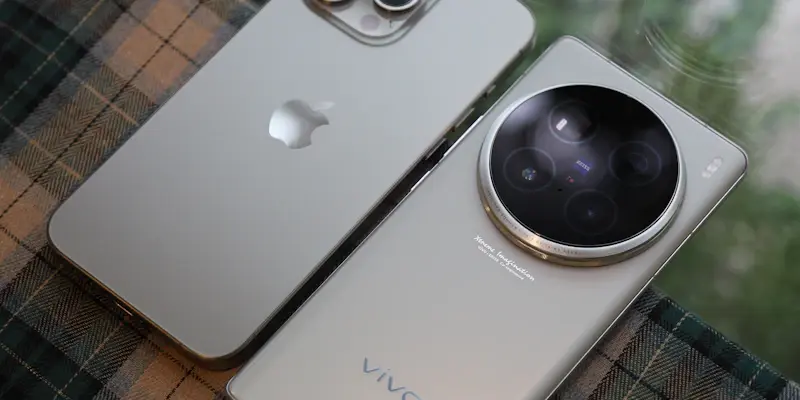
With the launch of the Vivo X200 Ultra in China at a starting price of approximately $890, Vivo has positioned this flagship model as a strong contender in the high-end smartphone market. Its standout feature is its advanced camera system, which has drawn comparisons to professional-grade cameras like the Sony A6700 mirrorless camera. The X200 Ultra boasts three Zeiss-tuned lenses, including two Sony LYT-818 sensors with 35mm and 14mm lenses and a Samsung Isocell HP9 telephoto camera with an 85mm lens. This camera setup, paired with a Zeiss teleconverter, supports up to 8.7x zoom, solidifying its prowess in mobile photography.
The Vivo X200 Ultra is powered by the Snapdragon 8 Elite and has two proprietary chips, the VS1 for image pre-processing and the V3+ for post-processing. This combination enhances image quality and supports advanced features like 4K120 FPS video recording from all three sensors, as well as 4K60 LOG support and 4K time-lapse capabilities. The front of the device is equally impressive, featuring a 6.82-inch quad-curved LTPO display with a 120 Hz adaptive refresh rate and a resolution of 3168 x 1440 pixels. This display supports Dolby Vision and HDR Vivid, providing an immersive viewing experience enhanced by its 93.3% screen-to-body ratio and Armor glass protection.
Advanced Camera System and Imaging Capabilities
The Vivo X200 Ultra’s camera system is undoubtedly its most talked-about feature, drawing significant attention and praise for its innovation and performance. The integration of Zeiss-tuned lenses with advanced sensors positions it as a superior option for photography enthusiasts and professionals alike. The primary cameras include two Sony LYT-818 sensors, known for their impressive light sensitivity and clarity, making them suitable for various lighting conditions. The Samsung Isocell HP9 telephoto camera, featuring an 85mm lens, adds further versatility, enabling detailed close-up shots.
The inclusion of a Zeiss teleconverter extends the camera’s zoom capabilities up to 8.7x, allowing users to capture high-quality images from a distance. Vivo’s proprietary chips, the VS1 and V3+, work together to refine image pre-processing and post-processing. This technology ensures that each photo taken with the X200 Ultra is processed for maximum clarity, color accuracy, and detail. These features make the Vivo X200 Ultra a standout choice for anyone looking to bridge the gap between smartphone and professional-grade photography. In addition to its still photography capabilities, the X200 Ultra excels in video performance. The device supports 4K120 FPS video recording, allowing for smooth and detailed video capture. Users can also benefit from 4K60 LOG support, which is ideal for those who want to edit their videos professionally, providing greater flexibility in post-production. The dynamic range of 14 EVs and 4K time-lapse recording capabilities further enhance its video functionality, making the X200 Ultra a comprehensive tool for both photographers and videographers.
Display, Battery, and Additional Features
Beyond its camera capabilities, the Vivo X200 Ultra offers several features that complement its flagship status. The device’s 6.82-inch quad-curved LTPO display is a visual delight, offering a 120 Hz adaptive refresh rate and a high resolution of 3168 x 1440 pixels. With a 93.3% screen-to-body ratio, the display is expansive and immersive. Its compatibility with Dolby Vision and HDR Vivid ensures vibrant colors and deep contrasts, enhancing the viewing experience for users, whether they’re watching videos, browsing the web, or playing games.
Battery life and charging capabilities are critical considerations for users, and the Vivo X200 Ultra does not disappoint. It comes equipped with a robust 6,000 mAh battery that supports 40 W wireless and 90 W wired charging. This ensures that the device can be charged quickly and efficiently, minimizing downtime and keeping users connected throughout the day. The inclusion of a 3D ultrasonic fingerprint reader adds an extra layer of security and convenience, allowing for quick and reliable access to the device.
Other noteworthy features include dual stereo speakers for superior audio quality and IP68 and IP69 ratings for water and dust resistance. This makes the X200 Ultra a durable choice for those who need a device that can withstand various environmental conditions. The smartphone comes in different configurations, with the base model offering 12 GB of RAM and 256 GB of storage, and an upgraded model boasting 16 GB of RAM and 512 GB of storage. This ensures that users have ample space and performance for all their needs.
Conclusion: A Comprehensive Mobile Device
The Vivo X200 Ultra has just been launched in China, starting at around $890, positioning itself as a contender in the premium smartphone market. Its standout feature is its cutting-edge camera system, which has been likened to professional cameras such as the Sony A6700 mirrorless. The X200 Ultra is equipped with three Zeiss-tuned lenses: two Sony LYT-818 sensors boasting 35mm and 14mm lenses, and a Samsung Isocell HP9 85mm telephoto lens. This setup, with a Zeiss teleconverter allowing up to 8.7x zoom, makes it a powerhouse for mobile photography. Under the hood, the Vivo X200 Ultra is driven by the Snapdragon 8 Elite processor and features two custom chips, the VS1 for image pre-processing and the V3+ for post-processing. This enhances image quality significantly, enabling advanced features such as 4K120 FPS video recording on all three sensors, 4K60 LOG support, and 4K time-lapse. The front of the device showcases a 6.82-inch quad-curved LTPO display with a 120 Hz adaptive refresh rate and a resolution of 3168 x 1440 pixels. The screen supports Dolby Vision and HDR Vivid, ensuring an exceptional visual experience, further enhanced by a 93.3% screen-to-body ratio and Armor glass protection.