

Dominic Jainy is a seasoned IT professional whose career has been defined by his deep engagement with artificial intelligence, machine learning, and the evolving architecture of blockchain technology. With a keen eye for how these digital innovations manifest in physical hardware, he has become a leading voice in evaluating how next-generation consumer electronics reshape professional workflows. In this discussion, we explore the engineering milestones of the Huawei Pura X Max, examining its transition to a broader aspect ratio and the sophisticated thermal and optical systems that allow it to function as a high-performance productivity hub. Our conversation covers the strategic design choices behind the device’s remarkably slim profile, the practical implications of its advanced durability ratings, and the specialized sensor technology that defines its photographic capabilities.
The Pura X Max shifts from a 16:10 display to a 14.1:10 aspect ratio and is significantly thinner at 5.2mm unfolded. How does this square design impact daily multitasking, and what engineering challenges were involved in reducing the thickness while increasing the screen size to 7.7 inches?
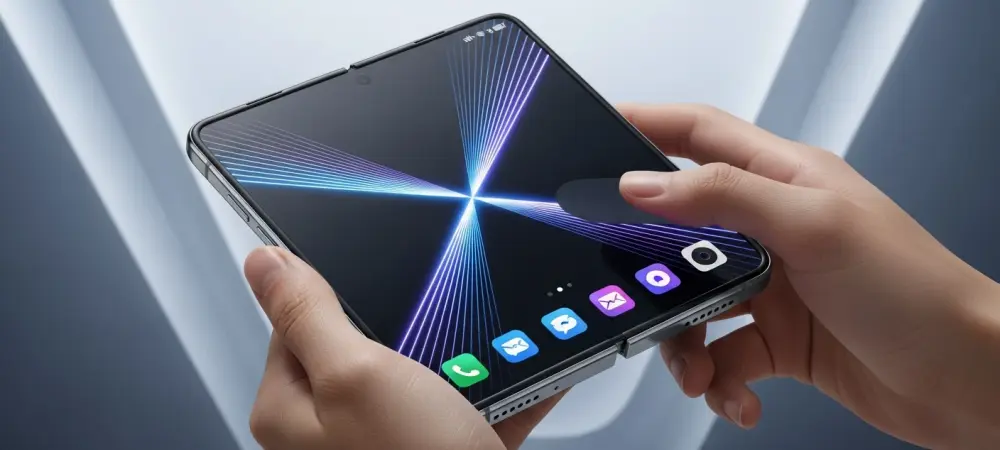
The shift to a 14.1:10 aspect ratio on the 7.7-inch internal display is a deliberate move away from the “narrow” feel of traditional phones toward something that mimics a digital canvas. When you are juggling multiple apps, this nearly square 2,584 x 1,828px resolution allows for side-by-side multitasking without the cramped verticality you see on 16:10 screens. From an engineering standpoint, shaving the thickness down to just 5.2mm while expanding the screen surface is a massive feat of structural management. They had to rethink the entire internal stack, utilizing an aluminum alloy frame to maintain rigidity so the device doesn’t feel fragile despite being 2mm thinner than the previous 7.2mm model. It’s a delicate dance between making the phone lighter at 229g and ensuring the 11.2mm folded profile still feels substantial in the hand.
With the addition of the M-Pen 3 Mini and its dedicated carrying case, this device moves toward a professional productivity tool. Could you explain the specific workflow benefits of using a stylus on a foldable screen and how the software adapts to these precision inputs?
A stylus on a foldable screen completely changes the utility of the device, turning a simple consumption tool into a legitimate workstation for designers or executives. The M-Pen 3 Mini is specifically scaled to match the 120mm height of the folded Max, allowing for a seamless transition from quick notes on the 5.4-inch cover screen to detailed schematics on the main 7.7-inch panel. HarmonyOS 6.1 plays a huge role here, providing low-latency response times that make writing feel like pen on paper rather than plastic on glass. You can feel the precision when marking up documents or navigating complex spreadsheets where a fingertip is simply too imprecise. The dedicated case ensures the pen is always within reach, which is vital for maintaining a flow state during back-to-back meetings.
The Kirin 9030 Pro promises a 30% performance boost over its predecessor, supported by a vapor chamber and graphene cooling. How does this hardware configuration handle high-demand tasks, and what metrics demonstrate the efficiency of this thermal management system during extended use?
That 30% performance leap is significant when you’re pushing the Kirin 9030 Pro through heavy data processing or high-end mobile rendering. To keep the 5.2mm chassis from becoming uncomfortably warm, the combination of a vapor chamber and a graphene sheet is essential for rapid heat dissipation. You can really feel the system working during extended video calls or gaming sessions, as the thermal spread prevents the localized “hot spots” that often lead to CPU throttling. This cooling efficiency is what allows the LTPO 2.0 panels to maintain their 1-120Hz refresh rates without dropping frames due to heat. It’s about sustaining peak performance over hours, not just minutes, ensuring the user experience remains fluid regardless of the workload.
Moving to IP58 and IP59 ratings provides protection against dust and high-temperature water jets. What specific testing protocols ensure that the second-gen Kunlun glass and the folding hinge mechanism maintain their structural integrity when exposed to these harsher environmental conditions?
The jump to an IP59 rating is quite rare in the smartphone world, as it implies the device can withstand high-pressure, high-temperature water jets. To achieve this, the seals around the hinge and the aluminum frame must be incredibly tight, preventing moisture from reaching the sensitive internal electronics. The second-gen Kunlun glass on the exterior provides the necessary impact resistance, while the hinge undergoes thousands of cycles of stress testing in dusty and wet environments to ensure no particles grind down the mechanism. When you fold the device, you can feel the precision in the tension, a tactile reassurance that the internal seals are holding firm. It moves the foldable category from being a “delicate luxury” to a rugged tool that can survive a spill or a dusty construction site.
The camera system features 50MP RYYB sensors and a variable aperture on the main lens. In what specific lighting scenarios does the RYYB sensor outperform traditional layouts, and how should a user manipulate the f/1.4-4.0 aperture to achieve professional-grade depth of field?
The RYYB sensor is a game-changer for low-light photography because the yellow sub-pixels capture significantly more light than the standard green ones used in traditional layouts. In a dimly lit restaurant or during a moonlit walk, this sensor pulls in detail from the shadows that other phones simply miss, creating a much cleaner image with less digital noise. To get that professional “bokeh” look, a user should open the aperture to f/1.4, which creates a shallow depth of field that beautifully blurs the background behind a portrait subject. Conversely, if you’re shooting a landscape and want everything from the foreground to the horizon in sharp focus, you’d stop it down toward f/4.0. The XMAGE processing works in the background to balance these optics, but having that physical variable aperture gives the photographer a level of creative control usually reserved for DSLR cameras.
With a 5,300mAh battery supporting 66W wired and 50W wireless charging, the power profile has changed significantly. How do these charging speeds affect long-term battery health, and what steps should users take to optimize their power consumption on such large dual displays?
Bumping the capacity to 5,300mAh was a necessary move to support those two massive high-frequency PWM dimming displays. While 66W wired charging is incredibly fast, it is designed with smart thermal management to prevent the battery cells from degrading prematurely due to excessive heat. To really get the most out of a single charge, users should take advantage of the 1-120Hz LTPO technology, which scales the refresh rate down when the screen is static to save precious energy. I also recommend using dark mode globally, as the OLED panels can simply turn off pixels to display black, which significantly reduces the power draw on that 7.7-inch main screen. It’s about being mindful of how you use that 50W wireless SuperCharge—perfect for top-offs during the day so you never actually hit that low-battery anxiety zone.
What is your forecast for the wide foldable smartphone market?
I believe the wide foldable market is on the verge of becoming the preferred choice for the “prosumer” demographic. While flip phones are great for portability and book-style foldables are excellent for media, the “wide” format of the Pura X Max strikes a unique balance that mimics the utility of a small tablet without the awkward bulk. As we see more integration with AI-driven productivity tools, having that extra horizontal screen real estate will become a necessity rather than a luxury. We are going to see a shift where these devices aren’t just seen as phones that open up, but as primary computing devices that happen to fit in your pocket. The engineering hurdles are being cleared, and once the software ecosystems fully catch up to these unique aspect ratios, the adoption rates will likely climb as users realize they can finally leave their laptops behind for most daily tasks.