

Dominic Jainy is a seasoned IT professional whose career has been defined by a deep immersion into the cutting-edge worlds of artificial intelligence, machine learning, and blockchain. His unique perspective allows him to see beyond the surface of consumer gadgets, analyzing how hardware evolution supports the increasingly complex software ecosystems of the modern era. As mobile technology reaches a fever pitch of innovation, Dominic’s insights into the integration of high-density power sources and advanced processing power provide a vital roadmap for understanding where the industry is headed.
This discussion explores the global debut of the Honor Magic V6, a device that pushes the boundaries of foldable engineering. We delve into the significance of its ultra-slim profile, the leap in power density provided by new battery materials, and the impressive display technology that challenges current industry standards. Dominic also evaluates the market strategy behind this global rollout and what these advancements mean for the future of mobile productivity.
The Honor Magic V6 arrives with a profile that feels almost impossible for a foldable device; how do you see this ultra-slim design impacting the way consumers interact with large-screen mobile technology?
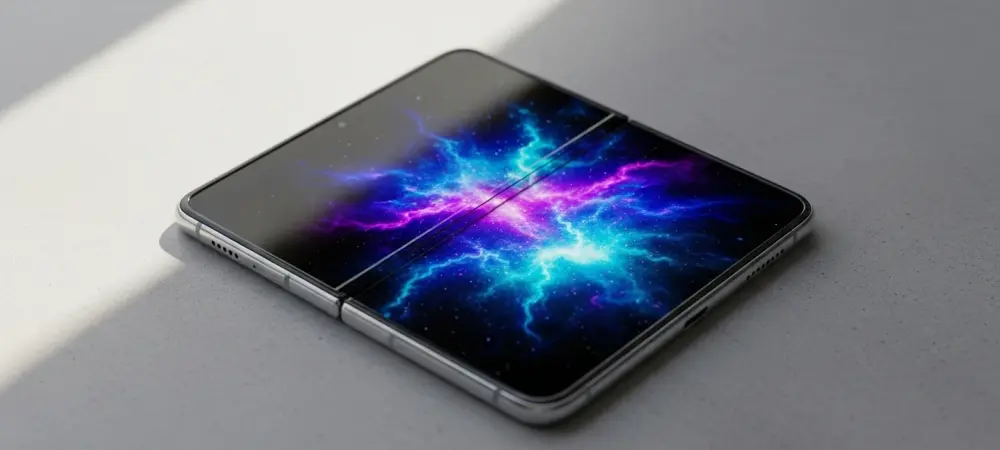
The achievement of a 4 mm thickness when unfolded is a staggering engineering milestone that fundamentally changes the ergonomics of the foldable category. At a weight of just 219 grams, this device effectively removes the “bulk tax” that has historically made book-style foldables feel cumbersome compared to traditional flagship slabs. When the device is closed, it measures only 8.75 mm, which is remarkably close to the thickness of a standard smartphone, allowing it to slide into a pocket without the awkward protrusion users have grown used to. This physical refinement means that the 7.95-inch internal canvas becomes a much more accessible tool for daily tasks rather than a heavy luxury used only in specific settings. We are finally seeing a design where the mechanical complexity of the hinge does not compromise the portability of the handset.
One of the most impressive feats here is the battery capacity given the thinness of the frame; what does the inclusion of a 6,600 mAh silicon-carbon battery signify for the future of power management in slim electronics?
Squeezing a 6,600 mAh battery into a chassis this thin is a masterclass in materials science, representing a significant 13.4% capacity increase over the previous Magic V5 model. By utilizing silicon-carbon technology, the manufacturer has achieved a much higher energy density, providing more power in a smaller physical footprint than traditional lithium-ion packs could ever manage. This isn’t just about raw capacity; the support for 80 W wired and 66 W wireless charging ensures that even a massive cell like this can be topped up rapidly during a short break. It sets a new industry benchmark where hardware designers no longer have to sacrifice longevity for a sleek aesthetic, proving that a device can be both incredibly thin and capable of enduring heavy professional use. This shift in battery chemistry is likely the key that will unlock even thinner form factors across the entire mobile industry in the coming years.
Beyond the hardware dimensions, the Magic V6 packs some of the most advanced internal components available; how do the processing power and display capabilities elevate this device above its predecessors?
Integrating the Snapdragon 8 Elite Gen 5 processor ensures that the device has the necessary horsepower to drive the demanding multitasking features of the Android 16-based MagicOS 10. The visual experience is equally transformative, with the 7.95-inch main AMOLED display hitting a peak brightness of 5,000 nits, while the 6.52-inch cover display reaches an even more incredible 6,000 nits. Such high brightness levels, combined with the 1-120 Hz variable refresh rate, mean the screens remain perfectly legible even under the harshest direct sunlight, which has often been a weak point for foldable panels. When you supplement this with a professional-grade camera array featuring a 50 MP main sensor and a 64 MP periscope telephoto lens, the device matures into a complete workstation. It demonstrates that foldables are no longer just about the screen trick; they are now matching or exceeding the specs of the best non-folding flagships.
As this device moves from its initial launch in Malaysia and Singapore to a broader global release, what do you think about the pricing strategy and the aggressive pre-order incentives being offered?
The starting price of MYR 7,699, which converts to roughly $1,917.18, clearly signals that this is a premium luxury flagship intended to compete at the very top of the market. To sweeten this high entry point, the company is offering exclusive gifts valued at up to MYR 3,797 for those who pre-order between June 4 and June 11, 2026. This aggressive promotional strategy is a classic move to capture early adopters and build immediate market share in regions like Europe and the Middle East where the brand is expanding. By offering the device in diverse colorways like gold, white, black, and red, they are also appealing to a broader demographic that views their smartphone as a personal fashion statement. This combination of high-end specs and significant value-add incentives suggests a very serious push for global dominance in the foldable sector.
What is your forecast for the foldable smartphone market?
I expect the foldable market to move toward a state of “invisibility,” where the mechanical hinge and the screen crease become so refined that the user eventually forgets they are using a folding device at all. As silicon-carbon battery technology becomes the industry standard, we will likely see foldables that are actually thinner and lighter than the current generation of traditional “slab” phones. The competition will shift heavily toward software optimization to ensure that the transition between the cover screen and the expansive internal display is completely seamless for AI-driven workflows. Within the next few years, I believe the “foldable” label will disappear as this form factor becomes the standard expectation for anyone seeking a premium mobile productivity experience.