

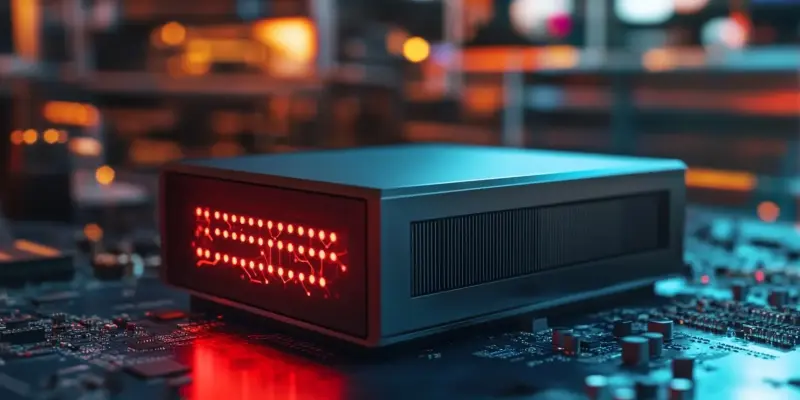
The GMKtec EVO-X2 is creating quite a buzz in the technology landscape with its groundbreaking capabilities, as mini PCs increasingly become an essential tool for advanced computing tasks. This device is particularly notable for integrating the AMD Ryzen AI Max+ 395 processor and supporting 70 billion parameters, enabling advanced local AI operations such as text generation and question-answering. These features position the EVO-X2 as a potential game-changer for those seeking high-performance, AI-driven mini PCs. By leveraging a robust combination of hardware and software advancements, this mini PC promises to push the boundaries of what these compact devices can achieve.
Power and Performance
At the heart of the GMKtec EVO-X2 is AMD’s Strix Halo chip, a powerhouse with 16 cores and 32 threads. This chip is coupled with powerful Radeon 8060S integrated graphics and a dedicated Neural Processing Unit, or NPU, which significantly enhances the device’s AI performance. According to reports, this combination allows the EVO-X2 to perform 2.2 times faster than the RTX 4090 in LM Studio operations, setting a new benchmark for AI performance in mini PCs. This enhanced speed and efficiency could substantially impact various applications, from cutting-edge research to more efficient everyday computing tasks. Furthermore, the inclusion of 8533 MT/s LPDDR5X memory, starting at 32 GB and upwards, offers ample space for demanding applications, ensuring smooth operation even under the heftiest workloads.
Advanced Connectivity and Pricing
Beyond raw computing power, the GMKtec EVO-X2 offers advanced connectivity options to meet the needs of modern users. With a variety of ports, including several fast USB Type-A ports, USB4 Type-C, HDMI 2.1, DP 2.0, and an audio jack, the device provides comprehensive support for connectivity and expansion. Dual M.2 2280 PCI-E Gen 4.0 slots ensure that users have the flexibility to customize their storage to suit their specific needs, whether for speed, capacity, or a balance of both. Priced at approximately $2,052 (14,999 Yuan), the EVO-X2 represents a significant investment, but one that could be justified by its groundbreaking features and potential to revolutionize AI-driven computing in a form factor previously thought incapable of such feats.
Future Prospects
The GMKtec EVO-X2 is generating considerable excitement in the tech world due to its remarkable capabilities, as mini PCs become increasingly vital for sophisticated computing tasks. This particular device stands out for incorporating the AMD Ryzen AI Max+ 395 processor and supporting an astonishing 70 billion parameters. This allows for advanced local AI functions such as text generation and question-answering, positioning the EVO-X2 as a potentially revolutionary option for those in need of high-performance, AI-focused mini PCs. By harnessing a powerful blend of cutting-edge hardware and software, the EVO-X2 aims to redefine the possibilities of what these compact devices can offer. Naturally, as the technology landscape evolves, mini PCs like the EVO-X2 are likely to become crucial tools for both personal and professional applications. They promise not only enhanced performance but also the capacity to handle more complex tasks with ease, thus truly pushing the limits of small-scale computing to new heights.