

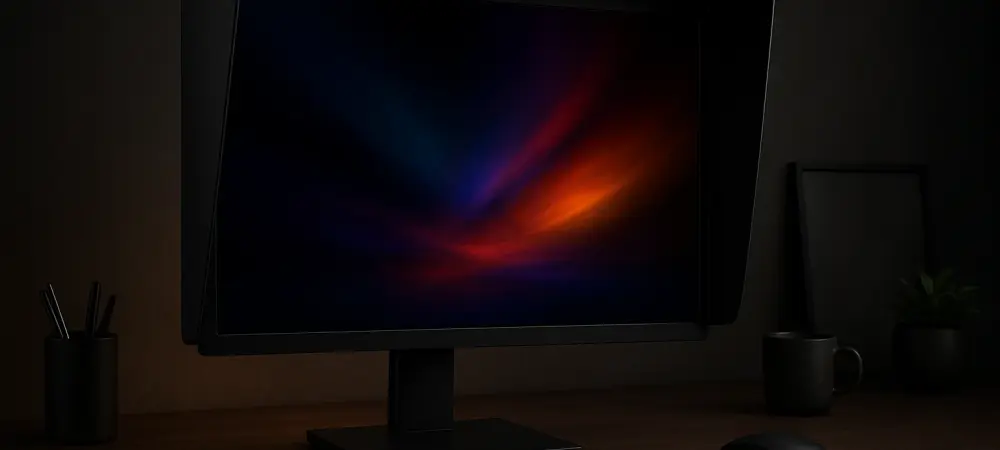
A single misplaced hue or a slightly crushed shadow can be the difference between a masterpiece and a digital disaster for a professional editor working in a high-stakes studio environment. For years, the creative industry viewed hardware through a binary lens: a professional either chose a reliable but visually standard office monitor or invested a small fortune in a specialized, color-accurate display from a boutique manufacturer. The high-end monitor market has long been a battleground between utilitarian office workhorses and color-accurate canvases designed for the elite. However, the introduction of the Dell UltraSharp U3226Q signals a definitive shift in this long-standing strategy, aiming to provide a dream canvas for those whose livelihoods depend on every single pixel being perfect.
This transition marks a significant moment for the industry in 2026, as the boundaries between corporate reliability and high-end creative excellence continue to blur. While Dell historically dominated the cubicle with dependable productivity screens, brands like BenQ and Samsung captured the hearts of visual artists. The U3226Q represents a calculated move to reclaim the creative professional’s desk by offering a specialized tool that prioritizes color fidelity without sacrificing the robust build quality that corporate IT departments have trusted for decades. It is no longer just another screen for spreadsheets; it is a sophisticated instrument for high-stakes visual storytelling.
Bridging the Gap Between Corporate Reliability and Creative Excellence
The emergence of the U3226Q represents the culmination of a decade-long evolution in how professional displays are conceived and marketed. Historically, the UltraSharp line was the gold standard for financial analysts and software developers who required consistency and longevity. By pivoting toward the creative sector, the design team recognized that the modern professional is often a hybrid worker who demands both the logistical convenience of a corporate dock and the extreme visual accuracy of a film studio monitor. This shift has forced the competition to reconsider their own offerings as the gap between these two worlds narrows.
Moreover, the reputation for durability that has followed the brand into the creative space provides a layer of security that boutique brands often struggle to match. Creative professionals often fear the downtime associated with hardware failure or the complexities of international warranties. By leveraging a global support network and a chassis design that feels substantial and purposeful, this monitor attempts to solve the anxiety of the “starving artist” by providing “enterprise-grade” stability. The result is a device that feels as comfortable in a high-end editing suite as it does in a modern executive office.
Why the Shift to QD-OLED Technology Matters for Modern Workflows
In the current digital landscape, the demand for high-dynamic-range (HDR) content is skyrocketing, and creators need hardware that can keep pace with industry standards from 2026 to the end of the decade. The transition from traditional IPS panels to Quantum Dot OLED (QD-OLED) technology is not merely a marketing buzzword; it is a fundamental leap in how light and color are produced. Traditional liquid crystal displays rely on a backlight that often results in “light bleed,” but QD-OLED pixels are self-emissive, allowing for absolute black levels that were previously impossible to achieve on a standard professional monitor.
Infinite contrast ratios and superior color volume solve common editing hurdles that have plagued digital artists for years. When a creator is working on a dark, atmospheric scene, the “gray black” problem of older panels can lead to over-correction, resulting in an image that looks washed out on other screens. The significance of DisplayHDR True Black certification means that the monitor can display deep, ink-like blacks while simultaneously pushing vibrant, saturated colors through the Quantum Dot layer. This ensures that the visual intent of the artist is preserved from the moment of capture through the final export.
A Deep Dive into Visual Fidelity and Performance Specs
The U3226Q is engineered to handle the most demanding visual tasks, from high-end color grading to intricate photo retouching. Its 32-inch 4K canvas strikes the perfect balance between pixel density and physical screen real estate, offering enough room for complex timelines in video editing software without sacrificing the sharpness needed for high-resolution photography. The fine detail visible on this display allows for a level of precision that smaller or lower-resolution monitors simply cannot provide, making it a cornerstone for detail-oriented professionals.
One of the most surprising additions to this professional-grade display is the 120Hz refresh rate. While high refresh rates were once reserved for the gaming community, they have become a necessity for smooth professional software interfaces in 2026. Navigating through dense layers in graphic design applications or scrubbing through a high-frame-rate video timeline feels noticeably more responsive and less taxing on the eyes. Furthermore, the inclusion of a state-of-the-art anti-glare coating ensures that peak brightness levels can be appreciated even in studios with large windows or aggressive overhead lighting.
Precision Tools Built for the Professional Studio
Unlike consumer-grade displays that require the user to guess whether their colors are accurate, this monitor incorporates hardware designed to eliminate guesswork and maintain long-term reliability. The integrated colorimeter is perhaps the most significant feature for a professional studio, as it allows for automated calibration. Over time, all monitor panels experience a phenomenon known as color drift, where the accuracy of the output gradually shifts. The built-in sensor streamlines the calibration process, allowing the user to schedule periodic checks that ensure the monitor remains within the strict Delta E tolerances required for commercial work.
To further shield the workflow from environmental inconsistencies, the monitor includes a premium magnetic shader hood. This accessory is more than just a piece of plastic; it is constructed from light-absorbing materials that prevent ambient light from hitting the screen surface and skewing the perceived contrast. Expert perspectives suggest that these built-in sensors and dedicated physical shields are superior to third-party hardware because they are tuned specifically for the panel’s unique sub-pixel structure. This holistic approach to accuracy makes the U3226Q a self-contained color-grading station.
Streamlining the Workspace with Thunderbolt Connectivity
A creator’s desk is often a chaotic mess of cables, but the U3226Q aims to serve as a sophisticated command center through its advanced connectivity options. Utilizing Thunderbolt docking technology, the monitor provides a “one-cable” solution that handles 100W power delivery, high-speed data transfer, and 4K video signals simultaneously. This allows a professional to move from a portable laptop setup to a full-scale studio workstation in seconds, reducing the friction often associated with modern hybrid workflows.
The port selection is designed to meet the rigorous needs of a modern digital studio, featuring a variety of USB-C and HDMI inputs that can accommodate multiple machines. However, the conservative design language of the brand is most evident in the ergonomic stand. While it is robust and offers a full range of height, tilt, and swivel adjustments, it lacks the radical aesthetic flair found in more experimental displays. This trade-off emphasizes function over form, ensuring that the monitor remains stable and functional even if it does not serve as a visual centerpiece on its own.
Navigating the Economic Reality of a $2,440 Investment
High performance comes at a premium, and the U3226Q is positioned as one of the most expensive 32-inch monitors on the market today. Determining the return on investment requires a cold assessment of how much color accuracy is worth to a specific business. For a high-end colorist or a commercial photographer, a multi-thousand-dollar price tag is easily justified by the time saved in post-production and the elimination of costly color-matching errors. In these scenarios, the monitor is not an expense but a critical infrastructure investment.
For general productivity or entry-level content creation, however, this monitor might be considered overkill. The specialized features, such as the built-in colorimeter and the QD-OLED panel, provide diminishing returns for users who primarily work with text-based documents or standard-definition video. When compared to niche industrial monitors from specialized brands, the U3226Q offers a compelling value proposition by providing similar technical specs at a more accessible price point than traditional reference displays. It occupies a unique middle ground that caters to the elite without drifting into the unreachable five-figure price range.
The professional community recognized that the quest for visual perfection required a tool that balanced raw power with refined accuracy. Decisions were made to prioritize the integration of a colorimeter, which simplified the maintenance of color standards across long-term projects. Professionals evaluated their studio environments and determined that the reduction in cable clutter and the addition of a magnetic shader hood significantly improved their daily efficiency. Looking toward the future of creative hardware, users investigated how a single investment in high-fidelity technology could sustain a high-performance career through the next several years of digital evolution. The focus shifted away from mere resolution and toward the spectral purity that only a QD-OLED panel could provide in a professional setting. Experts suggested that the best path forward involved adopting hardware that was as versatile as the creators themselves. In the end, the choice was about securing a canvas that could keep pace with the imagination of the artist.