

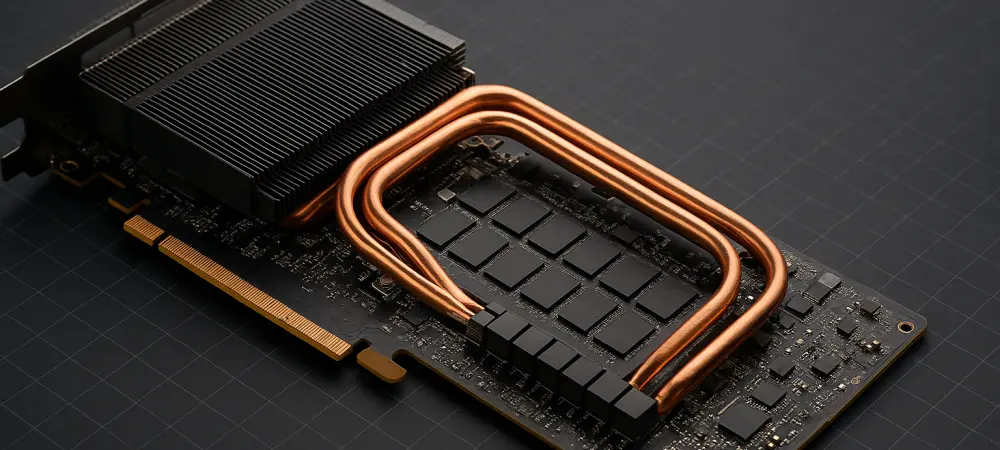
A heavily modified Nvidia GeForce RTX 5090 boasting 96GB of video memory has surfaced on Alibaba, offering triple the capacity of the standard consumer model for AI-intensive tasks. This discovery arrives at a time when the demand for high-capacity video memory has never been more critical, driven by the exponential growth of local large language models and generative AI frameworks. While Nvidia continues to maintain a strict divide between its professional-grade Blackwell architecture and consumer-focused hardware, the appearance of such a unit suggests that the barriers to high-end compute are being challenged by third-party innovators. The hardware landscape in 2026 reflects a desperate search for cost-effective alternatives to enterprise-grade accelerators, which remain prohibitively expensive for independent researchers and boutique AI firms. This modification represents a maturing aftermarket capable of performing complex surgical interventions on state-of-the-art silicon to meet the voracious appetite of the modern machine learning ecosystem.
Market Realities: The Cost of Artificial Intelligence
Bridging the Divide: Professional Performance at Consumer Prices
The seller behind this ambitious listing, Shenzhen Suqiao Intelligent Technology, is not a newcomer to the hardware manufacturing scene but an established OEM with over a decade of industry experience. By positioning this modified RTX 5090 at a price point of approximately $3,888, the company is directly targeting a lucrative niche of AI researchers who find the official $18,000 price tag of the professional-grade RTX Pro 6000 Blackwell unreachable. This massive price discrepancy highlights the artificial limitations imposed by market segmentation, as both cards utilize the identical GB202 silicon at their core. While the professional variant is designed for long-term reliability and specialized software support, the modified consumer card offers a raw hardware alternative that provides the necessary memory buffer for loading massive datasets. This strategy effectively democratizes access to high-tier compute power, allowing smaller labs to compete in a field dominated by massive corporations.
Repurposing high-end consumer hardware for industrial-scale workloads has become a hallmark of the global AI boom, following successful community-driven modifications of previous generation cards like the RTX 3090 and 4090. However, the leap to 96GB on a single board represents a significant technical milestone that exceeds earlier attempts to merely double standard capacities. The ability to triple the VRAM is particularly vital for the current generation of multimodal models that require extensive on-board memory to function without performance-degrading swaps to system RAM. This engineering feat suggests that the internal layout of the Blackwell cards is far more flexible than official documentation might imply. By pushing the boundaries of what consumer silicon can achieve, these modifications provide a glimpse into a parallel market where the only limit is the ingenuity of technicians. Such developments forced a broader conversation about hardware ownership and the right to modify devices for specific needs.
Technical Validation: Analyzing the Complexities of Modification
Despite the excitement surrounding the listing, several technical inconsistencies invite a healthy degree of skepticism from hardware experts and enthusiasts alike. The Alibaba product description notably mentions the use of GDDR6X memory running at speeds of 14 Gbps, which stands in stark contrast to the standard RTX 5090 configuration that utilizes the much faster GDDR7 standard. To physically accommodate 96GB of memory, the manufacturer would theoretically need to employ a highly customized printed circuit board featuring “clamshell mode,” where high-density memory modules are soldered to both sides of the substrate. This layout necessitates complex cooling solutions to manage the heat generated by thirty-two memory chips, especially when operating under the continuous thermal loads typical of deep learning training. The discrepancy in memory types suggests either an error in the listing or a creative solution involving older components integrated into a modern architecture, creating a hybrid that defies traditional branding. The existence of this modified hardware relied heavily on the ability of third-party engineers to bypass the strict software restrictions that Nvidia typically implemented to prevent such cross-tier competition. Rumors of leaked firmware for the Blackwell series provided the necessary key for Suqiao to unlock the hardware’s potential, allowing the GPU to recognize and utilize the expanded memory pool. For organizations considering such an investment, the actionable next step involves rigorous verification of memory bandwidth and stability under heavy compute loads before deployment. It is essential to implement secondary cooling systems if these units are utilized in server racks, as the modified power delivery and memory layout likely exceeded original thermal design parameters. Potential buyers should also remain aware that these modifications void all official warranties and lack driver optimizations found in professional suites. The emergence of these modified units served as a reminder of the drive to innovate beyond factory settings.