

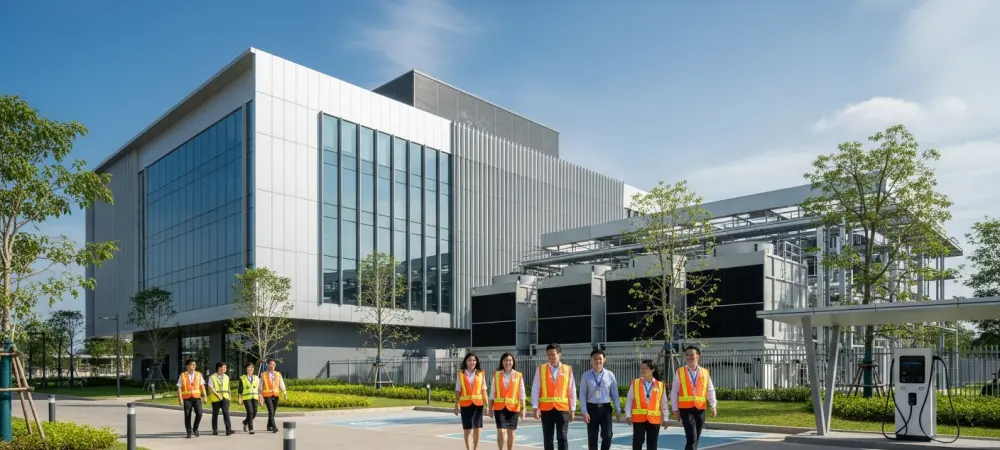
ThailandisrapidlyshiftingfromitslegacyasaregionalmanufacturingtitanintoafiercecontenderforthetitleofSoutheastAsiasprimarydigitalinfrastructuregatewayasglobaltechnologygiantsinvestbillionsinthenation. The transition from being known as the “Detroit of the East” to a modern cloud-computing hub marks a significant pivot in the kingdom’s economic strategy. For decades, the nation relied on heavy industry and automotive assembly to drive growth, but the surge in artificial intelligence and high-speed connectivity has necessitated a fundamental change in priorities. Foreign direct investment is flowing into the country at a record pace, led by massive commitments from Amazon Web Services, Google, and Microsoft. While the government celebrates these massive financial inflows as a sign of progress, the Federation of Thai Industries is raising pointed questions about the long-term impact on domestic resources. The arrival of hyper-scale data centers brings the promise of modernization, yet it also introduces a set of complex challenges regarding land use, electricity consumption, and water rights that could define the nation’s stability for the next decade. Understanding whether this boom represents a strategic victory or a resource drain requires an objective look at the scale of investment versus the environmental and social costs that are beginning to surface as these massive projects break ground across the landscape.
The Financial Magnetism of Thailand’s Digital Infrastructure
The current wave of investment represents a massive influx of capital that accelerated significantly following early commitments to establish local cloud regions. Amazon Web Services set a high benchmark with its long-term, multi-billion-dollar strategy to build out physical infrastructure, enabling businesses to store and process data locally for the first time on such a scale. This initial move served as a catalyst, signaling to other global technology players that Thailand was ready to compete with more established digital hubs like Singapore or Hong Kong. By the middle of the current decade, the scale of these projects reached unprecedented levels, with the Board of Investment receiving applications that totaled hundreds of billions of baht. High-profile entries from regional players and specialized data firms have completely redefined the industrial landscape of the Eastern Economic Corridor. These facilities are no longer just simple server rooms; they are high-tech, hyper-scale industrial zones designed to handle the intense processing power required for the latest generations of generative artificial intelligence and complex machine learning algorithms that now drive the global economy.
This financial momentum is further bolstered by a supportive regulatory environment that has aggressively courted foreign technology firms through tax incentives and streamlined approval processes. The government has positioned the digital economy as a primary pillar of its growth strategy, hoping that the presence of global tech giants will encourage a domestic ecosystem of software developers and tech startups. However, the sheer size of the individual investments—often exceeding tens of billions of baht for a single campus—can skew economic data and create an illusion of widespread prosperity. While the headline figures are undoubtedly impressive, the capital is largely spent on imported high-end server hardware, specialized cooling equipment, and proprietary software licenses. This means that a significant portion of the “investment” actually flows back out of the country to the home nations of these corporations, rather than circulating within the local Thai economy. Consequently, the challenge for financial planners is to ensure that these capital-intensive projects generate tangible wealth for the broader population rather than merely serving as a conduit for the interests of multinational conglomerates seeking a strategic footprint in Southeast Asia.
The Physical Strain on Water and Power Supplies
One of the most pressing concerns raised by environmental advocates and industry experts involves the massive amount of water required to keep these facilities functional. Data centers utilize highly sophisticated liquid cooling systems or evaporative cooling towers to prevent their dense arrays of servers from overheating during high-intensity processing tasks. In a tropical climate like Thailand’s, the energy and water needed to maintain optimal operating temperatures are substantial, putting these digital hubs in direct competition with agricultural communities and traditional manufacturers for a finite water supply. This competition is particularly acute during the dry season when water levels in reservoirs can drop, potentially leading to localized shortages that affect crop yields or the daily lives of citizens. As more hyper-scale facilities come online, the cumulative demand for water could force the government to make difficult decisions about resource allocation, potentially prioritizing high-value tech investments over the needs of rural farmers or long-standing industrial zones that have supported the nation for generations.
Energy security remains another major pressure point that requires immediate and long-term strategic planning to avoid grid instability. Unlike traditional factories that can sometimes adjust their shifts to operate during off-peak hours, data centers must remain fully powered and operational twenty-four hours a day, seven days a week. The rapid rise of artificial intelligence has only intensified this demand, as the specialized chips used for AI training consume significantly more electricity than standard cloud servers. Without a transparent and robust strategy to manage this load, the national power grid could face significant strain, leading to higher utility costs for the general public or even the risk of brownouts during periods of peak demand. Some upcoming projects are expected to require as much electricity as a small city, representing a massive jump in consumption that the current infrastructure was not originally designed to handle. If several of these projects reach full capacity simultaneously, the necessity for rapid expansion of the power generation sector could lead to increased reliance on fossil fuels, complicating Thailand’s commitments to international sustainability goals.
The Economic Disparity in Job Creation and Local Benefits
A persistent point of contention among labor experts is the notable disparity between the vast amount of money being invested and the relatively low number of permanent jobs created by these facilities. In traditional sectors like automotive manufacturing or electronics assembly, a billion-baht investment typically results in thousands of positions on the factory floor, supporting a large segment of the local workforce. In contrast, data centers are notoriously “labor-light” operations. Once the initial, intensive construction phase is completed, these massive campuses are often managed by a skeleton crew of highly specialized technicians, security personnel, and facility managers. While major investors frequently cite thousands of supported “full-time equivalent” roles in their press releases, many of these are indirect positions in logistics, basic maintenance, or third-party service providers rather than direct, high-paying employment within the tech companies themselves. This reality creates a risk that the local workforce will be sidelined as the economy shifts toward a model that prioritizes capital over human labor.
Furthermore, there is a growing concern that the nation is essentially providing the essential commodities—the land, water, and electricity—while the high-value intellectual property and operational profits are funneled back to foreign headquarters. This dynamic could potentially relegate Thailand to a supporting role in the global technological ecosystem, where it provides the physical space for growth but does not share in the innovation or the highest tiers of wealth creation. To combat this, some industry leaders suggest that the government must mandate more significant technology transfer and local partnership requirements. Without such measures, the “digital gold rush” might only benefit a small elite of landowners and specialized contractors, leaving the general population with the environmental and infrastructure costs but few of the long-term career opportunities associated with a true technological revolution. The goal should be to move beyond being a mere landlord for foreign servers and toward becoming a nation that actively participates in the development and management of the technologies being housed within its borders.
Technological Dependency and the Regulatory Gap
Thailand’s heavy reliance on foreign-developed technology for its burgeoning data center industry creates a complex challenge for maintaining national technological sovereignty. Because the majority of the specialized hardware, from advanced semiconductors to proprietary server rack designs, is imported from a handful of global manufacturers, the kingdom remains deeply dependent on overseas talent and supply chains to maintain its critical digital infrastructure. This dependency makes it difficult for local entrepreneurs or domestic technology firms to break into the market or compete on a level playing field with established global giants. If a trade dispute or a supply chain disruption were to occur, the nation’s digital backbone could be at risk, highlighting the vulnerability that comes with a strategy built almost entirely on foreign investment. Developing a local supply chain for data center components or fostering domestic expertise in cloud architecture is a slow process that has, so far, lagged behind the rapid pace of physical construction.
Compounding this issue is the fact that the speed of technological development has often outstripped the government’s ability to implement comprehensive and nuanced regulations. Concerns regarding data privacy, cybersecurity, and the ethical use of artificial intelligence are now at the forefront of the national debate as these facilities become operational. Industry experts warn that without a robust and modernized legal framework, the kingdom may struggle to protect the interests of its citizens and businesses as they integrate these powerful technologies into the national economy. There is a delicate balance to strike between creating a business-friendly environment for tech giants and ensuring that the data of Thai nationals is handled with the highest standards of security. Regulatory gaps could leave the country vulnerable to data breaches or the misuse of processing power, which could have far-reaching consequences for both national security and public trust in the digital transition. Establishing clear guidelines for data residency and the transparency of AI algorithms is becoming a prerequisite for a truly sustainable digital hub.
Seeking a Balance Between Hub Ambitions and Local Needs
Despite the various risks and systemic challenges, there is a clear path forward where the kingdom can successfully leverage the current data center boom for long-term national benefit. Local businesses and the burgeoning fintech sector hope that having these hyper-scale facilities located within the country will significantly reduce latency for digital services, which is an essential requirement for the growth of e-commerce and real-time financial transactions. If the government can effectively facilitate technology transfer programs and invest in specialized education, it may be possible to train a new generation of Thai engineers and architects to manage and innovate within these systems. Success will depend on the ability to integrate these massive facilities into the existing economic fabric, ensuring they act as catalysts for local innovation rather than isolated enclaves of foreign capital that operate independently of the national interest.
To ensure that this digital evolution was a net positive, the government established more rigorous resource-management policies that prioritized the needs of the Thai people and traditional industries alongside the requirements of the new tech giants. Strategic planners recognized that the rush to attract billions in capital required a parallel commitment to ensuring energy efficiency and water conservation through the adoption of innovative cooling technologies and renewable energy sourcing. By the time the current infrastructure projects reached maturity, the focus had shifted toward a more holistic view of the digital economy, one where environmental sustainability and local job growth were as important as the investment totals on a spreadsheet. The ultimate success of the digital pivot depended on this ability to balance the physical demands of global technology with the social and economic needs of the country. Looking ahead, the focus remained on fostering a domestic tech ecosystem that could eventually stand on its own, utilizing the foundation provided by foreign investment to build a resilient and sovereign digital future for all citizens.