

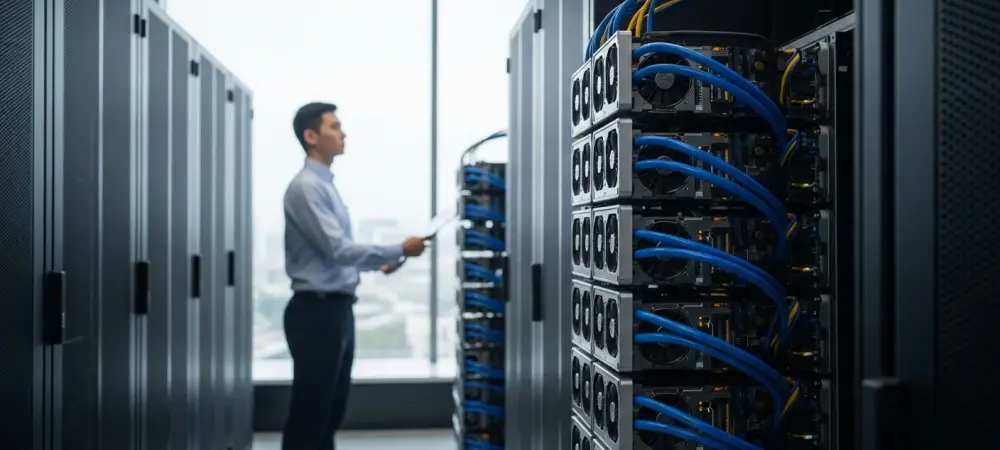
The explosive surge in generative artificial intelligence has forced a radical reimagining of global digital infrastructure, transforming traditional data warehouses into high-density powerhouses that demand unprecedented levels of energy and specialized cooling systems to function at peak capacity. Unlike the legacy facilities of the previous decade which primarily supported general cloud computing and storage, modern installations are specifically engineered around the massive parallel processing requirements of sophisticated neural networks. This shift has necessitated a move from standard Central Processing Unit configurations to dense clusters of Graphics Processing Units, such as the latest NVIDIA Blackwell architectures, which consume significantly more wattage per rack. Consequently, operators are facing a critical juncture where the physical limitations of existing power grids are being tested by the sheer scale of computation needed for model training. This evolution is not merely an incremental update but a fundamental overhaul of how data centers are constructed and managed on a global scale, leading to a new era where power availability dictates the pace of progress.
Evolution of Power and Cooling: High-Density Frontiers
Building on this physical transformation, the industry is witnessing a transition from traditional air-cooling methods to advanced liquid-cooling solutions to manage the extreme heat generated by high-density AI clusters. Standard cooling systems, which relied on chilled air circulated through raised floors, are often insufficient for racks that now regularly exceed 100 kilowatts in power consumption. In response, providers like Equinix and Digital Realty are increasingly implementing direct-to-chip cooling or rear-door heat exchangers to maintain operational stability. This shift significantly reduces the Power Usage Effectiveness ratio, allowing facilities to run more efficiently despite the increased workload. Moreover, the integration of on-site energy storage and small modular reactors is being explored to bypass the limitations of municipal power grids. This approach naturally leads to a more resilient infrastructure capable of supporting the persistent uptime required by mission-critical AI applications. As these technologies become standard, the focus is shifting toward sustainable thermal management as a primary competitive advantage.
Strategic Geographies: Decentralizing Digital Infrastructure
This logistical pressure also altered the geographical distribution of data centers, pushing development away from traditional tier-one hubs into secondary markets where land and electricity were more plentiful. While regions like Northern Virginia remained critical, new growth accelerated in locations like Columbus, Ohio, and various secondary European markets that offered better access to renewable energy sources. This decentralization was driven by the need to balance the high latency requirements of AI inference with the massive space requirements of model training. Furthermore, organizations prioritized modular designs that allowed for rapid scaling as hardware requirements continued to evolve. Stakeholders moved toward a more flexible deployment model, favoring distributed architectures that mitigated the risks of regional power shortages. Developers focused on grid-interactive designs and invested in localized power generation to ensure long-term viability. By aligning site selection with green energy availability, the industry addressed the dual challenge of meeting high demand while adhering to environmental regulations.