

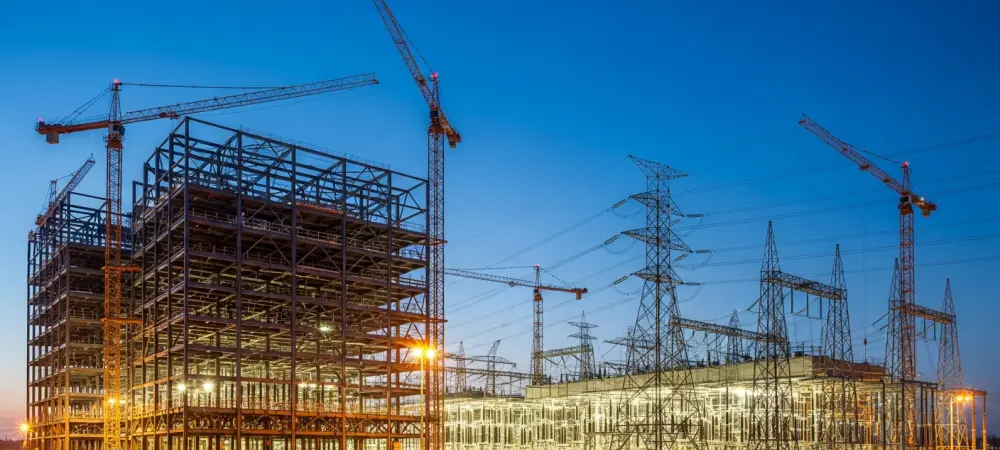
The current landscape of data center expansion is at a crossroads, where the grand ambitions of artificial intelligence have collided with the physical realities of our power infrastructure. As an expert who spent the last few years in boardrooms warning about these very bottlenecks, I have watched the industry transition from a period of unbridled optimism into a period of painful correction. In this discussion, we explore the fallout of the AI capacity crisis, the systemic failure to account for power grid limitations, and the strategic pivot required for enterprises to survive in an era of scarcity. The conversation touches upon the discrepancy between hyperscaler marketing and operational feasibility, the necessity of hybrid infrastructure models, and the critical importance of independent internal analysis when navigating vendor promises.
With nearly half of planned data center expansions currently facing delays or cancellations, how are power grid bottlenecks fundamentally reshaping the AI infrastructure landscape?
The shift we are seeing is a direct result of ignoring the basic physics of energy distribution in favor of aggressive corporate roadmaps. For several years, hyperscalers announced massive expansions and gigawatt-scale facilities with a level of confidence that simply didn’t match the capacity of our aging utility systems. Now, as we move through 2026, the industry is waking up to the fact that the grid cannot expand at the same breakneck speed as software or silicon production. This bottleneck has turned what was once a race for innovation into a desperate scramble for basic electricity, forcing many projects into indefinite stalls. It creates a landscape where compute is no longer a commodity you can simply purchase on demand, but a restricted resource that requires years of lead time and a deep understanding of local infrastructure constraints.
Many organizations based their entire AI road maps on the promises of hyperscalers; what does it look like for an enterprise that is now “holding the bag” due to these unmet capacity timelines?
For those who banked entirely on the availability of abundant cloud capacity, the situation is increasingly dire and fraught with difficult executive-level conversations. These enterprises are finding that the promised compute resources simply do not exist as advertised, leaving their expensive AI development teams without the necessary infrastructure to train or deploy models. There is a palpable sense of panic in these organizations as they realize their growth plans were built on a foundation of vendor optimism rather than verified data. Instead of scaling their applications, they are now forced to look inward, scrambling to optimize existing resources or re-evaluating their entire technology stack to compensate for the shortage. It is a sobering lesson in the dangers of outsourcing strategic infrastructure planning to vendors whose primary incentive is to capture market share through rosy projections.
You have mentioned that massive 10-billion-dollar data center campus announcements were often more about capturing mindshare than reflecting reality. How should a strategic leader differentiate between vendor optimism and operational feasibility?
Distinguishing between a marketing vision and a viable project requires a leader to step out of the hype cycle and perform their own cold, hard math. When a hyperscaler announces a multi-billion-dollar project, they are often signaling intent to investors and trying to lock in customer commitments before a single shovel has even hit the ground. A strategic leader must look past the press releases and demand to see the underlying infrastructure plans, specifically focusing on power availability and construction timelines that have historically proven difficult to meet. You have to treat vendor projections as the “best-case scenario” and then build a secondary, more realistic plan based on historical delivery patterns and known regional constraints. This involves hiring internal experts or trusted advisors who have no financial stake in selling cloud services, ensuring that your organization’s interests are protected by a layer of healthy skepticism.
Given that data center electricity consumption is projected to grow by 26% in 2026, how can companies build flexibility into their architecture to survive a world of chronic scarcity?
Survival in this environment depends on an organization’s ability to avoid the trap of single-vendor lock-in and to maintain a diverse portfolio of infrastructure options. The projected 26% growth in power consumption means that even existing facilities will face mounting pressure, potentially leading to increased costs or service degradation. To mitigate this, companies should adopt hybrid strategies that allow them to shift workloads between different providers or even bring critical operations back on-premises if cloud capacity becomes too volatile. It is no longer enough to just pick the “right” hyperscaler; you must build architectures that are provider-agnostic and can adapt as the reality of the grid unfolds. Those who succeed will be the ones who treated compute as a finite resource and built their systems with the inherent flexibility to pivot when a specific region or provider hits a wall.
Two years ago, your warnings about unrealistic timelines were met with polite dismissals; what specific infrastructure realities were being overlooked by those who believed the hype?
The most significant oversight was the assumption that the power grid could be upgraded with the same agility as a software update. Many industry leaders ignored the reality that building high-voltage transmission lines and securing permits for massive substations can take a decade, far outlasting the two-year hype cycle of an AI model generation. There was also a general disregard for the physical limits of memory production and the specialized cooling requirements that these gigawatt-scale facilities demand. While vendors were painting pictures of infinite scalability, they were glossing over the fact that nearly 50% of the planned capacity for 2026 was already at risk due to simple logistics and supply chain failures. People wanted to believe in the fantasy of unlimited growth because it made for a better story, even when the math clearly showed that the timeline was physically impossible.
What is your forecast for the AI data center industry over the next few years?
I expect that we will see a significant move away from “megascale” announcements as the industry enters a period of forced pragmatism and localized infrastructure development. The era of assuming that power is an infinite resource is officially over, and we will likely see more moratoriums on new data center builds in major hubs as local grids reach their breaking points. Organizations will stop blindly trusting vendor timelines and will instead start demanding enforceable accountability clauses in their contracts to protect themselves from project delays. We are moving toward a future where “sovereign” or private infrastructure becomes a high priority for enterprises that cannot afford to have their AI initiatives stalled by a third-party power shortage. Ultimately, the winners in this space will be the ones who planned for constraints rather than abundance, treating infrastructure not as a background utility, but as a primary strategic challenge.