

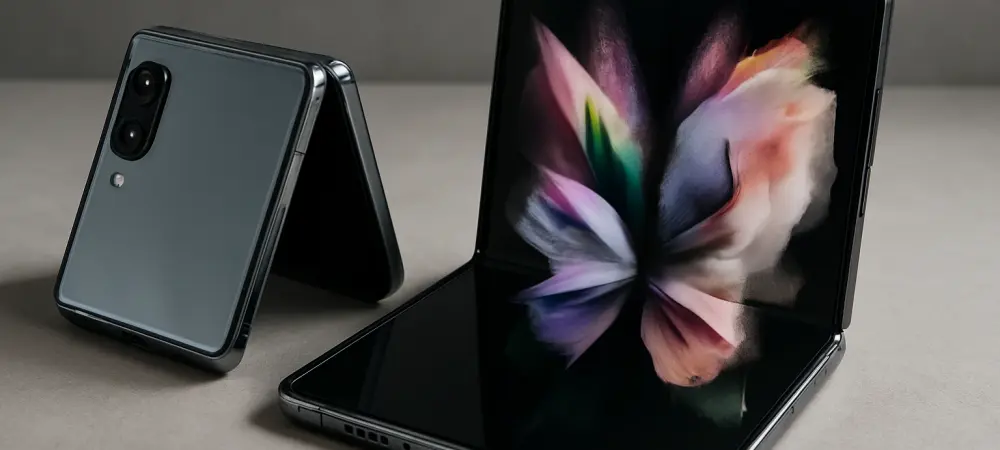
Samsung’s foldable tech innovation is reshaping smartphone possibilities, offering unique form factors. The rapid evolution of these devices presents a fundamental question: have foldables extended beyond novelty to become market leaders? As consumers increasingly seek multifunctional gadgets, foldable technology sees a remarkable surge, turning heads toward a previously ignored product segment.
A New Fold in Innovation
Samsung’s recent Galaxy Unpacked event showcased a remarkable leap with its advanced folding models. The introduction of the Galaxy Z Fold 7 and Z Flip 7, alongside the affordable Z Flip 7 FE, revealed an innovative approach that has captured the interest of tech enthusiasts. This transition offers more than an aesthetic refresh; it introduces a paradigm shift, potentially transforming user-device interactions. When placed within the context of rising AI-driven features, Samsung’s offerings not only meet but exceed consumer expectations for innovation and utility.
Unpacking the Extraordinary Features
The standout attributes of the Galaxy Z Fold 7 and Z Flip 7 continue to set benchmarks for design and usability. These devices encapsulate an ultra-slim design ethos while ensuring robust functionality, especially the Z Fold 7’s refined aesthetics tailored to premium users. The critical addition, the Z Flip 7 FE, has democratized access to foldable tech by offering a mid-range alternative. The introduction of the Galaxy Watch 8, featuring a unique antioxidant index, underscores Samsung’s expansion into other technological arenas, showcasing its commitment to diverse consumer needs.
Insights from Industry Connoisseurs
Industry experts from TechRadar, such as Hamish Hector and Axel Metz, have openly praised Samsung’s strategic advances. They see the latest launch as not just another offering but a pivotal moment marking significant innovation. Their evaluations reflect the market’s enthusiasm, highlighting how Samsung’s dedication to cutting-edge technology hasn’t gone unnoticed. The focus on affordability while maintaining high specifications resonates well in a competitive landscape.
Embracing the Practicality and Future Directions
Consumers are challenged to integrate these foldable innovations seamlessly into their daily routines, leveraging them beyond basic tasks. Future trends may witness Samsung further diversifying its foldable portfolio, potentially setting new standards for multifunctional devices. Options might include enhanced multi-tasking features, streamlined designs, and more cost-efficient production processes—critical developments that could redefine market dynamics.
Powering Toward New Horizons
At its core, Samsung’s foldable tech achievements in recent years reflect its dedication to pushing boundaries and setting new standards. These developments have delivered formidable competition in the smartphone realm. As Samsung looks ahead, anticipation grows for even more revolutionary advances and strategies that align with consumer desires for cutting-edge features and affordability, signaling continuous evolution in the tech landscape.