

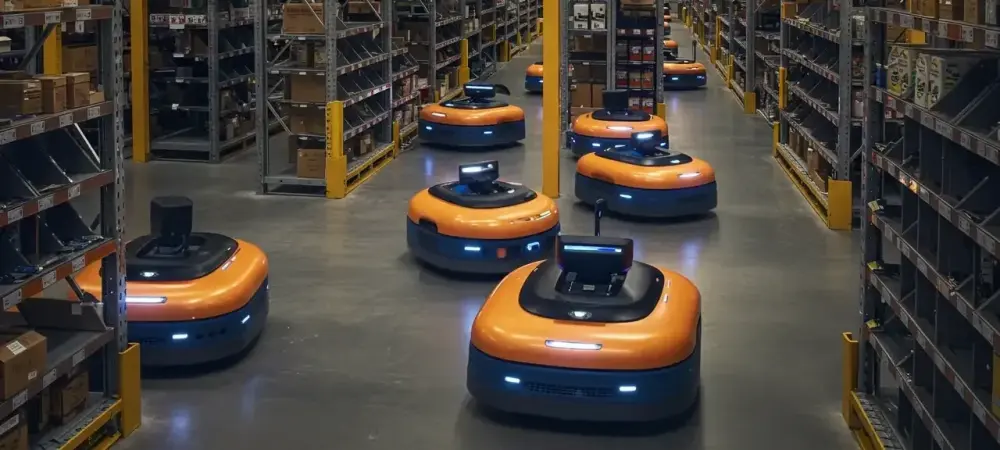
Amazon’s announcement of deploying over one million robots stands as a testament to the transformative role that robotics plays in modern logistics. These once-basic machines have become crucial to Amazon’s fulfillment centers, reshaping the logistics landscape and setting the benchmark for automation within the retail industry. This highlights the pivotal role that technology plays in fostering operational efficiency on a global scale.
The Starting Point: Amazon’s Robotic Evolution
The journey began in 2012 with simple shelf-moving robots, which quickly became sophisticated machines integral to fulfillment processes. This evolution of automation reflects broader industry trends, where efficiency and precision in warehouse operations have become paramount. The progression in robotic capabilities underscores the increasing reliance on technology in logistics operations, marking a significant shift in retail logistics management.
Enhancing Operational Efficiency Through Robotics
Technological Innovations and Integration
Robotics has paved the way for unprecedented operational efficiency, revolutionizing traditional workflows. The introduction of DeepFleet, Amazon’s AI-driven system, demonstrates innovative advancements in logistics. This technology manages the movement of robotic units, ensuring optimal performance across fulfillment centers. Such systems enhance productivity by reducing bottlenecks and streamlining operations, fostering a more efficient logistics framework.
Workforce Collaboration and Role Evolution
The collaborative relationship between robots and humans in Amazon’s operations fosters productivity while creating job opportunities. This collaboration does not replace human workers but creates new roles related to automation. The Shreveport fulfillment center exemplifies this trend, with a 30% increase in automation-related jobs, emphasizing the balance between technological advancement and job creation, which is crucial in navigating the future of manual labor.
Strategic Implications Across the Industry
Global variations and competitive strategies influence robotics adoption in logistics. Companies like Ocado and Walmart have adopted distinct automation approaches, affecting logistics dynamics worldwide. These examples emphasize not only the competitive nature of automation but also its potential to redefine logistics operations. Addressing public misconceptions about job displacement versus creation remains essential in understanding the real impacts of automation.
Future Trends in Logistics and Robotics
Emerging trends suggest a transition towards smaller, urban-centric fulfillment centers aimed at reducing carbon footprints while enhancing delivery speeds. Leveraging AI and energy-efficient robotics signifies a future where logistics strategies are increasingly dynamic and sustainable. The forecast for logistics operations remains promising, as adaptive AI-driven frameworks hold the potential to reshape warehouse management and redefine industry practices.
Concluding Insights and Strategic Recommendations
The strategic integration of robotics has fundamentally transformed Amazon’s logistics, combining efficiency with sustainable growth. Businesses benefit by focusing on blending automation with workforce upskilling, aligning with evolving logistical landscapes. The need to adapt to technological advancements while considering human development and ethical practice implications is pivotal in sustaining competitiveness in a rapidly shifting market. As the logistics industry continues to evolve, strategic foresight remains essential for businesses to thrive in an automated future.