

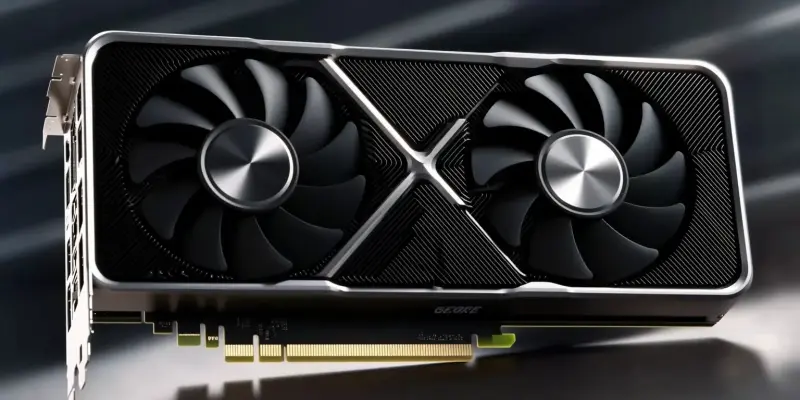
Nvidia’s latest GeForce RTX 5080 Founders Edition (FE) graphics card has been making headlines recently, but not only for its groundbreaking performance capabilities. The card has been facing instability issues when operating in PCIe 5.0 mode, raising questions about the impact of Nvidia’s tri-PCB design on its overall reliability. The issues, identified by YouTuber der8auer and corroborated by Igor’s Lab, suggest that the unique architecture of the RTX 5080 might be compromising signal integrity, leading to significant performance setbacks.
Encountering Instability in PCIe 5.0 Mode
When reviewing the RTX 5080, YouTuber der8auer encountered boot failures, crashes, and unexpected system freezes, particularly when the graphics card was set to operate in PCIe Gen 5.0 mode. Using a test bench comprising an Asus ROG Crosshair X870E Hero motherboard paired with a Ryzen 7 9800X3D CPU, the RTX 5080 faced numerous signal issues that were not observed with other high-performance GPUs such as the RX 7900 XTX, RTX 4080, RTX 4090, and even Nvidia’s own RTX 5090. These issues raised red flags about the new GPU design’s capacity to sustain stable operations under PCIe 5.0’s high data rates.
The design of the RTX 5080 FE is indeed unconventional, employing a tri-PCB architecture. This design includes separate PCBs for the PCIe 5.0 x16 connector, the video ports, and the main PCB which houses the GB202 package, GDDR7 memory, and power circuitry. While this modular approach could theoretically aid in heat distribution and overall cooling efficiency, there is growing speculation that it might be causing the signal degradation observed in PCIe 5.0 communications. The issues seem to parallel those faced when using riser cables, which are already known for potential signal integrity problems.
Early Troubleshooting and Observations
To address the instability, initial troubleshooting efforts included attempts to manually configure PCIe settings in the BIOS to x16 Gen 5.0. Despite these changes, the card continued to experience unstable performance and frequent crashes during gameplay in titles like Valorant, PUBG, and Remnant 2. These persistent issues led to further speculation that the root cause could be the GPU’s physical design rather than software-related factors, such as drivers or BIOS configurations.
Insight from Igor’s Lab supports the theory that the extremely high data transmission speeds of PCIe 5.0 make signal integrity a critical factor for stability. In complex and compact designs like that of the RTX 5080 FE, maintaining such integrity can be particularly challenging. The necessity to switch to PCIe 4.0 when using Blackwell GPUs with a riser cable further emphasizes the importance of robust signal pathways. This context highlights the challenges Nvidia faces in innovating GPU architectures that not only deliver performance but are also reliable in real-world applications.
Potential Solutions and Future Considerations
Nvidia’s new GeForce RTX 5080 Founders Edition (FE) graphics card has been generating buzz, not just for its advanced performance features but also for some concerns related to its stability. The card, which operates in PCIe 5.0 mode, has been experiencing instability issues. These issues have raised questions about the reliability of Nvidia’s tri-PCB design, which is unique to the RTX 5080. YouTuber der8auer first identified these problems, and his findings were later confirmed by Igor’s Lab. The consensus suggests that the innovative architecture of the RTX 5080 may be compromising signal integrity, leading to noticeable performance drops. This has led to speculation and debate within the tech community about whether the design trade-offs were worth the performance advancements. While Nvidia’s latest release was expected to set new standards in the market, these stability issues might impact consumer confidence. It’s a reminder that cutting-edge technology often comes with its own set of challenges, requiring continuous refinement and troubleshooting to fully realize its potential.