

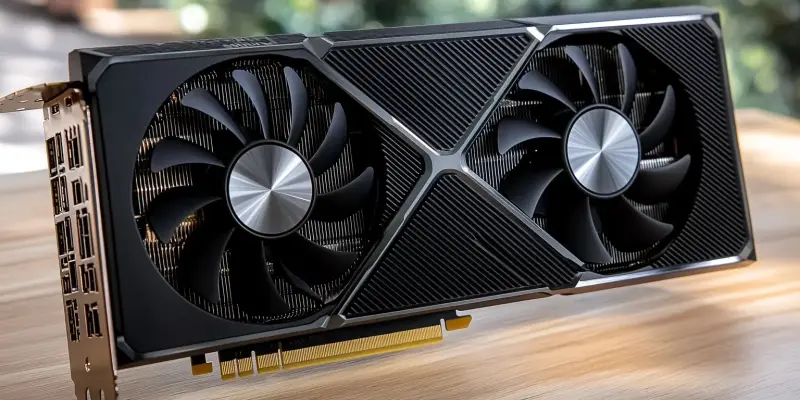
In a surprising move that has sent ripples across the tech community, Nvidia might be postponing the highly anticipated launch of its RTX 5070 graphics card to early March. This potential delay follows initial expectations of a February release and comes amidst speculation that the delay is a strategic maneuver aimed at outpacing AMD’s forthcoming Radeon RX 9070 XT. With both companies fiercely competing to attract mainstream gamers seeking affordable 4K gaming performance, this delay may be indicative of Nvidia’s intent to solidify its standing in the market and effectively counter AMD’s newest offering.
The competitive rivalry between Nvidia and AMD has been a driving force in the evolution of the graphics card market for years. Nvidia recently released the RTX 5080 and RTX 5090, which saw immediate stock shortages, underscoring the soaring demand for high-performance GPUs. By delaying the RTX 5070, Nvidia is likely aiming to bolster its supply chain, ensuring a more stable and accessible launch. This decision could help circumvent the issues of immediate stock deficits, which have plagued many recent hardware releases, ensuring that Nvidia meets consumer demand more effectively.
Strategic Considerations and Market Dynamics
Nvidia’s potential delay of the RTX 5070 showcases the company’s forward-thinking strategy for maintaining a strong market presence against AMD’s imminent RX 9070 XT. As Nvidia carefully watches AMD’s movements, the tech giant seems poised to capitalize on the timing of its releases. This meticulous approach not only highlights Nvidia’s adaptability but also its intent to stay ahead of the competition by planning releases that secure maximum consumer interest and market uptake.
Speculation about the differing launch timelines points to an ongoing cat-and-mouse game between these two tech giants. Nvidia’s decision to potentially introduce the RTX 5070 Ti in February, right before the possible release of AMD’s RX 9070 XT, demonstrates a strategic flanking tactic. Such a move can effectively divert consumer attention towards Nvidia’s offerings before AMD can capture the market spotlight. Consequently, this strategic launch could reduce the impact of the RX 9070 XT’s release by providing gamers with an enticing alternative under the Nvidia brand.
Ensuring Supply Stability and Market Readiness
Nvidia’s effort to delay the RTX 5070 is likely a calculated move to avoid the pitfalls of immediate sellouts, providing a buffer that enables the company to meet demand adequately. Learning from the challenges faced with the RTX 5080 and RTX 5090, which experienced stock shortages due to overwhelming demand, Nvidia’s revised launch strategy aims to ensure product availability and consumer satisfaction. This consideration not only enhances its market stance but also reinforces consumer trust in Nvidia’s capacity to deliver.
This strategic maneuvering underlines Nvidia’s commitment to refining its product’s market readiness. With the delay, the company can optimize production and distribution logistics, ensuring a more robust and stable launch. This planned delay could serve Nvidia’s long-term interests by securing consistent sales and minimizing the frustration that accompanies scarce product availability. Additionally, a well-supplied launch could foster positive market reception, enhancing Nvidia’s brand loyalty in an intensely competitive landscape.
Anticipated Performance and Market Reception
The anticipation surrounding the RTX 5070 and the RX 9070 XT is palpable, with both products promising to deliver impressive gaming experiences. Market forecasts suggest that the RTX 5070, expected to be priced around $549, will offer performance on par with the higher-end RTX 4090. This makes it a highly attractive option for gamers who seek high-powered graphics capabilities without breaking the bank. Nvidia’s strategic delay could provide additional time to fine-tune the card’s performance and value proposition.
Ultimately, Nvidia’s delay of the RTX 5070 could be advantageous, allowing the company to refine its product and enhance its market readiness in the face of AMD’s competition. The ongoing chess match between these two tech behemoths underscores the dynamic nature of the graphics card market, where strategic timing and supply stability are critical. Nvidia’s potential delay, seen as a shrewd market move, could ensure that it maintains a strong foothold against AMD’s forthcoming products.
Conclusion: The Weight of Strategic Timing
In a surprising development that has stirred the tech world, Nvidia might delay the launch of its much-anticipated RTX 5070 graphics card to early March. Originally expected in February, this potential postponement is speculated as a strategic move to outpace AMD’s upcoming Radeon RX 9070 XT. Both companies are locked in fierce competition to lure mainstream gamers seeking affordable 4K gaming solutions. This delay could signal Nvidia’s intention to strengthen its position in the market and effectively challenge AMD’s latest offering.
For years, the intense rivalry between Nvidia and AMD has propelled advancements in the graphics card industry. Nvidia’s recent launches of the RTX 5080 and RTX 5090 experienced immediate stock shortages, highlighting the high demand for cutting-edge GPUs. By delaying the RTX 5070 release, Nvidia likely aims to reinforce its supply chain, ensuring a more stable and accessible launch. This strategic decision could help avoid the stock deficits that have plagued recent hardware releases, allowing Nvidia to better meet consumer demand and maintain a competitive edge.