

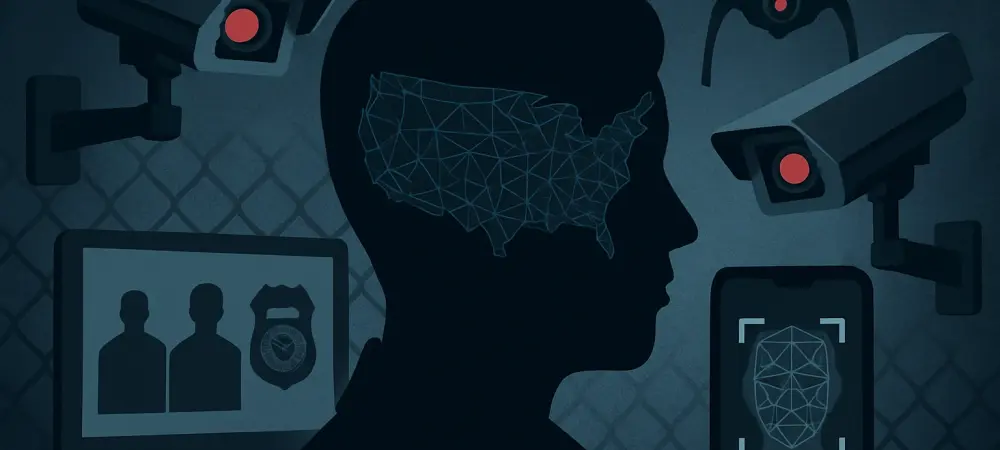
Picture this: a simple photo shared on social media from a local protest could be the key to a federal agency building a detailed profile of an individual’s life, raising serious concerns about personal privacy in the digital age. U.S. Immigration and Customs Enforcement (ICE) has spent over $5 million on cutting-edge AI technology capable of scouring online platforms, tracking locations, and even accessing stolen data from the dark web. This isn’t a distant possibility—it’s a reality unfolding right now. The rapid expansion of such surveillance tools raises a pressing question: how much of personal privacy is at risk when every digital footprint could be under scrutiny?
Why ICE’s Tech Expansion Raises Eyebrows
The significance of ICE’s investment in surveillance technology cannot be overstated. With a recent $2 million contract for Tangles, a software developed by Cobwebs (now part of PenLink), the agency has gained access to a powerful tool that uses artificial intelligence and machine learning to mine data from social media and beyond. This isn’t merely about enhancing border security; it’s about a federal entity extending its digital reach into the everyday lives of countless individuals. The implications for civil liberties in an era where personal information is increasingly exposed are profound and demand attention.
This development signals a shift in how law enforcement operates, moving toward a model that prioritizes vast data collection over targeted investigations. Tangles can create intricate profiles by analyzing online activity, connections, and even physical locations, often without clear oversight. As privacy becomes a growing concern, the balance between security and individual rights hangs in a precarious state, urging a deeper look into the tools being deployed.
The Inner Workings and Risks of Tangles
Delving into the capabilities of Tangles reveals both its sophistication and its potential dangers. The software employs natural language processing and facial recognition to dissect social media content, map networks of individuals, and monitor mobile device activity at specific locations like public gatherings. Real-world applications include identifying participants in significant events such as the January 6 Capitol riot, demonstrating its effectiveness in large-scale investigations.
However, the risks are equally striking. Past instances show the technology being used to target activists, including those associated with the Black Lives Matter movement, raising red flags about selective surveillance. Moreover, ethical concerns emerge from its use of hacked data from the dark web, which could include sensitive details like banking or health records of innocent people, highlighting a troubling potential for misuse.
Adding to the unease is the history of Cobwebs, which faced a ban by Meta in 2021 for spying on activists and political figures across various regions. Despite such controversies, the continued reliance on this technology by federal agencies suggests a prioritization of capability over accountability, leaving many to question the safeguards in place to prevent abuse.
Balancing Security and Privacy: Voices on Both Sides
The debate surrounding ICE’s surveillance tools is polarized, with compelling arguments from both advocates and critics. Privacy experts, such as Beryl Lipton from the Electronic Frontier Foundation, have voiced strong opposition to what they describe as “indiscriminate and warrantless data collection.” Lipton argues that such practices risk turning law-abiding citizens into unintended targets, eroding fundamental rights under the guise of security.
On the other side, ICE spokesperson Mike Alvarez defends the technology, emphasizing its alignment with civil liberties while aiding in critical crime-fighting efforts. The agency maintains that tools like Tangles are essential for tackling issues like human trafficking, presenting them as standard practice in modern law enforcement.
Historical context adds weight to the skepticism, with documented cases of Cobwebs targeting political opposition in places like Hong Kong and Mexico. These examples fuel concerns that the technology could be wielded against dissenters or vulnerable groups, amplifying the need for transparent guidelines and robust oversight to ensure its use remains justified and fair.
Navigating the Digital Surveillance Landscape
Amid these powerful surveillance capabilities, individuals can take proactive steps to protect their digital presence. A starting point is reviewing social media privacy settings to restrict who can access posts and personal information, minimizing exposure to automated data collection. Caution around sharing location-tagged content or material related to sensitive events can also reduce visibility to monitoring tools.
Beyond basic settings, adopting encrypted messaging apps for private conversations offers an additional layer of security against interception. Tools like VPNs can help mask online activity, while staying vigilant about data breaches is crucial, as compromised information could end up in unauthorized databases. Awareness of these risks empowers individuals to make informed choices about their digital interactions. Supporting advocacy groups that push for government transparency in surveillance practices is another vital step. Organizations like the Electronic Frontier Foundation work to hold agencies accountable, ensuring that public discourse shapes policies on data collection. Staying informed about evolving technologies and regulations equips everyone to navigate this complex landscape with greater confidence.
Reflecting on a Digital Dilemma
Looking back, the journey through ICE’s adoption of advanced surveillance tools paints a picture of both innovation and unease. The power of technologies like Tangles has proven undeniable in bolstering law enforcement capabilities, yet the shadow of potential overreach looms large. Each revelation about data collection practices has underscored a critical tension between safeguarding security and preserving personal freedoms. Moving forward, a collective push for stricter oversight and clearer regulations stands as a necessary response to these challenges. Engaging with policymakers to demand accountability could reshape how such tools are deployed, ensuring they serve justice without compromising rights. As technology continues to evolve, fostering an informed public dialogue remains essential to strike a balance that protects both society and the individual in an increasingly connected world.