

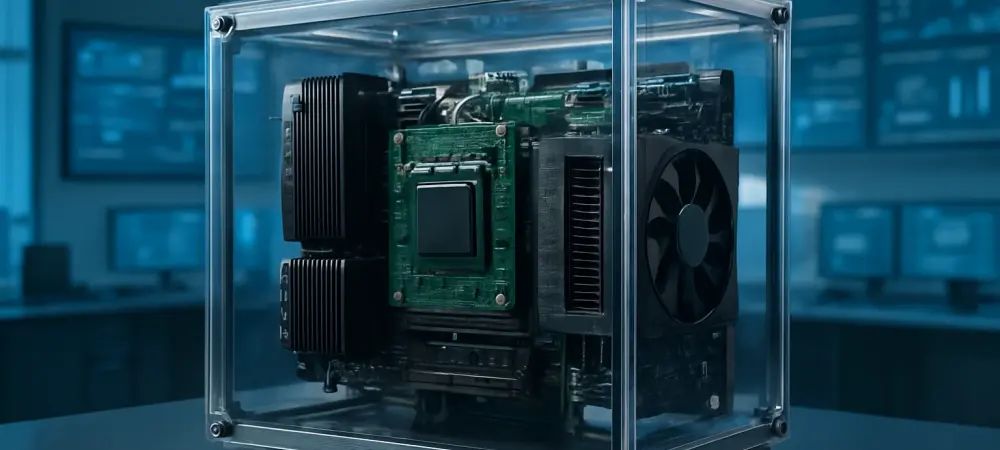
The rise of edge intelligence requires hardware capable of handling massive thermal loads from GPUs and Neural Processing Units while operating within compact, fanless enclosures. This demand marks a fundamental shift in the industrial computing landscape, where specialized hardware has evolved from a niche requirement into a foundational pillar of global automation and digital transformation. As raw processing power scales at an unprecedented rate, the primary challenge for engineering teams has transitioned from mere capability to the complex task of integrating that power into ruggedized, field-ready systems. The hardware integration market is currently valued at approximately USD 5.9 billion and is projected to reach USD 15.9 billion by 2036. This steady growth, characterized by a compound annual growth rate of 9.5 percent, reflects a market that increasingly prioritizes mechanical-thermal integrity and long-term reliability over the rapid disposability common in consumer electronics. These platforms now serve as the essential link between advanced silicon developments and functional equipment in high-stakes sectors.
This transformation is centered on the necessity of providing a cohesive bridge between complex internal circuitry and the harsh realities of the factory floor or the battlefield. In the current industrial climate, companies are no longer satisfied with off-the-shelf components that require extensive internal modification. Instead, they seek out hardware integration platforms that provide a validated, ready-to-deploy foundation. This approach allows manufacturers to bypass the grueling cycles of individual component testing and move straight to application-level development. The shift toward integrated solutions is driven by the realization that in modern manufacturing, the physical housing and the internal board architecture are just as critical as the software running on top of them. By focusing on the synergy between hardware components, industry leaders are successfully reducing the time to market for advanced robotics, sophisticated medical imaging devices, and high-performance aerospace systems.
Defining the Scope and Lifecycle of Integration Platforms
The market for these specialized systems encompasses a wide array of hardware components, ranging from industrial PCs and computer-on-modules to ruggedized chassis designed for extreme environments. However, the true value of these systems lies not just in the individual parts but in the comprehensive integration services that ensure they function as a single, cohesive unit. This process includes the development of specialized firmware, tailored board support packages, and innovative thermal management solutions that allow embedded systems to operate reliably in high-temperature or high-vibration settings. Hardware integration platforms are strategically designed to manage the entire lifecycle of an industrial product, which often spans more than a decade in sectors like transportation or energy. This long-term perspective is a sharp contrast to the fast-paced, two-year cycles of mobile phones or consumer laptops, where hardware is frequently replaced rather than maintained.
Unlike the disposable nature of consumer tech, industrial systems require a high degree of stability and a validated hardware stack that remains unchanged for years. This reliability is vital for companies that must comply with strict regulatory standards and safety certifications. A minor change in a motherboard revision or a component swap can trigger an expensive and time-consuming re-certification process, which is why stability is a core tenant of the integration industry. By providing a fixed, long-term hardware roadmap, integration specialists allow machine builders to bring complex machinery to market with the confidence that their hardware foundation will remain available and supported for the duration of the product’s lifespan. This creates a predictable environment for software developers, who can optimize their code for a specific set of hardware parameters without worrying about the underlying platform shifting beneath them during the deployment phase.
Dominant Architectures and the Embedded Compute Layer
Embedded compute integration currently stands as the leading platform type, capturing nearly a third of the total market share. These platforms provide equipment manufacturers with a ready-made path from initial processor selection to final deployment in the field. By utilizing standardized computer-on-modules, companies can focus their internal engineering resources on proprietary application software and unique sensing technologies rather than the complexities of high-speed circuit board layout. This repeatable compute layer has become absolutely indispensable for the rapid rise of modern robotics and advanced machine vision systems. It allows for a modular approach where the “brains” of a machine can be upgraded or scaled without redesigning the entire physical architecture of the system. This modularity is particularly useful in an era where AI requirements are evolving faster than the mechanical components of the machines they control.
From a structural perspective, x86 industrial systems continue to dominate the global field primarily due to their extensive and mature software ecosystem. Engineering teams favor this architecture because it supports a wide variety of operating systems and offers a smooth, low-risk migration path for legacy code that has been perfected over several decades. Recent advancements in AI acceleration within these processors have further solidified their market position by adding modern intelligence and neural processing capabilities without sacrificing backward compatibility. While alternative architectures are gaining ground in specific low-power applications, the sheer breadth of tools, drivers, and developer familiarity associated with x86 ensures it remains the gold standard for high-performance industrial tasks. The ability to run the same software on a development workstation and a ruggedized edge controller remains a powerful incentive for firms looking to minimize developmental friction and maximize operational efficiency.
Precision Engineering through Board-Level Integration Services
Board-level integration has emerged as the most significant service segment in the industry, focusing on the practical and often grueling steps of physical hardware creation. This involves the intricate layout of power rails, the optimization of signal integrity, and the implementation of advanced thermal interfacing techniques. This stage of the development process is absolutely vital for achieving the necessary safety and environmental certifications required for industrial use. Without precise and expert board-level execution, a product may fail rigorous electromagnetic compatibility tests or succumb to mechanical fatigue under heavy vibration. These physical failures can lead to catastrophic delays in production and massive financial losses for manufacturers. Therefore, the expertise of integration firms in managing these low-level physical details is becoming a primary competitive advantage for companies that lack in-house electronics design capabilities.
By mastering the complexities of board-level integration, suppliers help machine builders navigate the increasingly difficult landscape of modern electronics. This service ensures that the physical layer of the technology is every bit as robust and reliable as the sophisticated software running on it. As industrial systems become more compact and their processors more power-hungry, the difficulty of designing these boards increases exponentially. Small errors in heat dissipation or power delivery can lead to throttled performance or premature hardware failure. Integration firms step in to bridge this gap, providing the specialized knowledge required to pack immense processing power into small, fanless volumes. This specialized engineering allows for the deployment of high-performance computing in locations previously thought impossible, such as inside small robotic joints or within the cramped engine compartments of autonomous transport vehicles.
Primary Drivers for Modern Industrial Expansion
A major catalyst for the current growth of the market is the widespread and necessary refresh of industrial automation infrastructure worldwide. Factories are rapidly moving away from bespoke, one-off control systems in favor of standardized hardware stacks that combine high-level compute power with specialized safety input and output modules. This shift is essential to support the massive increase in industrial robot installations, which require scalable and repeatable hardware solutions to maintain global competitiveness. Standardized platforms allow for a “plug-and-play” approach to factory upgrades, where new sensors and AI-driven analytics can be integrated into existing lines with minimal downtime. As the manufacturing sector moves toward more flexible and autonomous operations, the demand for these reliable, standardized building blocks continues to outpace traditional, custom-built electronic solutions.
The rise of Edge AI is also forcing a comprehensive redesign of industrial hardware across all sectors. Because intelligence is moving from remote cloud servers to local devices for real-time decision-making, hardware must now handle the intense heat and power demands of specialized AI accelerators and neural engines. Integration platforms enable these high-performance components to operate within the fanless, compact enclosures required for the factory floor, where dust, moisture, and extreme temperatures would destroy traditional server hardware. This migration of intelligence to the edge is not just a software trend; it is a hardware challenge that requires innovative cooling techniques and power delivery systems. As more industries adopt machine learning for predictive maintenance and quality control, the role of the hardware integrator becomes central to ensuring that these advanced algorithms can actually survive and perform in real-world industrial environments.
Lifecycle Management and the Demand for Efficiency
In the defense, aerospace, and energy sectors, equipment is expected to remain operational and maintainable for fifteen years or even longer. This creates a high demand for lifecycle-managed modules where suppliers provide a formal guarantee regarding the availability of specific parts for a decade or more. This long-term support is a key differentiator in the market, as it protects the massive investments that companies make in their proprietary software, driver development, and system-wide certifications. When a critical component reaches its end-of-life, a professional integration partner handles the transition to a compatible replacement, often performing the necessary validation to ensure that the change does not disrupt the existing system. This service is invaluable for organizations that cannot afford to redesign their entire infrastructure every time a semiconductor manufacturer updates their product catalog.
Energy efficiency has also emerged as a critical driver for the hardware integration market, particularly as edge devices and distributed compute nodes consume a larger share of global electricity. Integration platforms play a vital role in optimizing the power-to-performance ratio of hardware by selecting the most efficient components and designing boards that minimize energy loss. By making systems more efficient, integrators help companies meet their corporate sustainability goals while maintaining the high levels of computational output required for modern industrial processes. This focus on efficiency also has practical benefits, such as reducing the heat signature of devices and extending the battery life of portable industrial tools. In many cases, the ability to squeeze more performance out of every watt of power is the deciding factor in whether a new technology can be successfully deployed in a remote or constrained environment.
Regional Performance and Global Geographic Trends
Japan is currently leading the world in growth for the hardware integration sector, driven by a surge in high-end machinery orders and a deep-seated cultural focus on long-term reliability. Japanese manufacturers are primary consumers of integrated platforms because they require the deep firmware support and high-quality electronics that these systems provide. The region’s commitment to durability and precision makes it a central hub for the hardware integration ecosystem, with many of the world’s most advanced robotics companies based there. This demand is further bolstered by Japan’s aging workforce, which has accelerated the adoption of automation and the need for reliable hardware to power autonomous systems. The integration of high-performance computing into traditional mechanical engineering is a hallmark of the current Japanese industrial strategy, creating a robust domestic market for these specialized platforms.
In the West, the United Kingdom and the United States are showing strong demand fueled by heavy investments in aerospace, defense, and advanced manufacturing technologies. The UK market focuses heavily on automation as a means to boost national productivity and overcome labor shortages in key sectors. Meanwhile, the U.S. market benefits from a diverse range of use cases including the deployment of 5G infrastructure and the modernization of energy systems. Both regions rely heavily on validated hardware to maintain their technological edge in highly competitive global markets. In these countries, the focus is often on high-value, low-volume production where the cost of a hardware failure is far greater than the initial price of a high-quality integrated system. This preference for quality and long-term support has created a lucrative environment for integration firms that can prove their reliability through rigorous testing and documented performance.
Industrial Powerhouses and Production Centers in Europe and Asia
Germany remains the undisputed industrial engine of Europe, where a vast network of specialized machine builders requires integration platforms to transition to modern, software-defined architectures. These companies use integrated hardware to protect their substantial software investments while upgrading the physical capabilities of their machines. This strategy allows the famous German “Mittelstand” to remain competitive in a rapidly digitizing global market by adopting new technologies without discarding the specialized knowledge embedded in their existing control logic. The German market is particularly demanding regarding safety standards and industrial communication protocols, making it a primary driver for innovation in ruggedized and secure hardware platforms. This focus on the “Industrie 4.0” framework has turned Germany into a massive laboratory for new hardware integration techniques and standards. Taiwan continues to serve as the global production center for the industry, though its role has evolved significantly in recent years. Taiwanese suppliers are moving up the value chain, shifting from pure contract manufacturing to providing sophisticated, fully integrated hardware packages. Their unparalleled scale in electronics production and their close proximity to major semiconductor foundries allow them to offer highly competitive board-level supply solutions to the rest of the world. This evolution has made Taiwan a critical partner for Western and Japanese firms that design the high-level architecture but rely on Taiwanese expertise for the actual physical realization of the hardware. The ability of Taiwanese firms to rapidly prototype and scale production of complex integrated systems has made them indispensable to the global supply chain, ensuring that new hardware innovations can reach the market quickly and at a sustainable cost.
Specialized Use Cases in Demanding Operational Environments
Industrial automation represents the largest and most diverse use case for integration platforms, particularly regarding the integration of sensing and connectivity within standardized control cabinets. For example, expandable Edge AI platforms allow older factory lines to be upgraded with modern vision-based quality control systems without requiring a total overhaul of the existing infrastructure. This modularity enables technological progress to occur in stages, allowing manufacturers to see immediate returns on investment as they modernize their operations. These systems must be able to interface with a wide variety of legacy equipment while providing the high-speed data processing needed for real-time analytics. The ability of an integration platform to act as a translator between the old world of analog sensors and the new world of digital AI is one of its most valuable functions in the modern factory.
In the aerospace and defense sectors, the primary focus of hardware integration is on extreme ruggedization and adherence to strict open-architecture standards. Integration in these fields involves creating specialized chassis that can survive the intense vibrations of a jet engine or the extreme temperature swings of a desert environment. These systems must also ensure interoperability between different vendors and platforms to prevent vendor lock-in and ensure long-term maintainability for military hardware. Similarly, the mobility and transportation sectors rely on integrated platforms to manage the complex sensor arrays and communication protocols required for autonomous vehicles. These systems must process massive amounts of data from LiDAR, radar, and cameras with zero latency, all while operating in the harsh environment of a moving vehicle. The engineering required to make these systems both powerful and indestructible is the pinnacle of the hardware integration craft.
The Competitive Landscape of Hardware Integration Firms
The competitive landscape features a mix of traditional embedded computing leaders and semiconductor giants that are increasingly moving into the platform space. Established companies like Advantech and Kontron offer a comprehensive “one-stop-shop” experience, managing everything from the initial motherboard design and firmware development to long-term end-of-life support and recycling. Their primary value proposition to industrial customers is this total lifecycle management, which removes the burden of hardware maintenance from the machine builder. These firms have spent decades building the logistical and engineering infrastructure necessary to support industrial products over ten-year lifespans. As the market grows, these traditional players are expanding their software and service offerings to provide a more complete ecosystem that includes pre-configured security settings and cloud connectivity tools.
In contrast, semiconductor giants like NVIDIA and Intel are moving aggressively into the platform market to capture more value from their silicon. By offering “platform-in-a-chip” solutions that include pre-integrated AI accelerators, reference designs, and extensive software libraries, they are lowering the barrier to entry for smaller hardware integrators. This shift is blurring the traditional line between a component supplier and a full-scale platform provider. For many customers, the choice is between a highly customized solution from a traditional integrator or a more standardized, high-performance platform provided directly by the silicon manufacturer. This competition is driving rapid innovation in the sector, as all players strive to offer more integrated, easier-to-use, and more powerful hardware solutions. The result is a richer ecosystem where manufacturers have more choices than ever before regarding how they build their digital infrastructure.
Overcoming Certification and Supply Chain Obstacles
Despite the overwhelmingly positive outlook for the sector, the industry continues to face significant hurdles related to the high costs of qualification and certification. Every time a hardware platform is updated or a major component is changed, the entire system must undergo rigorous testing to ensure it still meets safety, EMI, and environmental resilience standards. In fields like medical imaging and defense, these certification costs can be astronomical and often act as a major deterrent to the adoption of newer, more efficient technologies. This creates a tension between the desire for the latest performance improvements and the need for a stable, certified platform. Integration firms that can streamline this certification process through pre-validated designs and modular testing procedures are seeing the highest levels of success in these highly regulated and demanding markets.
Supply chain volatility and the physical limits of thermal management also pose ongoing challenges for the industry. The loss of even a single minor component, such as a specialized power regulator or a specific connector, can render an entire platform obsolete and force a costly redesign. This reality has forced suppliers to adopt much more complex and robust inventory strategies, often stockpiling years’ worth of critical components to ensure they can meet their long-term support commitments. Furthermore, as processors continue to push the boundaries of performance, managing the resulting heat in fanless industrial enclosures remains a significant physical challenge. Even the most experienced engineering teams find it difficult to balance the need for high compute power with the strict temperature limits required for fanless operation. These physical constraints are the ultimate gatekeepers of industrial hardware growth, requiring constant innovation in materials and thermal design.
Strategic Frameworks for Future Industrial Success
The most successful companies in this space were the ones that recognized early on that hardware is no longer just a physical commodity but a critical part of a broader software-defined ecosystem. By focusing on “software readiness,” these firms ensured that their hardware arrived with pre-integrated security firmware, fully tested driver packages, and seamless support for modern containerization technologies. This approach significantly reduced the integration burden for their customers and allowed for much faster deployment cycles in the field. Industry leaders also prioritized modularity, creating systems where individual components could be upgraded without requiring a total system overhaul. This strategy protected their clients’ long-term investments and allowed them to adopt new AI and connectivity features as they became available, rather than waiting for a complete hardware refresh cycle.
Looking back at the progress made, it became clear that the distinction between a hardware component and a comprehensive platform had almost entirely faded. The vendors that thrived were not necessarily those with the fastest absolute clock speeds, but those that provided the most stable, reliable, and easily integrated environments for their users. These companies addressed the physical challenges of thermal management and the logistical challenges of long-term supply chain stability with equal rigor. They also embraced the shift toward standardized architectures, which allowed for greater scale and lower costs while still providing enough flexibility to meet the unique needs of different industrial verticals. As a result, hardware integration transformed from a behind-the-scenes engineering task into a primary strategic asset, enabling the full realization of the fourth industrial revolution across the global manufacturing and defense landscapes.