

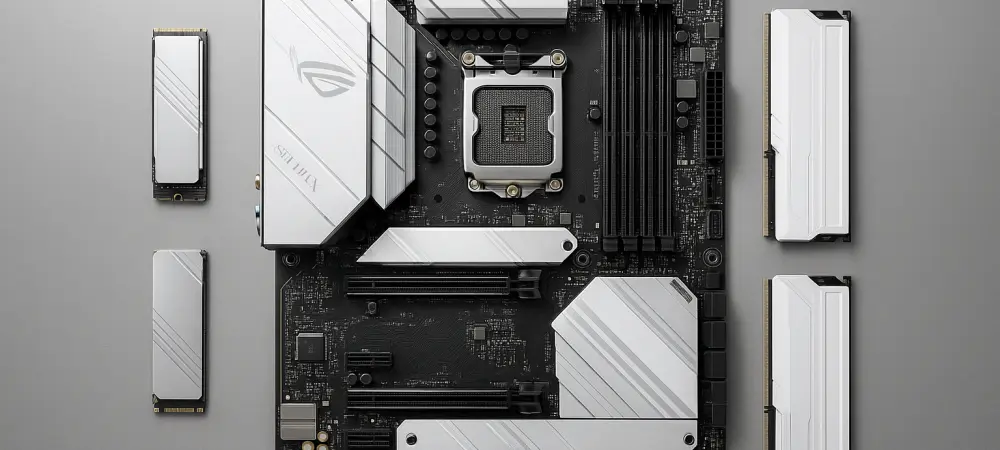
The 14+2+2 Voltage Regulator Module architecture is a critical foundation that prevents performance throttling and extends the longevity of connected components by delivering clean electrical current. This high-performance motherboard serves as a cornerstone for modern PC enthusiasts who are looking to transition to the AMD AM5 platform without the financial burden of flagship models. By supporting the latest Ryzen 7000, 8000, and 9000 series processors, the hardware bridges the gap between mid-range affordability and high-end reliability. Its striking white aesthetic caters to the growing trend of clean, minimalist PC builds that have dominated the custom market from 2026 to 2028. Beyond its visual appeal, the board provides an accessible entry point for builders who demand enthusiast-grade stability and extensive feature sets. This strategic positioning allows a wider range of users to experience the benefits of advanced power delivery and next-generation connectivity in a unified, professional package.
Engineering a Stable Foundation for High-Performance Computing
Maintaining peak performance in a modern desktop environment requires more than just high-quality silicon. It demands a sophisticated ecosystem of support components that can withstand sustained thermal stress over many years. The architecture of this board is specifically engineered to handle the intense power requirements of multi-core processors during high-demand tasks. Whether performing 4K video rendering or engaging in competitive gaming, users expect absolute stability. By prioritizing electrical purity, the system ensures that every watt delivered to the processor is clean and free from fluctuations. This level of engineering detail separates professional-grade hardware from standard consumer products. It provides a level of confidence that is essential for long-term computing projects. As builders move toward more powerful setups, the importance of a reliable foundation becomes even more apparent. This makes a focus on robust electrical design a primary factor in hardware selection today.
Robust Power Delivery and Thermal Management
At the heart of the board’s technical prowess is a power stage design that ensures consistent electrical delivery even under extreme conditions. This sophisticated power architecture is essential for stabilizing high-TDP processors. It allows them to maintain peak boost clocks during intensive gaming sessions or heavy multi-threaded workloads. The use of premium alloy chokes and durable capacitors further enhances the efficiency of the power conversion process. This reduces energy waste and minimizes the heat generated by the VRM itself. Such a proactive approach to power management does more than improve immediate performance. It also protects the motherboard from the wear and tear associated with high-voltage operation. For users who intend to push their hardware through mild overclocking or long computational tasks, this system provides the necessary headroom. It ensures that the system remains stable and responsive at all times, regardless of the workload intensity.
Advanced Memory Support and Future-Proof Storage
The transition to DDR5 memory represented a significant hurdle for many builders due to the complexity of timing adjustments and voltage stability. To solve this, the integration of ASUS Enhanced Memory Profile (AEMP) technology provides a streamlined pathway to achieving maximum memory frequency without manual trial and error. This feature automatically detects the capabilities of memory chips and applies the most aggressive stable settings, allowing users to unlock the full bandwidth of their RAM in seconds. As high-speed memory becomes standard in 2026 and through 2028, having a motherboard that can handle these speeds natively is a major advantage for reducing system latency. Moreover, the memory traces are optimized to minimize interference, which is critical when running at speeds that push the physical limits of the hardware. This democratization of performance ensures that even those without deep technical knowledge can benefit from the responsive multitasking capabilities today.
Next-Generation Connectivity and Intelligent Networking
Modern desktop builds are defined by their ability to interact with high-speed networks and external devices with minimal latency. The shift toward higher data throughput has necessitated a new generation of connectivity standards. These standards must handle the massive files and real-time interactions common in today’s digital landscape. This motherboard addresses these needs by integrating a suite of high-bandwidth ports and wireless technologies. Whether transferring large media assets or engaging in low-latency cloud gaming, the hardware provides the necessary infrastructure. The user is never slowed down by connection bottlenecks. Furthermore, the inclusion of internal expansion headers allows for the easy addition of front-panel ports. This brings enthusiast-level connectivity to the user’s fingertips. Such a focus on seamless data movement is essential for maintaining a productive computing experience. It ensures the system remains relevant as software demands grow in complexity.
Leveraging WiFi 7 and AI-Driven Traffic Management
A standout feature of this hardware is its leap into the next era of wireless standards with the inclusion of WiFi 7, which utilizes Multi-Link Operation and 320MHz channels. These advancements deliver significantly higher throughput and lower latency compared to previous generations, making it a viable alternative to wired connections for even the most demanding users. This is complemented by a 2.5G LAN port, providing a high-speed wired option for those who require a rock-solid connection for competitive gaming or large-scale data transfers. To further refine the online experience, the board utilizes AI Networking II, an intelligent traffic management system that prioritizes data packets in real-time. This software-driven innovation ensures that critical tasks, such as video conferencing or online gaming, receive priority over background downloads. By functioning as a smart traffic controller, the system guarantees a seamless user experience across a variety of network-intensive applications regardless of bandwidth.
Adaptive Tuning and Comprehensive System Optimization
Builders who adopted this platform discovered that the synergy of artificial intelligence and hardware design significantly simplified the process of system optimization. Those who utilized the AI Overclocking and AI Cooling tools found that their systems maintained a better balance between noise and performance than was possible with manual tuning alone. To achieve the best results, it was often suggested that users paired this board with high-frequency DDR5 memory to fully leverage the bandwidth capabilities of the AM5 architecture. The transition to this hardware proved that premium features could be accessible without compromising on the aesthetics or the durability required for a long-lasting build. Moving forward, the focus remained on how these intelligent systems would continue to adapt to new software challenges as the ecosystem expanded from 2026 to 2028. Ultimately, the choice to invest in a stable and future-proof foundation allowed users to focus more on their creative and professional goals rather than technical hardware limitations.