

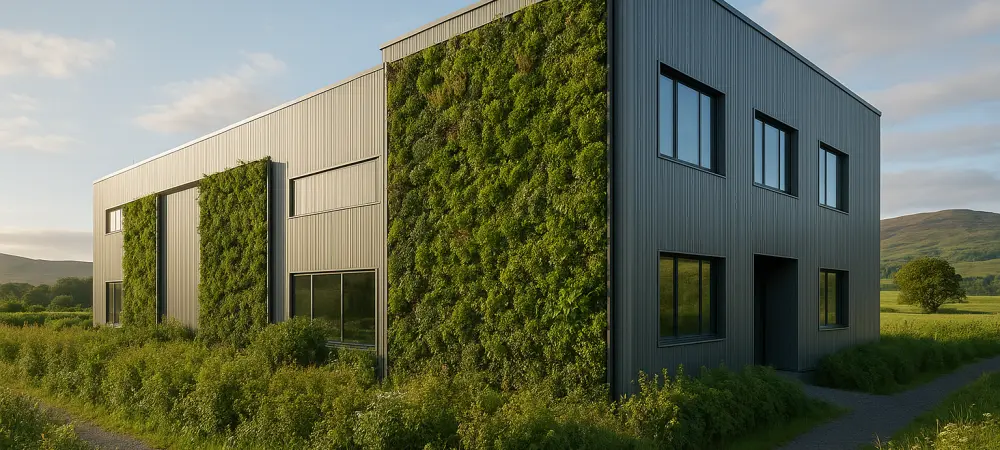
The silent hum of high-performance servers often feels worlds away from the rolling hills of North Lanarkshire, yet a new architectural proposal is bringing the physical reality of the cloud into sharp focus for local residents. DataVita’s latest proposal for its DV4 facility in Chapelhall isn’t just another server warehouse; it represents a calculated attempt to reconcile massive industrial growth with the delicate environmental and social expectations of a modern Scotland. As the nation grapples with the energy demands of the AI era, this development serves as a high-stakes test case for whether data centers can truly be “good neighbors.” This facility, which adds to a growing campus, highlights the transition from digital abstraction to tangible brick-and-mortar responsibility.
Beyond the Digital Blueprint: Scotland’s Infrastructure Evolution
The global demand for data processing is surging, yet the physical footprint of the internet often remains invisible until it lands in a local neighborhood. Scotland’s infrastructure is currently undergoing a radical shift, moving away from traditional industrial roots toward a future defined by bit-rates and cooling efficiencies. The DV4 project exemplifies this evolution by embedding itself within the existing technological landscape of Chapelhall rather than seeking isolated greenfield sites. This approach suggests a new philosophy where data storage is treated as a vital utility rather than a detached industrial byproduct.
The High Stakes: Scotland’s Digital Ambitions
The push for digital sovereignty in the UK has placed Scotland in a unique position, utilizing government-designated AI Growth Zones to attract heavy investment. However, this progress faces a paradox: the massive power and water requirements of data centers often clash with national sustainability goals. While some political factions called for a complete moratorium on new facilities starting in late 2025, the industry remains under intense pressure to prove its worth. The debate shifted from whether these centers should exist to how they can contribute to the economy without depleting natural resources or alienating local communities.
The DV4 Blueprint: Integrating Industry With Ecology
DataVita’s expansion into its third facility, DV4, moves beyond standard industrial construction by prioritizing adaptive design and resource efficiency. By reducing the maximum building height from 30 to 26 meters, architects successfully minimized the visual footprint of the structure for nearby residents. Furthermore, the plan relocated noisy operational machinery away from residential borders, signaling a commitment to acoustic privacy. This design also included a “net-positive” foliage strategy, aiming to double local biodiversity by planting 1,000 meters of native hedgerows to offset the construction footprint.
Engineering for a Low-Carbon Future
Industry leadership in the data sector is increasingly measured by efficiency metrics rather than just raw processing power. DataVita aimed for a Power Usage Effectiveness (PUE) rating of 1.25, a figure significantly below the industry average, by utilizing 100 percent renewable energy sources. To address water scarcity, the engineering team implemented a closed-loop cooling system that eliminated the continuous consumption of local water supplies. This shift was supported by proposed thermal export partnerships with the BioCity campus and the Monklands Replacement Hospital, turning server heat into a community asset.
Strategies for Harmonizing Tech Growth and Community Values
The framework provided by this development offered a definitive blueprint for industrial integration by prioritizing radical transparency throughout the planning cycle. Developers engaged in multiple rounds of public consultation, which allowed local feedback to directly reshape the physical site plan and mitigate potential community friction. By treating surplus thermal output as a community asset, the project solved local heating problems while reducing the overall carbon footprint of the surrounding area. The strategy shifted the focus toward long-term operational history, which successfully distinguished the project from speculative real estate ventures. Ultimately, this approach secured necessary renewable resources early in the planning phase, ensuring that the facility supported national sustainability targets. Future developers looked to this case as proof that industrial waste could be transformed into public utility through collaborative engineering and community-focused gardens.