

The transition to 6G is less about simple mobile connectivity and more about establishing a high-density, intelligent computing framework on a national scale. This shift represents a critical fever pitch in the race for electromagnetic spectrum supremacy as nations pivot from the saturated 5G landscape toward the untapped potential of sub-terahertz waves. In this rapidly evolving theater, China has aggressively positioned its state-backed telecommunications giants to bypass traditional incremental upgrades in favor of a total architectural overhaul. By leveraging its vast industrial base and centralized planning, the nation has already initiated large-scale pilot programs in 2026 that blur the lines between telecommunications and pervasive artificial intelligence. These efforts are not merely about speed; they represent a strategic move to dictate the future of the global digital economy by integrating terrestrial networks with orbital assets. The push toward a 2030 commercial rollout suggests a fundamental shift in how power is projected through connectivity.
Technological Foundations: Converging Sensing and Computation
Terahertz Frequency Utilization: Breaking the Bandwidth Barrier
The shift toward terahertz frequencies represents the most significant hardware challenge being addressed by researchers in Beijing and Shenzhen. These high-frequency bands offer a massive expansion in available bandwidth, potentially reaching speeds that are a hundred times faster than existing 5G networks. However, the physical properties of these waves necessitate a dense deployment of micro-base stations due to their limited propagation range and susceptibility to interference. To overcome these hurdles, Chinese firms have accelerated the production of advanced gallium nitride semiconductors and specialized antenna arrays designed to focus energy into highly directional beams. By mid-2026, the focus has transitioned from theoretical modeling to the deployment of experimental urban grids that test how these signals behave in high-density environments. This infrastructure is vital because it provides the low-latency throughput required for real-time holographic communication and the operation of autonomous swarms.
Integrated Sensing and Communication: the Rise of Network Vision
Building on this hardware foundation, integrated sensing and communication has emerged as a cornerstone of the domestic 6G strategy, effectively turning the network into a giant radar system. By utilizing the same radio signals for both data transmission and spatial sensing, 6G infrastructure can detect the position, velocity, and shape of physical objects without the need for dedicated sensors. This capability is being integrated into the latest smart city initiatives across the Greater Bay Area, where the network provides a layer of environmental awareness for unmanned aerial vehicles and self-driving logistics fleets. The synergy between high-frequency communication and precise sensing allows for an unprecedented level of interaction between the digital and physical worlds. Engineers are currently refining the algorithms that filter signal reflections to ensure privacy while maintaining high-resolution environmental mapping. As these systems mature, they provide the granular data necessary for the network to manage complex ecosystems.
Strategic Global Positioning: Policy and Standards
Celestial Connectivity: the Role of LEO Constellations
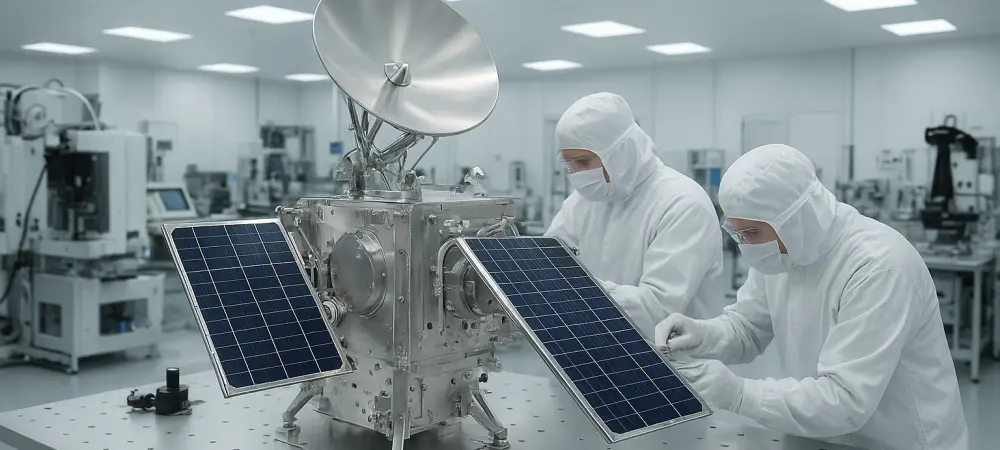
To ensure global coverage, the geographical limitations of terrestrial networks are being addressed through the rapid deployment of massive Low Earth Orbit satellite constellations. China’s “Xingyun” and similar aerospace projects have ramped up their launch schedules in 2026 to ensure that remote regions and maritime routes receive the same high-speed coverage as metropolitan hubs. This multi-layered architecture is essential for achieving the global reach necessary to compete with Western satellite internet providers and to secure international data corridors. The integration process involves developing sophisticated hand-off protocols that allow mobile devices to switch between terrestrial towers and overhead satellites without losing connectivity. Furthermore, the use of laser inter-satellite links ensures that data can be routed across the globe at nearly the speed of light. This orbital layer functions as a strategic backup and a primary distribution channel for the next generation of global internet services by providing a resilient framework.
Digital Sovereignty: Ensuring International Leadership
The race for 6G leadership was fundamentally won through early participation in international standard-setting bodies and a heavy investment in foundational patents. Policymakers in the mid-2020s recognized that controlling the underlying protocols of the 6G era was as important as the physical hardware itself. By 2026, the emphasis shifted toward fostering a collaborative ecosystem where domestic academic institutions and private enterprises worked in unison to submit comprehensive technical proposals to groups like the 3GPP and the ITU. This proactive engagement ensured that the requirements of high-density, AI-driven networks were reflected in global benchmarks, reducing reliance on foreign intellectual property. The most effective path forward for the global industry involved establishing reciprocal technology sharing agreements and diversifying semiconductor supply chains to maintain a balanced market. These strategic foresight efforts provided a clear blueprint for achieving long-term digital resilience.