

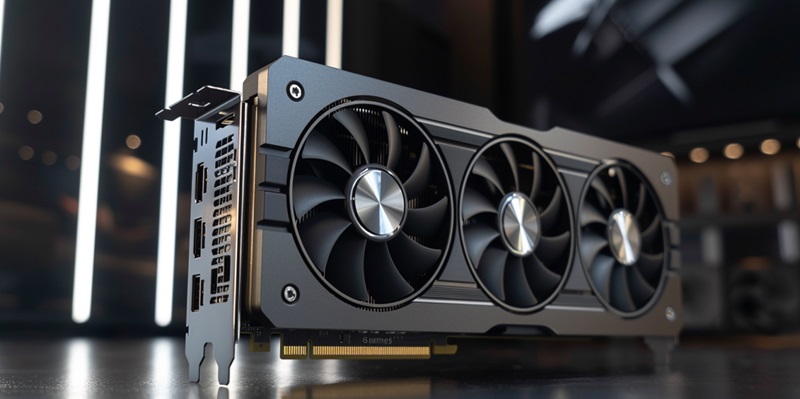
Tech enthusiasts and casual consumers alike are buzzing with intrigue following leaked information hinting at AMD’s RX 8000 series GPUs, possibly signaling a pivotal change within the mid-range market segment. Historically, AMD has been known to offer competitive solutions that often excel in delivering bang-for-your-buck performance, but with this next step, the question arises: are we witnessing the beginnings of a mid-range market transformation? This speculative dive into the AMD rumors seeks clarity on whether the rumored RDNA 4-powered textures and terrains will reshape our graphical expectations or simply refashion them with subtle enhancements. Is it a paradigm shift or prudent progression we can anticipate?
The Whispered Blueprint: RDNA 4’s Conservative Progress
Embracing an evolutionary approach, AMD’s anticipated RDNA 4 architecture is rumored to be less about performance upheaval and more about polishing the platform. According to leakster Wjm47196, refining the RDNA 3’s issues seems to be the top priority for the next lineup. Codenamed a ‘bug fix,’ AMD might not be striving to outmatch their previous top-tier card, the RX 7900 XT, but instead aim to match or incrementally outperform it. It’s a fascinating insight into the company’s strategy, where enormous leaps in performance are eschewed for delivering a product that champions stability and refinement. This could signal a shift in philosophies: rather than aiming to outpace the sheer performance powerhouses, they may focus on a product that balances proficiency and perfection.
The prophecy from the Chiphell forums presages a conservative technological march forward with RDNA 4, which seems more rooted in realism than in the dreams of boundless graphical power. By nurturing what’s already at hand, AMD’s next-generation GPU could represent a reinforcement of their current lineup’s stronghold, with targeted ameliorations set to appease those who’ve encountered tribulations with the RDNA 3 variants. A strategic upgrade over a radical transformation, if the murmurs hold true, may define the RX 8000 series as the embodiment of incremental but essential progress.
Ray Tracing Refinement and Aggressive Stratagem
At a time when ray tracing is becoming less of a luxury and more of a staple, AMD’s reported emphasis for the RX 8000 series on improving this feature indicates an advantage shaping for the mid-range market. Optimizing light simulation could be the chisel with which AMD sculpts its niche, cutting through the noise to not only present an alluring price point but to offer technological dexterity where it matters. The leaks gesture towards a scenario where the graphics cards offer better ray tracing performance and reliability rather than broad-spectrum computational supremacy.
Beyond the lure of enhanced ray tracing, AMD’s upcoming release might also herald a pricing melee in the mid-range realm, where a performance-per-dollar metric is paramount. Meanwhile, Nvidia’s looming RTX 5090 and 5080 offerings have the potential to expand the performance divide—yet, this is where AMD might pivot. Sparing the expense of trying to scale the performance peak, they could instead seek to dominate the territory of affordability and value, delivering a performance punch without the premium price knockout. Herein lies the wisdom of AMD’s strategy, perhaps, to entice the masses rather than to dazzle the few.
Anticipating the RDNA 5 Quantum Leap
The tech community is abuzz with the leaked news of AMD’s RX 8000 series GPUs, pointing to a potential game-changer in the mid-range graphics market. Well-regarded for their value, AMD’s upcoming GPUs, rumored to be powered by the new RDNA 4 architecture, might set a new standard for price-to-performance expectations. The intrigue is whether these GPUs will merely present incremental upgrades or truly revolutionize the segment. Do they herald a shift in the mid-range landscape or represent a natural technological evolution?
AMD has historically provided powerful yet cost-effective options. If these leaks are accurate, the RX 8000 series could redefine what gamers and professionals expect from mid-tier offerings, blending improved performance with affordability. The anticipation grows as the market awaits to see if AMD will once again reset the benchmarks for mid-range GPUs.