

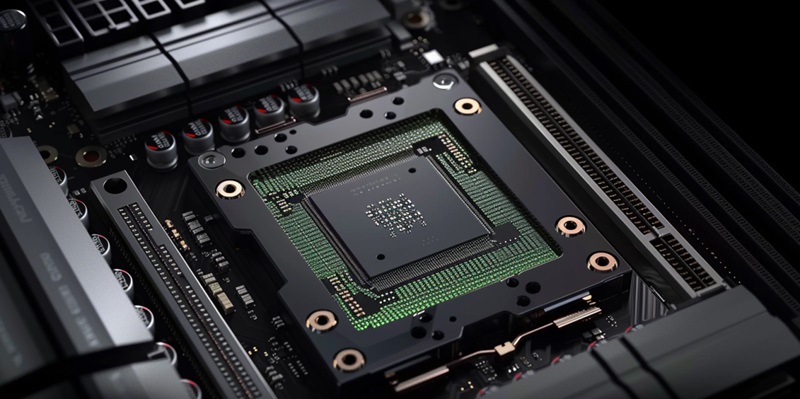
As the race to dominate the Arm-based computing market heats up, Nvidia and MediaTek have emerged as significant players gearing up to make their mark. Known for their technical prowess in the realms of graphics processing and mobile chip design, respectively, these two industry giants have set their sights on the laptop segment, promising innovations that might reshape the future of Arm-powered PCs. This partnership melds Nvidia’s AI expertise with MediaTek’s chipmaking dexterity, aiming to deliver a product that provides not only performance but also groundbreaking AI integrations.
The Next Generation of Arm-Based Computing
Nvidia’s AI Dominance Meets MediaTek’s APU Expertise
Nvidia’s initiative into Arm-based laptops signifies a strategic shift, emphasizing the burgeoning role of AI in computing. MediaTek brings valuable experience to the table with its history in mobile SoC development, particularly in integrating AI capabilities as seen in their Kompanio series for Chromebooks. Although these SoCs haven’t yet reached the performance peaks set by Snapdragon’s offerings, the collaboration suggests a keen focus on leveraging Nvidia’s AI savvy. Moreover, Nvidia’s deep learning and autonomous vehicle technology could significantly bolster the AI potential in their joint chip design, potentially setting a new benchmark for AI-workload efficiency.
The potential of combining MediaTek’s APU solutions with Nvidia’s AI might not just result in a competitor but could establish a new archetype for laptop computing. These developments arrive against a backdrop of increasing consumer and enterprise demand for more intelligent, power-efficient computers capable of handling sophisticated AI algorithms with ease. With AI transforming industries and daily life, a chip that can seamlessly integrate these capabilities into personal computing devices has profound implications.
Design and Production Roadmap
Tackling a project of this magnitude comes with an ambitious schedule. Reports suggest that Nvidia and MediaTek have a clear timeline for their joint product’s journey from conception to production. The design phase is expected to be concluded by the third quarter of 2024, setting the stage for tape-out by year’s end. Subsequently, they anticipate kick-starting the manufacturing process in the first half of 2025. This timeline is crucial not only for planning technological advancements but also for staking a claim within the competitive Arm PC market landscape. The partnership’s success hinges on keeping pace and delivering a product that aligns with consumer expectations of enhanced AI processing on their laptops.
This timeline aligns with the tech industry’s rapid evolution and the need to stay ahead of the curve. The two companies are tasked with creating a highly integrated, efficient chip capable of taking on heavyweight Qualcomm and its Snapdragon chips. The use of TSMC’s 4nm process in Snapdragon’s X Elite sets a high standard, but Nvidia and MediaTek’s shared ambition could redefine competitiveness in the Arm PC space. If they succeed in harnessing their respective strengths in AI and mobile APUs, their product could be a game-changer.
Anticipating the Impact
A High-Stakes Market Play
By entering the consumer Arm chip space after a long hiatus, Nvidia is not just revisiting its roots but also carving out a new narrative where AI takes center stage. MediaTek’s presence in this partnership signals a parallel intent to elevate its technological offerings to Snapdragon’s levels. The reported price point of around $300 could make the Nvidia x MediaTek chip an appealing proposition for laptop manufacturers and consumers alike, offering a balance between high-end capabilities and affordability. Should they meet the projected performance and AI milestones, they could disrupt a market segment that Qualcomm currently leads.
Scaling from mobile chipsets to laptop-grade processors while embedding advanced AI functionalities is an ambitious leap. Both companies are poised to benefit from this cross-pollination of technological acumen. Nvidia would gain a foothold in a market complementary to their existing sectors like graphics and data centers, while MediaTek could secure an upswing in its reputation and market share. The industry and consumers stand at the precipice of a new era where AI-driven computing is not just a luxury but a fundamental feature.
The Future of AI-Integrated Laptops
In the competitive arena of Arm-based computing, industry heavyweights Nvidia and MediaTek are vying for supremacy, especially in the laptop market. Nvidia, lauded for its advancements in graphics, is joining forces with MediaTek, celebrated for its mobile chip innovations. Together, they are poised to revolutionize Arm-driven laptops with their combined expertise. This collaboration is set to fuse Nvidia’s cutting-edge AI capabilities with MediaTek’s prowess in chip manufacturing. The goal is no less than to elevate the performance of laptops while integrating AI technologies in unprecedented ways. These developments signal a potential shift in how Arm-based PCs might evolve, with a focus on enhancing user experiences through smarter, more efficient computing. As these two titans align strategically, the future of laptop technology appears to be on the cusp of a significant transformation.