

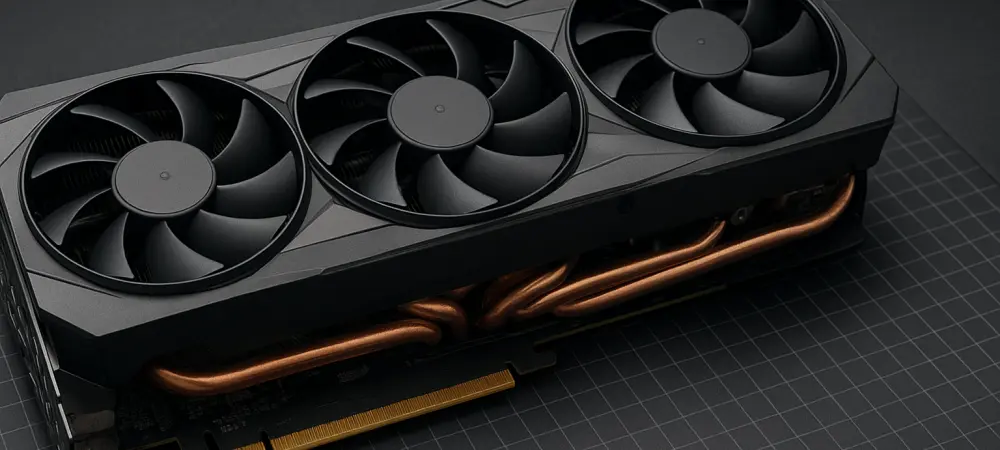
Modern console ports are notorious for their heavy memory footprints, driving a surge in consumer demand for graphics cards with at least 16GB of dedicated video memory. This shift has fundamentally altered the competitive landscape of the PC gaming market, where enthusiasts are no longer satisfied with marginal upgrades that sacrifice longevity for brand prestige. A recent viral case study involving a veteran Nvidia GeForce RTX 3060 owner encapsulates this transition perfectly. Although the user initially planned to upgrade to the GeForce RTX 5070, a detailed analysis of current benchmarks and community feedback led to the selection of the AMD Radeon RX 9070 XT instead. This decision highlights a growing tension between Nvidia’s software-centric ecosystem and AMD’s strategy of delivering superior raw hardware specifications. As mid-range pricing continues to climb toward the seven-hundred-dollar mark, the criteria for a successful purchase have evolved into a complex calculation involving memory buffers, rasterization speed, and architectural endurance.
Identifying the Shift in Consumer Brand Loyalty
The pivot from an established ecosystem like Nvidia’s to a competitor’s platform is rarely a spontaneous event; rather, it is the result of a calculated assessment of value. For years, Nvidia maintained a dominant market share by offering a polished experience, but the current generation of hardware has seen a narrowing of that gap. When an RTX 3060 owner looks at the RTX 5070, they see a card that provides a sixty to seventy percent performance increase, which is objectively impressive. However, the realization that a similarly priced AMD card offers higher-tier hardware specifications can quickly erode brand loyalty. The community-driven discourse has become a powerful force in this regard, as users on platforms like Reddit share data-driven arguments that favor raw silicon over marketing buzzwords. This democratization of technical knowledge ensures that consumers are more informed than ever, making it difficult for manufacturers to rely on historical reputation alone when their current offerings are perceived as being strictly segmented or intentionally limited.
Evaluating Rasterization and Architectural Tiering
The core of the argument for AMD in the mid-range segment rests on the difference between architectural tiering and pure rasterization performance. While Nvidia’s RTX 5070 is a capable card, enthusiasts argue that the RX 9070 XT performs more like a “Ti” class product, sitting a full tier higher in terms of traditional rendering power. For gamers who do not prioritize ray tracing above all else, the AMD card offers a more powerful foundation that handles high-resolution textures and complex environments without needing to lean on artificial frame generation. This “raw power” approach appeals to users who want a card that can sustain high performance across a variety of titles, regardless of whether those games support specific proprietary technologies. By focusing on traditional rendering efficiency, AMD has managed to capture the attention of a segment of the market that views software enhancements as a secondary benefit rather than a primary requirement for a premium gaming experience in the current hardware cycle.
Addressing the Looming Video Memory Bottleneck
A recurring theme in this hardware debate is the “VRAM wall,” which has become a primary concern for modern gamers who expect their purchases to last for several years. As AAA titles demand more video memory for high-resolution assets and complex lighting models, the 12GB of memory found on the RTX 5070 is increasingly viewed as a potential bottleneck for long-term use. AMD has strategically countered this by equipping its mid-range RDNA 4 cards with 16GB of VRAM. This 4GB difference serves as both a practical performance buffer and a powerful psychological marketing tool, providing a sense of security for users who plan to keep their hardware for four or five years. The industry has reached a point where having enough memory is no longer just about current performance; it is about ensuring that a card remains viable as developers continue to push the limits of console-to-PC ports. For many buyers, the extra overhead provided by AMD’s generous memory allocation is the deciding factor that outweighs Nvidia’s software features.
Navigating the Economic Impact of the AI Tax
The shifting value paradigm is also a direct result of global economic pressures, specifically what many call the “AI tax.” High demand for Artificial Intelligence infrastructure has caused a sharp climb in memory prices, as high-performance components like GDDR7 are diverted to massive data centers. This shortage has forced consumer GPU manufacturers to face tighter supplies and higher production costs across the board. Because Nvidia maintains high profit margins and invests heavily in proprietary software development, their mid-range cards often carry a premium price tag that some consumers find difficult to justify. AMD, by contrast, has positioned itself as the value-oriented alternative, focusing on providing more “raw” hardware per dollar spent. This economic reality means that every gigabyte of memory and every stream processor is scrutinized by the buyer. When the prices for mid-range cards hover around seven hundred dollars, the expectation for high-end specifications becomes non-negotiable for the enthusiast community.
Balancing Proprietary Software and Raw Performance
Nvidia’s primary defense against AMD’s hardware advantage is its sophisticated software suite, including DLSS 3.5 and 4.0. These AI-driven features use machine learning to upscale images and generate frames, often providing a smoother visual experience than raw hardware can achieve alone. However, the hardware community is increasingly vocal about the idea that software should be a bonus rather than a “crutch” for underpowered specifications. This sentiment suggests that while Nvidia leads in technological innovation, many buyers still prefer the reliability of a larger memory buffer and higher raw rendering speeds. There is a growing concern that relying too heavily on upscaling technologies might lead to a lack of optimization in future game titles. Consequently, the RX 9070 XT is seen as a more “honest” piece of hardware by some, offering consistent performance that does not fluctuate based on the availability of specific plugin support. This tension between software-defined performance and hardware-defined performance remains the defining conflict of the era.
Analyzing the Power of Enthusiast Community Consensus
The current state of the GPU market reveals that enthusiast communities now wield significant power in breaking traditional brand loyalty through data-driven arguments. Technical discussions have moved beyond simple fanboyism, focusing instead on price-to-performance metrics and long-term viability. Video memory has moved from a secondary specification to a primary decider for mid-range buyers, largely due to the increasing memory footprints of modern console ports. Furthermore, with mid-range cards now priced at levels that used to buy flagship hardware, consumers are more scrutinizing than ever before. They are no longer willing to pay a premium for brand prestige if the competing “silicon” offers more longevity and better raw performance for the same price. This shift in power dynamics has forced manufacturers to be more transparent about their hardware limitations, as the community is quick to identify and broadcast any perceived deficiencies in new product launches. The result is a more competitive market where value is defined by the users rather than the marketing departments.
Formulating Long-Term Hardware Investment Strategies
The evolution of the mid-range GPU market established a clear precedent for how hardware value should be measured in a resource-constrained economy. Enthusiasts who transitioned to the Radeon RX 9070 XT demonstrated that a focus on robust memory configurations and raw rasterization power provided a more stable path for future-proofing. This shift in purchasing behavior signaled to manufacturers that software features, while innovative, could not fully compensate for perceived hardware limitations at higher price points. Moving forward, the industry likely focused on balancing AI-driven enhancements with substantial increases in physical memory buffers to meet the rising demands of modern game engines. For the consumer, the primary takeaway was the importance of evaluating a graphics card based on its fundamental architectural strengths rather than its ecosystem alone. By prioritizing hardware longevity and memory capacity, gamers ensured their systems remained capable of handling the increasingly complex requirements of next-generation software without needing frequent or expensive hardware cycles.