

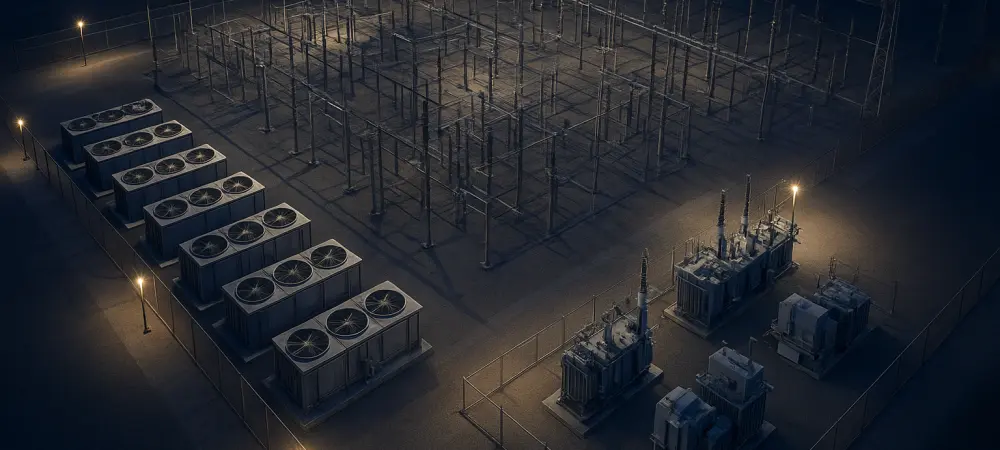
The quiet hum of a British power facility abruptly vanished this past July when a sophisticated digital intrusion paralyzed operational controls and forced engineers into an unprecedented four-day manual override sequence. This breach represents a chilling evolution in cyber warfare, shifting from traditional data theft toward the active manipulation of physical machinery. Energy Minister Michael Shanks addressed the incident, reassuring the public that the national grid remained stable while acknowledging the severity of the localized intrusion.
The Four-Day Blackout: When Code Becomes a Kinetic Weapon
Operations came to a sudden halt as control screens went dark, signaling that the facility had been successfully compromised by external actors. The transition from digital espionage to kinetic disruption marks a threshold where software exploits now have the power to shut down heat and light for citizens.
While the immediate threat was contained, the four-day outage served as a physical manifestation of what was once a theoretical vulnerability in the energy infrastructure. The government’s effort to contain public concern focused on the isolation of the event, though the message to the industry was far more urgent.
Geopolitical Friction in the Digital Trenches
The United Kingdom has increasingly found itself in the crosshairs of Iranian-state actors who view the energy grid as a high-value strategic target. These adversaries leverage digital tools to exert pressure on international stages, using the threat of infrastructure failure as a modern form of diplomacy. By targeting smaller facilities, these actors bypass the robust defenses found at major nuclear plants, finding “distributed vulnerability” to be an efficient path to disruption. This shift suggests that the goal is no longer just intelligence gathering but the physical demonstration of power to undermine national resilience.
Anatomy of the Attack: Targeted Systems and Attribution
Forensics pinpointed the exploitation of Programmable Logic Controllers, with Siemens S7 devices being specifically targeted due to their role in managing industrial processes. These devices act as the brain of the machinery, and once compromised, allow remote attackers to manipulate physical breakers and cooling systems.
While a group identifying as “APT Iran” denied responsibility, intelligence from the NCSC and Check Point Software provided evidence linking the methodology to known state-sponsored playbooks. National data reveals that nation-state actors now account for 75% of all attacks on critical infrastructure.
The High Cost of Fragility: Economic and Security Implications
The financial consequences of such vulnerabilities are immense, as evidenced by the $2.5 billion loss suffered by Jaguar Land Rover following a separate breach. In the energy sector, costs extend beyond immediate revenue to include the high expense of emergency forensic recovery and the degradation of public trust.
Experts continue to debate whether this incident should be viewed as an isolated fluke or a symptom of systemic fragility in aging industrial networks. Susceptibility in the energy sector is particularly dangerous because it directly impacts business continuity across every other essential industry.
Engineering Resilience: Strengthening the UK’s Industrial Defense
Authorities shifted the national strategy toward recovery and resilience, recognizing that total prevention was no longer a realistic goal. During high-level briefings for energy sector CEOs, officials mandated new defensive protocols that prioritized the rapid isolation of compromised segments to prevent lateral movement.
The incident prompted a re-evaluation of how utility providers integrated legacy hardware with modern cloud-based monitoring tools. Experts recommended a return to analog fail-safes and physical air-gapping for the most sensitive control loops. By fostering a culture of proactive defense, the industry sought to transform a moment of vulnerability into a catalyst for a more robust national energy architecture.