

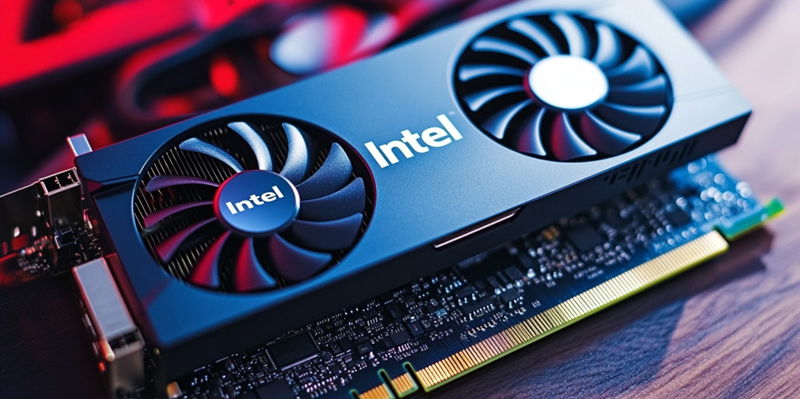
In a move poised to shake up the budget gaming market, Intel has announced the launch of its new Battlemage series of discrete graphics cards, the Intel Arc B580 and Intel Arc B570. These newly unveiled GPUs are designed to cater specifically to budget-conscious gamers seeking high-performance 1440p gaming solutions without the hefty price tag. Boasting advanced specifications and competitive pricing, Intel’s latest offerings aim to make a notable impact, providing an attractive alternative to established players like Nvidia and AMD. Industry experts and gamers alike are eagerly anticipating the release of these graphics cards and their potential to redefine value in the budget GPU segment.
Intel’s New Graphics Card Announcement
Intel’s official unveiling of the Arc B580 and Arc B570 represents a significant leap in their journey within the discrete graphics card market. Built on Intel’s sophisticated Xe2 graphics architecture, these new GPUs promise heightened performance and efficiency, generating substantial excitement among industry insiders and gamers. The Arc B580 and B570 are meticulously designed to deliver robust 1440p gaming performance, a resolution increasingly favored by modern gamers for its optimal balance between visual fidelity and performance. Intel’s aim with these GPUs is crystal clear: deliver a comprehensive, high-quality gaming experience that leverages their advanced architecture for superior graphics and rapid processing speeds.
As Intel positions itself as a strong competitor in the budget GPU market, the release of the Arc B580 and B570 is a strategic maneuver to capture a significant share, especially among budget-conscious consumers. The anticipation surrounding these graphics cards underscores the gaming community’s enthusiasm for new options that break away from the dominance of Nvidia and AMD. By emphasizing their Xe2 architecture, Intel intends to enhance the gaming experience, promising smoother gameplay, better visuals, and quicker responses. This strategic focus is reflective of Intel’s broader goal to become a key player in the discrete GPU market, challenging the status quo with innovative products designed for diverse gaming needs.
Specifications and Features
The specifications of the Intel Arc B580 are impressive, showcasing 20 Xe-cores, 20 ray tracing units, 160 XMX AI Engines, and 12GB of GDDR6 memory equipped with a 192-bit memory interface. These features are tailored to offer gamers a high-performance experience, capable of handling resource-intensive games and applications seamlessly. The inclusion of ray tracing units and AI engines further elevates the visual quality and overall smoothness of the gaming experience. The Arc B580’s robust hardware configuration is designed to meet the demands of modern gaming, ensuring that even the most graphically demanding titles run smoothly and efficiently.
In contrast, the Arc B570, while slightly scaled down, still maintains substantial capabilities. It comes with 18 Xe-cores, 18 ray tracing units, 144 XMX AI Engines, and 10GB of GDDR6 memory paired with a 160-bit memory interface. Despite being a step below the B580 in terms of raw power, the B570 remains a strong contender for gamers looking for a cost-effective GPU that can deliver solid 1440p performance. Intel’s choice to include a slightly lesser but still powerful configuration ensures that gamers on a tighter budget can still enjoy a high-quality gaming experience. The Arc B570 strikes a balance between performance and affordability, making it an enticing option for those who prioritize value.
Target Market and Budget-Friendly Pricing
Intel’s new GPUs specifically target the budget gaming segment, offering high-performance 1440p graphics at more accessible price points. The Arc B580 is priced at $249, making it an attractive choice for gamers who desire top-tier performance without a corresponding high price. Meanwhile, the Arc B570, available at a slightly lower price of $219, presents a cost-effective option for those who still seek notable gaming capabilities. By positioning these GPUs within the budget segment, Intel aims to draw in a wide range of gamers who have previously been underserved by the offerings from Nvidia and AMD.
The competitive pricing strategy adopted by Intel is expected to make the Arc B580 and B570 popular picks among value-conscious gamers. This approach could potentially disrupt the current market dynamics, prompting other manufacturers to reevaluate their pricing and performance strategies. By providing affordable yet powerful GPUs, Intel is poised to capture the attention and wallets of gamers who demand quality without compromising on cost. This move signifies a deliberate attempt to shift the balance of power in the budget gaming market, compelling competitors to rethink their approaches and potentially leading to more competitive offerings across the board.
Comparison with Industry Rivals
Compared to Nvidia’s RTX 4060 Ti and AMD’s RX 7600 XT, Intel’s new graphics cards stand out due to their superior memory bandwidth, a crucial component for efficient 1440p gaming. Higher memory bandwidth ensures smoother gameplay and better handling of high-resolution textures, which is essential for an immersive gaming experience. The Arc B580 and B570’s focus on memory bandwidth addresses the existing performance limitations observed in their competitors’ budget cards. This strategic emphasis on memory capacity showcases Intel’s intent to provide not just another option, but a superior gaming experience in the budget category.
Additionally, Intel’s new GPUs boast a higher count of Xe-cores and ray tracing units compared to their rivals, amplifying their allure to gamers. These specifications hint that the Arc B580 and B570 could potentially outperform Nvidia’s RTX 4060 Ti and AMD’s RX 7600 XT in actual gaming scenarios. If Intel’s claims hold up under scrutiny, these new GPUs could set a new benchmark for budget-friendly 1440p gaming performance. This potential for superior real-world application performance positions Intel as a serious contender in a market dominated by established juggernauts, offering gamers more choices and potential gameplay improvements.
Market Release Timeline
In a strategic move set to disrupt the budget gaming market, Intel has unveiled its new Battlemage series of discrete graphics cards, the Intel Arc B580 and Intel Arc B570. Targeted at budget-conscious gamers looking for high-performance 1440p gaming experiences without breaking the bank, these newly launched GPUs come with advanced specifications and competitive pricing. Intel’s latest efforts are expected to make a significant impact and offer a compelling alternative to well-established players like Nvidia and AMD. Industry experts and gaming enthusiasts are buzzing with excitement over these graphics cards, eagerly anticipating their release. The Intel Arc B580 and B570’s ability to deliver impressive graphics performance at an accessible price point has the potential to reshape the value proposition in the budget GPU market. This launch not only looks to satisfy the current demand for affordable yet powerful gaming hardware but may also set new standards, sparking a broader competition and innovation within the industry.